A Sweet Day in Seoul — 6 Korean Dessert Cafes in Anguk, Seongsu & Ikseon-dong
Contents
- A Suggested One-Day Route Through Seoul’s Dessert Cafes
- Essential Information for Travelers
- Reading the Tense of Seoul’s 2026 Dessert Trends
- 6 Recommended Cafes by District
- District 1: Anguk (Where Tradition Meets the Modern)
- District 2: Seongsu (The Hub of Trends and Art)
- District 3: Ikseon-dong and Jongno (A Trip Back in Time)
Seoul’s dessert scene moves fast. It’s a city where a cafe you saw on social media a year or two ago has often closed or relocated, so this guide only includes places confirmed to be open as of June 2026. It covers 6 Korean dessert cafes across three districts that international travelers can reach by subway alone, Anguk, Seongsu, and the Ikseon-dong and Jongno area, organized around addresses, transit, signature menus, prices, and tips for the wait.
Key Information at a Glance
- The districts: Anguk (where tradition meets the modern), Seongsu (trends and adaptive-reuse architecture), Ikseon-dong and Jongno (hanok alleyways and traditional shaved ice)
- The 6 cafes: London Bagel Museum Anguk, Onion Anguk, NUDAKE (HAUS NOWHERE SEOUL), Onion Seongsu, Cheongsudang, Sulbing Jonggak Branch
- Waiting app: International visitors should use the CatchTable Global app, which you can sign up for with just an email, no Korean phone number required
- Taxis: You can hail one by registering an overseas card on Kakao T, or with the foreigner-only k.ride app. The Uber app you use at home also works in Seoul
- Information note: Hours and prices are accurate as of June 2026. Since the industry changes often, it’s best to double-check each cafe’s official Instagram or a map app right before visiting
A Suggested One-Day Route Through Seoul’s Dessert Cafes
This route is designed for independent travelers using the subway, so you can experience the different atmospheres of all three districts in a single day. For a more detailed, hour-by-hour itinerary, see our Seoul dessert cafe one-day tour course.
- Morning (09:00–12:00): Anguk
Start at Anguk Station on Subway Line 3. Gyeongbokgung Palace and Bukchon Hanok Village are close by, so you can take in Korea’s traditional atmosphere along the way. Have breakfast or brunch at London Bagel Museum or Onion Anguk. - Lunch (12:00–14:00): Insadong or Bukchon
Have a Korean lunch in Insadong or Bukchon, near Anguk Station. - Afternoon (14:00–18:00): Seongsu
From Anguk Station on Line 3, head to Euljiro 3-ga Station and transfer to Line 2, then get off at Seongsu Station. It takes about 30 minutes including the transfer. This area is packed with cafes converted from old factories and warehouses. Visit NUDAKE (HAUS NOWHERE SEOUL) and Onion Seongsu. - Evening (after 18:00): Ikseon-dong and Jongno
From Seongsu Station on Line 2, return to Euljiro 3-ga Station and transfer to Line 3; Jongno 3-ga Station is just one stop away, about 25 minutes in all. Enjoy the evening mood at Cheongsudang in the Ikseon-dong hanok alleys, and later in the night you can wrap up with shaved ice at Sulbing in Jonggak.
Essential Information for Travelers
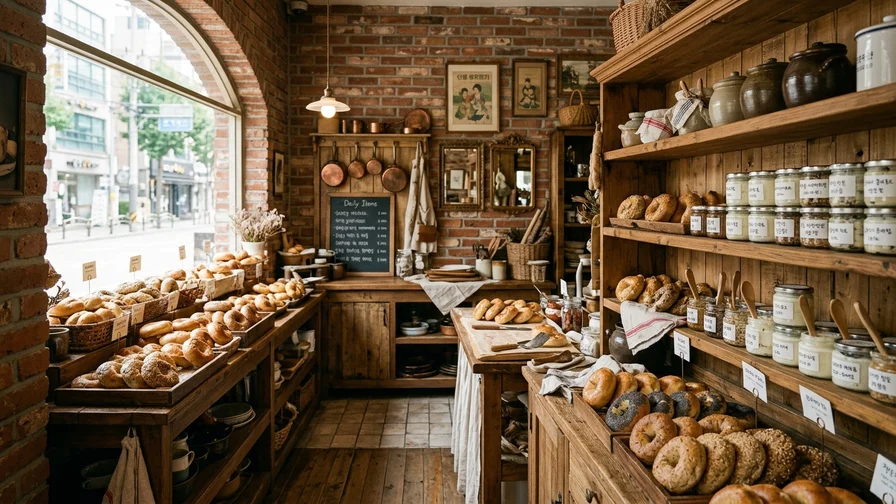
Getting Around
Seoul’s subway has clear signage in English, Japanese, and Chinese, making it easy for international travelers to use. For taxis, there are three options (as of June 2026).
- k.ride: A foreigner-only taxi-hailing app launched by Kakao Mobility in June 2024. It supports overseas phone number verification, sign-up with a Google or Apple account, automatic payment with an overseas-issued card, and in-app automatic translation.
- Kakao T: Kakao T accepts overseas-issued cards (Visa, Mastercard, American Express, JCB), but sign-up needs SMS verification and some overseas SIMs don’t receive the code (verified October 2026).
- Uber: You can hail a taxi in Seoul with the same Uber app and payment method you use at home.
If you need help with directions or transit, call the Korea Tourism Organization’s travel hotline at 1330. It operates 24/7 year-round, offers English support, and charges no separate service fee beyond standard call rates.
Payment
Most cafes accept overseas credit cards such as Visa and Mastercard. It’s a good idea to keep a little Korean won (KRW) in cash on hand for smaller shops or in case of a card-terminal error.
The Waiting System
Some of the cafes featured here have very long wait times. Remote queuing is done through apps.
- CatchTable Global: A separate app for international visitors (iOS, Android). You can sign up with a Google, Apple, or email account without a Korean phone number, and it supports English, Japanese, and Chinese. It handles both remote queuing and restaurant reservations. Some in-store kiosks have an “Overseas User” button that links to the global app via QR code.
- Tabling: This one is aimed at residents of Korea, so signing up with an overseas phone number is effectively impossible.
Reading the Tense of Seoul’s 2026 Dessert Trends
Seoul’s trending desserts change every few months. Here’s a snapshot of the current state of things, so you can gauge how recent that information you saw on social media really is.
- The cream-donut craze is past its peak: The donut “open runs” led by Knotted have noticeably calmed down going into 2025. The Knotted Seongsu branch that was on Yeonmujang-gil is no longer operating. Knotted donuts themselves are still available at branches around Seoul, so search “Knotted” in a map app to find locations.
- The croffle and yakgwa craze is also a thing of the past: The croffles and yakgwa that were the talk of 2022–2023 are no longer a trend but have settled in as everyday menu items. We cover limited-run venues and the newest trends, along with tips on booking, in Korean pop-up dessert cafes.
- What lasts is space and tradition: Hanok cafes, adaptive-reuse cafes, and desserts rooted in tradition like bingsu are less subject to trend cycles. For modern takes on traditional ingredients such as black sesame, injeolmi, and hallabong, see K-dessert fusion.
6 Recommended Cafes by District
District 1: Anguk (Where Tradition Meets the Modern)
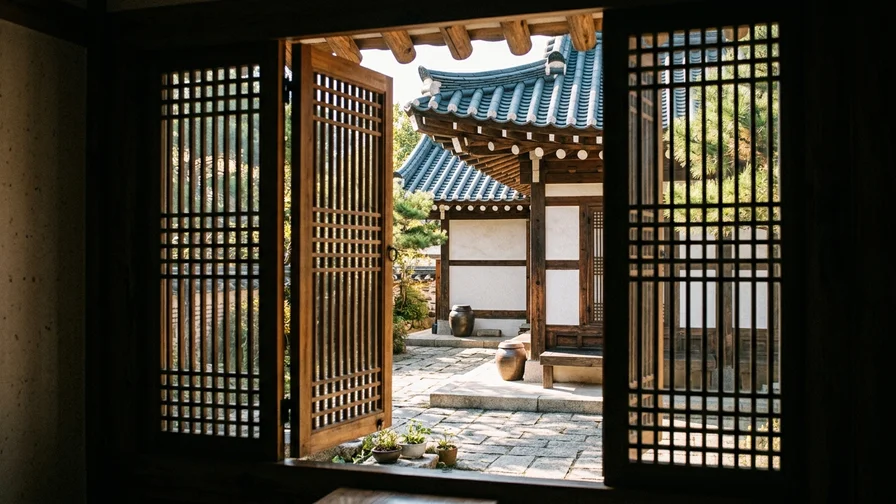
The Anguk-dong and Bukchon area is a district where the hanok, the traditional Korean house, has been preserved. With many old palaces and galleries, you can feel Seoul’s historic atmosphere here, and against that backdrop you’ll find many cafes with unique concepts.
1. London Bagel Museum – Anguk Branch
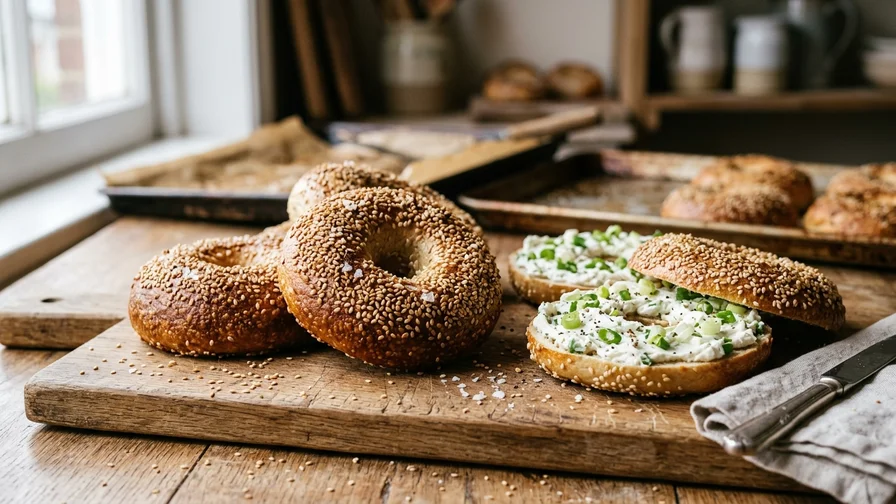
Known for its interior recreating a London atmosphere along with dozens of bagels and cream cheeses, London Bagel Museum Anguk Branch 📍. It was the No. 1 most-queued venue nationwide in CatchTable’s 2025 tally, and even as of November 2025, morning waits of around 100 parties continue. Most of those in line are international tourists.
| Item | Details |
|---|---|
| Address | 20 Bukchon-ro 4-gil, Jongno-gu, Seoul (Google Maps) |
| Transit | About a 5-minute walk from Exit 2 of Anguk Station on Subway Line 3 |
| Hours | Daily 07:00–18:00 (closes early once bread sells out; check the official Instagram before visiting. Verified October 2026) |
| Signature Menu (as of June 2026) |
|
| Highlights | Long wait times, a wide range of bagels and cream cheeses; take-out can be ordered separately without waiting |
Foreign visitors can register in CatchTable Global with no Korean phone number
Remote queuing is available through CatchTable only on weekdays (Mon–Thu) from 9 a.m., while Friday through Sunday is walk-in only. On-site queue registration begins around 7:30 a.m. International visitors can register through the CatchTable Global app without a Korean phone number. Dining in can take over an hour even on a weekday morning, so if you’re short on time, take out (no wait) and eat at a nearby park or your accommodation.
2. Onion Anguk
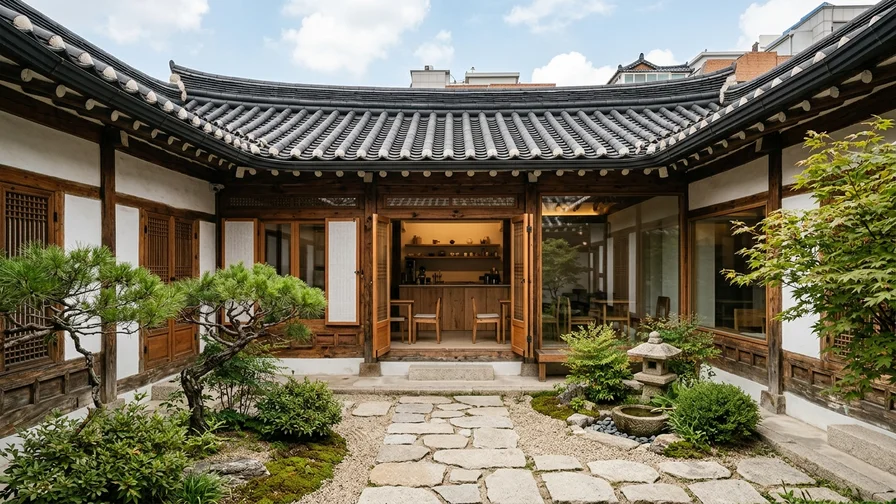
Built in a renovated hanok, Onion Anguk 📍 is a space that pairs a modern bakery with the original traditional rafters and wooden-floored daecheong (main hall) structure left intact. You can take off your shoes and sit on the wooden floor, or enjoy coffee and bread at a table in the courtyard. The variety of breads baked on-site is a defining feature.
| Item | Details |
|---|---|
| Address | 5 Gyedong-gil, Jongno-gu, Seoul (Google Maps) |
| Transit | A 1–3 minute walk from Exit 3 of Anguk Station on Subway Line 3 |
| Hours | Weekdays 07:00–22:00, weekends 09:00–22:00 (last order 21:30. As of June 2026) |
| Signature Menu (as of June 2026) |
|
| Highlights | Renovated hanok cafe, floor seating, a variety of baked goods, a spacious courtyard |
Grab a seat and look around first
The signature Pandoro is a bread shaped like a snow-capped mountain, coated thickly with powdered sugar that scatters a lot as you eat. Since each space within the hanok has its own atmosphere, it’s worth grabbing a seat first and taking a quick look around before ordering.
District 2: Seongsu (The Hub of Trends and Art)
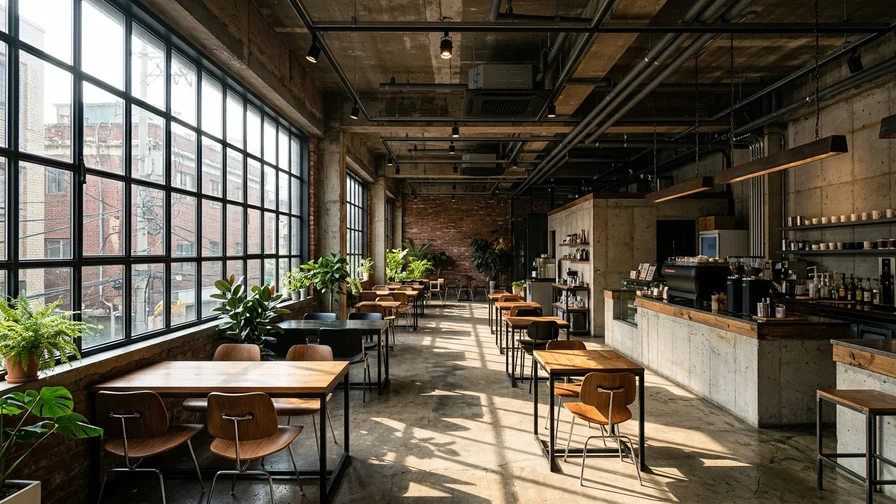
Seongsu-dong was once an industrial district packed with shoe factories and print shops, but it has now transformed into Seoul’s trendiest area, filling up with galleries, fashion brand showrooms, and cafes with distinctive concepts. There are many industrial-concept spaces that keep the old building structures intact, and it’s also the neighborhood with the most active brand pop-ups. For a roundup of just the atmospheric cafes in Ikseon-dong and Seongsu, see aesthetic cafes as well.
3. NUDAKE at HAUS NOWHERE SEOUL
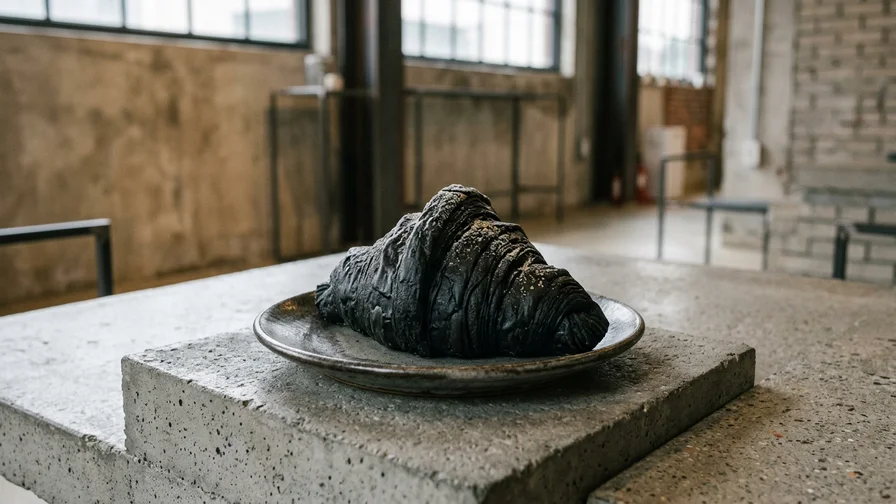
NUDAKE is a dessert brand created by the eyewear label Gentle Monster. It’s known for art-piece desserts that go beyond the usual form of a cake, like its signature “Peak,” a squid-ink pastry filled with matcha cream. The standalone Seongsu store is gone, and since September 2025 it has operated as a tea house on the 5th floor of Gentle Monster’s cultural complex, HAUS NOWHERE SEOUL 📍. The Gentle Monster and Tamburins stores on floors 1–3, along with large-scale sculptural installations, are free to view, making the whole building worth seeing.
| Item | Details |
|---|---|
| Address | 5th floor, HAUS NOWHERE SEOUL, 433 Ttukseom-ro, Seongdong-gu, Seoul (Google Maps) |
| Transit | About a 10-minute walk from Exit 3 of Seongsu Station on Subway Line 2 |
| Hours | Gift shop 11:00–21:00, tea lounge 12:00–21:00 (verified October 2026) |
| Signature Menu (as of June 2026) |
|
| Highlights | Artistically designed desserts, the same building as Gentle Monster and Tamburins, free exhibition-style stores |
Weekend waits run 45 min–2 hrs; go in the morning
With NUDAKE desserts, it’s hard to imagine the taste from the look alone, so it’s best to read the descriptions next to the menu carefully before ordering. Entry to the tea house is by on-site registration at the 1st-floor kiosk, and many reviews mention weekend waits stretching from 45 minutes to 2 hours, so a morning visit is recommended on weekends. Keep in mind it’s a tea-focused salon with no coffee.
4. Onion Seongsu
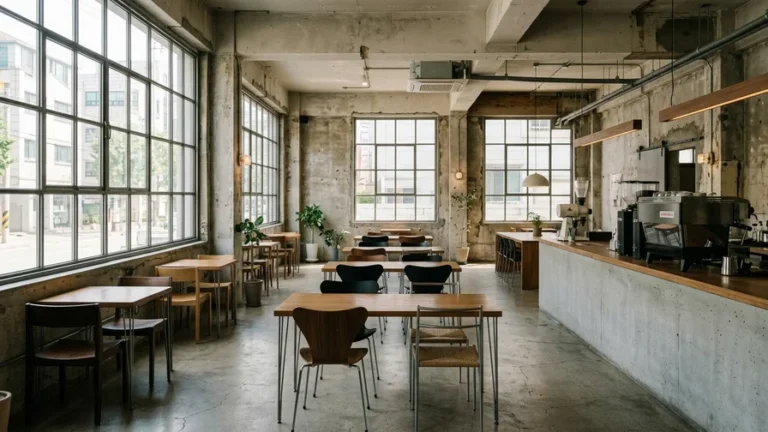
The same brand as the Anguk location but offering an entirely different experience, Onion Seongsu 📍. It’s a converted metal-parts factory built in the 1970s, and it keeps the worn, rough textures intact: rusted iron doors, broken walls, and concrete floors. It has a spacious interior and rooftop seating, and sells the same bakery lineup as the Anguk branch.
| Item | Details |
|---|---|
| Address | 8 Achasan-ro 9-gil, Seongdong-gu, Seoul (Google Maps) |
| Transit | A 2-minute walk from Exit 2 of Seongsu Station on Subway Line 2 |
| Hours | Weekdays 08:00–22:00, weekends 09:00–22:00 (last order 21:30. As of June 2026) |
| Signature Menu (as of June 2026) |
|
| Highlights | Converted factory, industrial interior, spacious layout, rooftop seating |
Order bread and drinks first, then find a seat
Visiting both Onion Anguk and Onion Seongsu lets you compare how the same “adaptive reuse” concept plays out in two different ways, a hanok versus a former factory. On a nice day, the rooftop is great for taking in the Seongsu-dong scenery. The bakery display area and the seating area are separate, so order your bread and drinks first, then find a seat.
District 3: Ikseon-dong and Jongno (A Trip Back in Time)
Ikseon-dong is one of the oldest hanok villages in Seoul. Unlike Bukchon, it has been fully reborn as a commercial space, with distinctive cafes, restaurants, and shops tucked away among narrow, winding alleys. It’s a place where even getting lost becomes a pleasant kind of exploration. Combine it with Jonggak and Insadong, just over a 10-minute walk away, and the dessert route flows naturally from evening into night.
5. Cheongsudang
From its very entrance, the bamboo and lanterns stand out at Cheongsudang 📍. There’s a small pond and a stone bridge inside the cafe, giving the feeling of having entered a forest. The signature menu features “stone-drip coffee” made with a millstone and a soufflé castella that starts baking only after you order.
| Item | Details |
|---|---|
| Address | 31-9 Donhwamun-ro 11na-gil, Jongno-gu, Seoul (Google Maps) |
| Transit | About a 5-minute walk from Exit 4 or 6 of Jongno 3-ga Station on Subway Lines 1, 3, and 5 |
| Hours | Daily 10:30–21:00 (last order 30 minutes before closing; depending on the season it may be listed as closing at 20:00, so check before visiting. As of June 2026) |
| Signature Menu (as of June 2026) |
|
| Highlights | Bamboo-forest concept interior, floor and standard seating, a dessert-focused menu |
Soufflé castella bakes after ordering, so allow time
Cheongsudang has a completely different mood by day and by night. In the daytime, sunlight filters through the bamboo leaves for a peaceful feel, while in the evening the lanterns are lit for a mysterious atmosphere. The soufflé castella starts baking after you order, so allow time when ordering. There’s a lot of floor seating you enter shoes-off, so comfortable shoes are a good idea.
6. Sulbing – Jonggak Branch
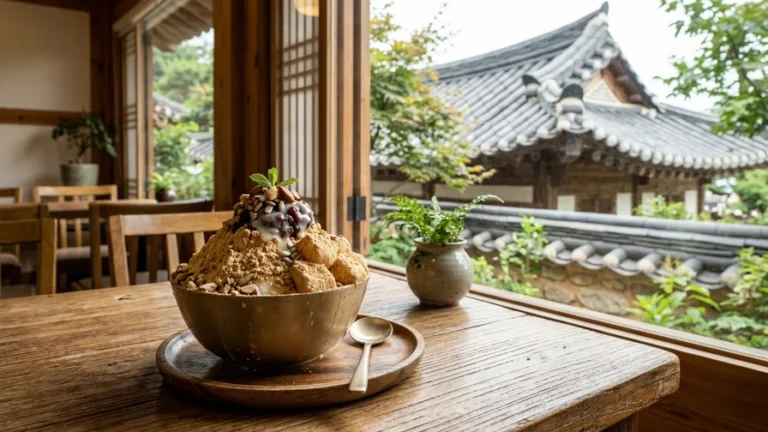
Sulbing is a leading chain that modernizes traditional Korean desserts. Its signature is the “Injeolmi Sulbing,” topped with bean powder and chewy injeolmi rice cake over snowy ice made from finely ground milk. It’s a great way to try bingsu, the Korean style of shaved ice, for the first time, and unlike trendy cafes it rarely has a long wait and stays open late into the night. The Jonggak branch is on the 2nd–3rd floors of a building along the main road by Jonggak Station 📍, making it a convenient stop after an Ikseon-dong or Insadong itinerary. If you want to learn more about injeolmi and Korean desserts, see injeolmi and Korean dessert cafes.
| Item | Details |
|---|---|
| Address | 2nd–3rd floors, Youngan Building, 74 Jongno, Jongno-gu, Seoul (Google Maps) |
| Transit | About a 2-minute walk from Jonggak Station on Subway Line 1, or about 10 minutes on foot from Jongno 3-ga Station (Ikseon-dong) |
| Hours | Daily 11:30–23:30 (varies by branch; check before visiting. As of June 2026) |
| Signature Menu (as of June 2026) |
|
| Highlights | A nationwide chain with the same menu in any city, almost no wait, open late into the night |
Solo visitors: ask about smaller sizes or toast
One bowl of bingsu is sized to share among 2–3 people. If you’re visiting solo, check whether the store has a smaller size or toast options. Injeolmi is a glutinous rice cake and very chewy, so it’s best eaten slowly. Even if your plans shift and you end up in another neighborhood, you can find a nearby branch anywhere in the country by searching “Sulbing” in a map app.
Since Seoul’s cafes change quickly, hours and prices can shift, so double-check each cafe’s official social media or a map app before you go.