Changdeokgung Palace & Secret Garden (UNESCO 1997)
Contents
- What the 1997 Inscription Means: Palace Architecture That Works With the Terrain
- Key Spaces of the Main Palace: The Stage of a King’s Daily Life
- Huwon: The Secret Garden Where Advance Booking Is Practically a Must
- General Admission to the Main Palace and the Combined Ticket
- Free Admission in Hanbok and Nearby Rental Shops
- Getting There and Nearby Routes
- Practical Tips for Foreign Travelers
- Frequently Asked Questions (FAQ)
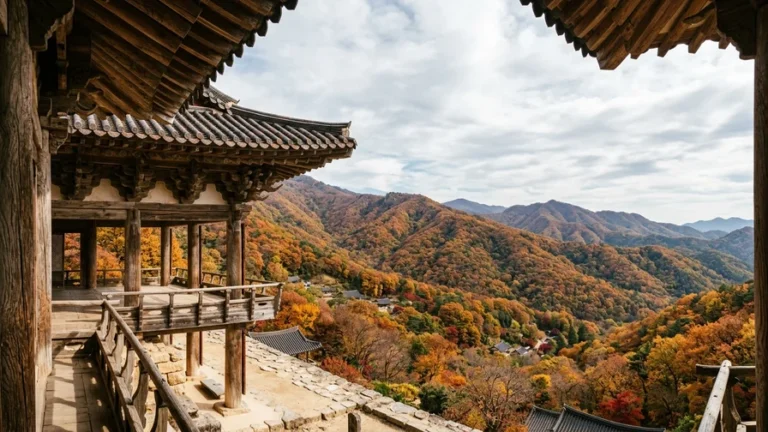
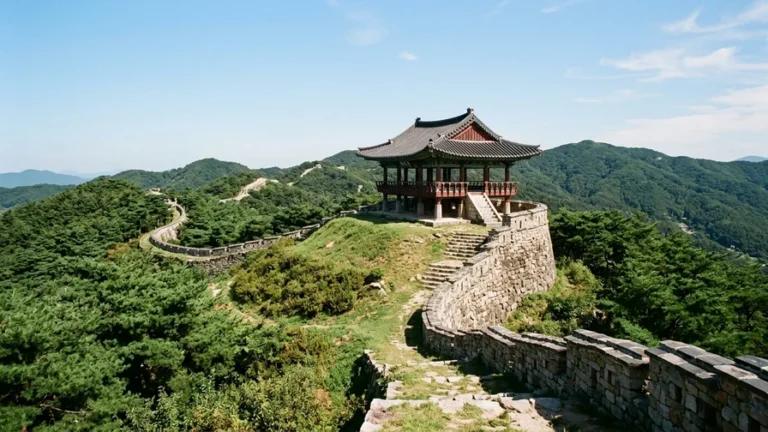
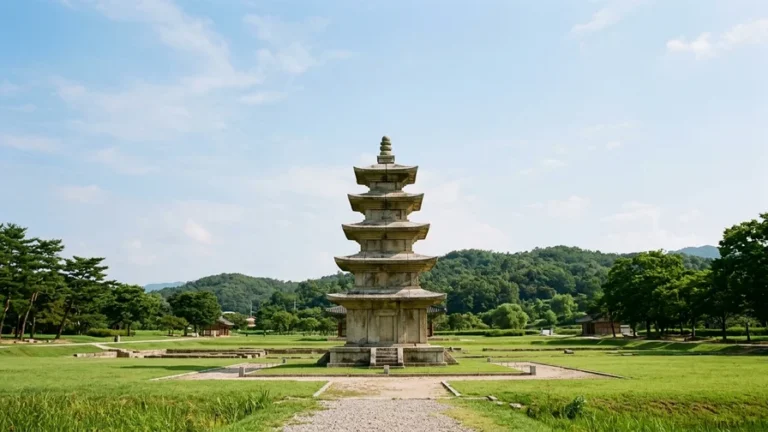
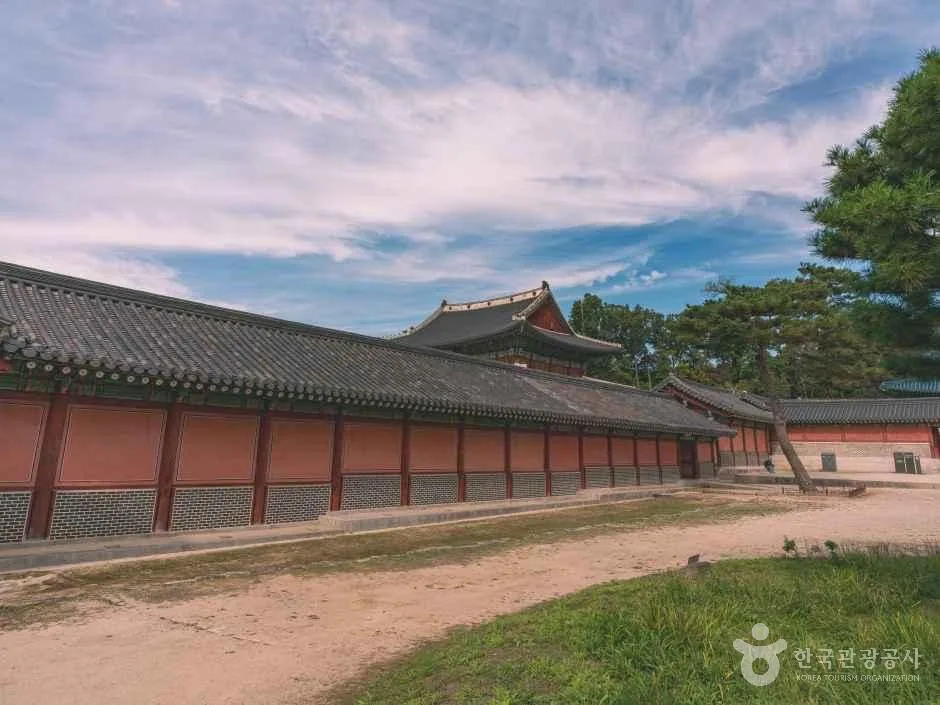
Changdeokgung Palace is one of Seoul’s essential heritage sites, inscribed on the UNESCO World Heritage List in 1997 (official UNESCO listing page). First built in 1405 by King Taejong, destroyed during the Japanese invasions of 1592, and rebuilt in 1610, it served as the principal palace (beopgung) where Joseon kings resided longest — about 270 years. Behind it lies Huwon, a masterpiece of Korean garden architecture that follows the natural terrain, and which can only be entered on a guide-led tour.
- Huwon (the Secret Garden) is capped at 100 visitors per session: 50 online-reserved spots + 50 same-day on-site tickets
- During peak season, online allocations sell out instantly — advance booking is essential when planning a visit
- Buildings arranged to suit the natural terrain — the core reason for UNESCO inscription
- About a 5-minute walk from Exit 3 of Anguk Station (Subway Line 3)
- Close to Jongmyo Shrine, Bukchon Hanok Village, and Insadong — ideal for a one-day itinerary
What the 1997 Inscription Means: Palace Architecture That Works With the Terrain
The heart of Changdeokgung’s inscription is its layout, designed to harmonize with the surrounding natural environment. Unlike other East Asian palaces, which were typically built on flat ground along a symmetrical axis, Changdeokgung sits naturally at the foot of Mount Bugak’s Eungbong ridge without forcing the terrain. UNESCO praised it as “an outstanding example of East Asian palace architecture and garden design, integrated and in harmony with the surrounding nature,” recognizing inscription criteria (ii), (iii), and (iv).
- Uses the northern Eungbong ridge terrain as-is, with minimal artificial intervention
- Hills preserved, valleys turned into ponds
- In Huwon, the existing forest, valleys, rocks, and streams are kept, with pavilions added only where needed
- Reflects the traditional Korean view of nature as something to coexist with
Key Spaces of the Main Palace: The Stage of a King’s Daily Life
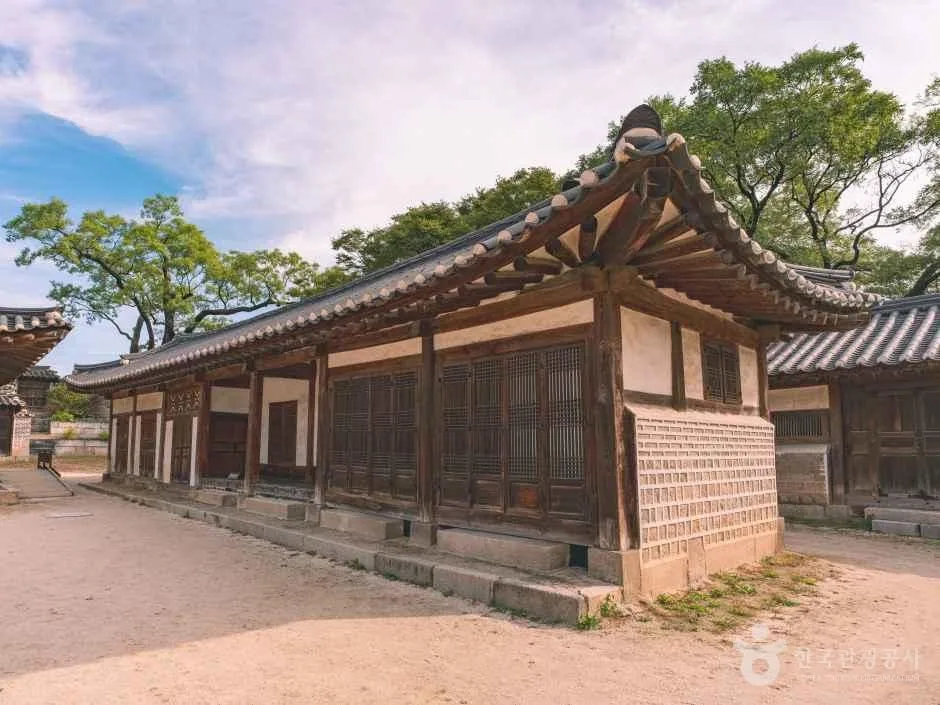
The main palace area was the space for the public duties and private life of the king and the royal family. Understanding each building’s function adds depth to your visit. If you’re short on time, don’t miss these two: the folding screen behind the throne in Injeongjeon, and the blue-tiled roof of Seonjeongjeon — both are scenes unique to Changdeokgung that you’ll rarely see at other palaces.
Injeongjeon Hall
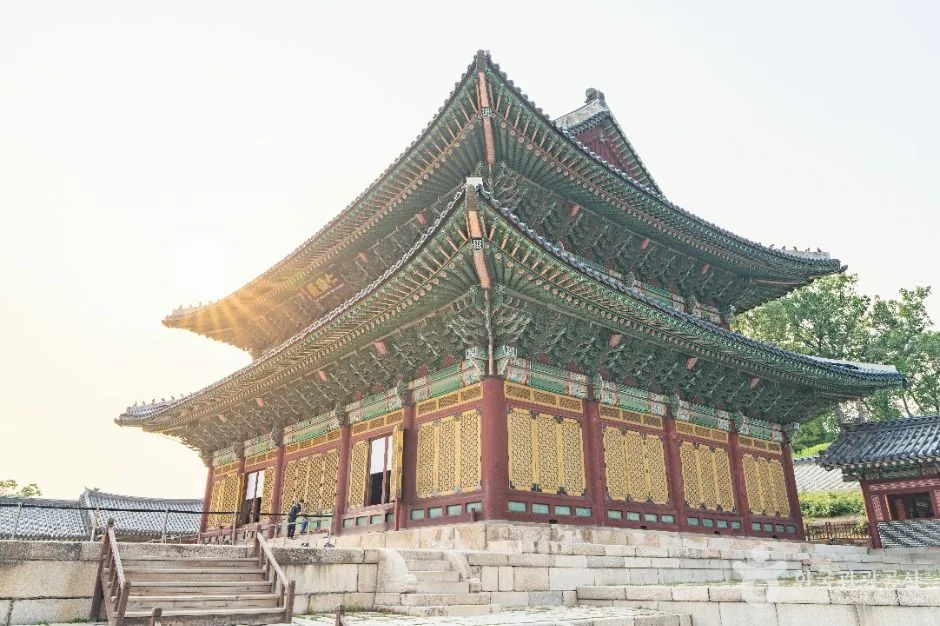
- The throne hall (jeongjeon) — the central building of Changdeokgung
- The venue for official state events such as coronations, royal greetings, and receptions for foreign envoys
- Two stories on the outside, but a single tall-ceilinged hall inside, emphasizing authority
- The front courtyard (jojeong) is lined with rank stones (pumgyeseok) marking each official’s position by grade
- Behind the throne stands the Irworobongdo screen (Sun, Moon, and Five Peaks), symbolizing royal authority and the prosperity of the dynasty
Seonjeongjeon Hall
- The pyeonjeon — the official office where the king discussed state affairs with his ministers
- The only major hall with a blue-tiled roof, easily identifiable from afar
- Blue tiles were a costly material, marking the building’s importance
- Smaller in scale than Injeongjeon, but the true center of politics in practice
Daejojeon Hall
- The queen’s living quarters and the official royal bedchamber (chimjeon)
- The roof has no top ridge beam — a symbolic choice tied to the king being likened to a dragon
- Built around the bedroom, with several rooms and wooden floors connected in a complex layout
- The east annex, Heungbokheon, is where the final royal council was held when Korea lost its sovereignty on August 22, 1910 (the Japan–Korea Annexation Treaty), and also where the last emperor, Sunjong, passed away in 1926
Nakseonjae Complex
- A study and reception hall built in 1847 by King Heonjong, the 24th monarch; the following year, Seokbokheon — the residence of his concubine Lady Kim (Gyeongbin) — was added
- Built without dancheong (decorative coloring), giving it a plain, refined elegance
- A structure where Nakseonjae, Seokbokheon, and Sugangjae are connected by corridors
- Empress Sunjeonghyo, the last empress of Joseon, lived in Seokbokheon until her death in 1966; Princess Deokhye and Lady Yi Bangja (wife of Crown Prince Uimin) also spent their final years here
Huwon: The Secret Garden Where Advance Booking Is Practically a Must
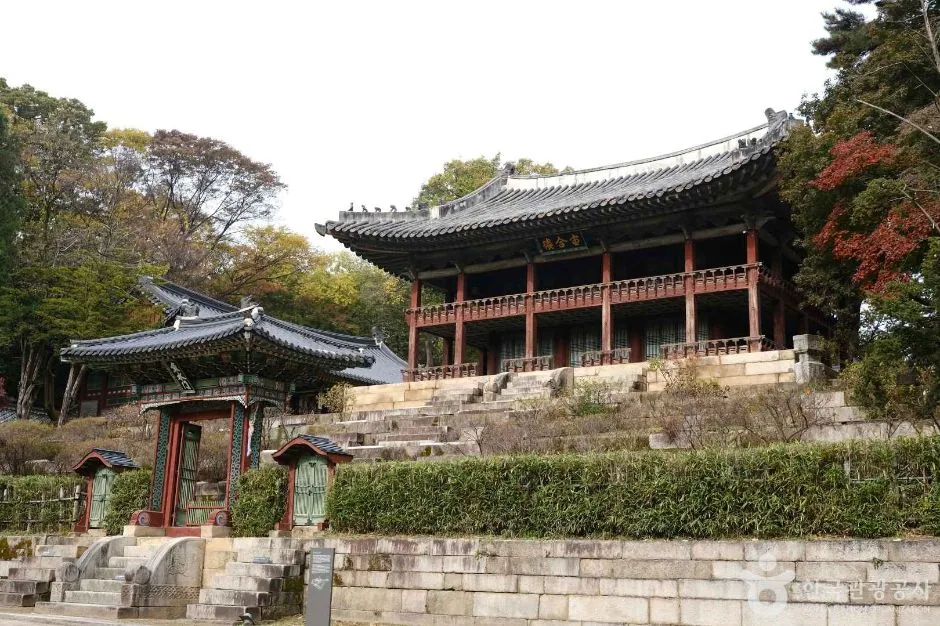
The highlight of any visit, Huwon is better known as the Secret Garden. It was a forbidden garden reserved for the royal family, and can only be explored on a guide-led tour — for which competition is fierce. Each session is capped at 100 people, split into 50 online-reserved tickets and 50 same-day on-site tickets (as of June 2026, Korea Heritage Service).
How to Book in Advance
- Booking channel: select the Huwon special tour on the Royal Palaces & Tombs Center integrated reservation page for Changdeokgung (it connects to the Eutourus booking system)
- Booking opens: at 10:00 a.m. KST, 6 days before your desired visit date (excluding the visit day; first come, first served)
- Booking steps:
- Select the Changdeokgung Huwon special tour on the integrated reservation page
- Choose your visit date and session (time)
- Choose your language (Korean, English, Chinese, Japanese)
- Choose the number of people (up to 10 per person, once per day)
- Enter your personal details and pay (credit card)
- Fee: 5,000 won (about $3.6) per adult, 2,500 won for ages 7–18. A separate 3,000 won palace-grounds ticket is also required (you enter Huwon by passing through the palace-grounds area)
- Payment deadline: if not paid by the payment cutoff (within 24 hours), the reservation is automatically cancelled
- On-site sales: 50 tickets per session, sold first come, first served at the ticket office up to 15 minutes before that session’s entry time. On peak-season weekends they often sell out by morning
- Entry rules: it’s recommended to pass through the entrance gate at least 15 minutes before your tour starts (while Donhwamun is under restoration, visitors enter through Geumhomun on the western side; the Korea Heritage Service announced this arrangement through 2026, so confirm the current entrance with the Changdeokgung Management Office at 02-3668-2300, checked October 2026); if you miss the time, neither entry nor a refund is possible
- Foreign-language sessions cannot be booked by Korean nationals (Korean nationals may enter — up to 2 people — if accompanying a foreign visitor)
Guided Tour Sessions by Language (as of June 2026)
- Korean: every hour on the hour from 10:00 (through the 16:00 session from March–October; reduced sessions in winter)
- English: 10:30, 11:30, 14:30 (an extra 15:30 session from March–November)
- Japanese: Wednesdays, Fridays, and Sundays at 13:30
- Chinese: Tuesdays, Thursdays, and Saturdays at 12:30
Log in right at 10:00 a.m. when booking opens: The toughest competition is on weekends during cherry-blossom season in April and peak fall foliage from late October to early November. Logging in right at 10:00 a.m. KST when booking opens improves your odds. If you don’t get in, cancellation tickets occasionally appear, so check back often; and if there’s still nothing, lining up early in the morning for the same-day on-site tickets remains an option.
The Buyongji, Gwallamjeong, Jondeokjeong, and Ongnyucheon Tour Route
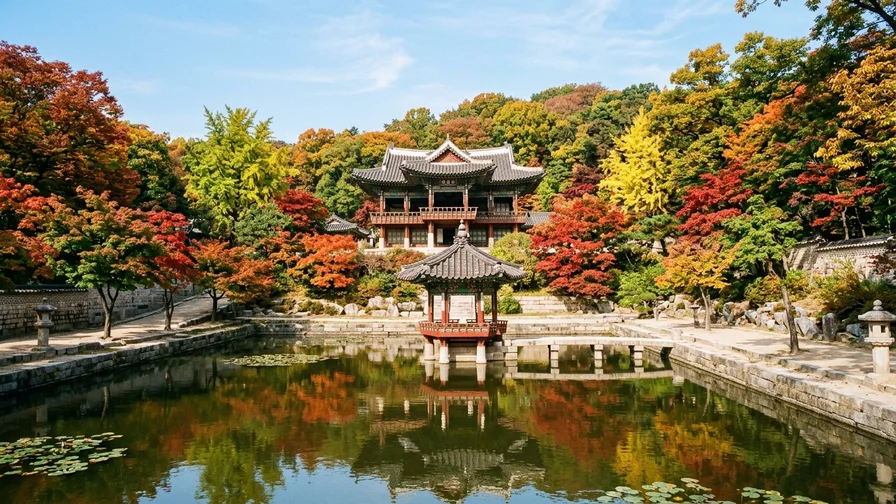
The tour walks roughly 2.5 km of forest paths with a guide over about 90 minutes, taking in the main sights. During the hottest months (July–August) and coldest months (December–February), it’s shortened to about 70 minutes, and the innermost Ongnyucheon section is excluded. There are slopes and stairs, so comfortable shoes are a must. If you can pick just one spot, make it the first stop, Buyongji — the cross-shaped pavilion over the square pond, framed by the two-story pavilion on the hill above, is the signature scene of Huwon.
- Buyongji Pond and Juhamnu Pavilion: reflecting the “round heaven, square earth” (cheonwonjibang) philosophy, a round island sits within the square pond. To the south, Buyongjeong has a cross (十) shape; to the north on the hill, Juhamnu stands on the former site of the Gyujanggak royal library
- Aeryeonji Pond and Bullomun Gate: a restful spot for admiring lotus flowers — passing through Bullomun, carved from a single stone, is said to grant longevity
- The Jondeokjeong area: the fan-shaped Gwallamjeong and the hexagonal Jondeokjeong. The plaque on the ceiling, “Mancheonmyeongwol Juinong Jaseo,” reflects the governing philosophy of King Jeongjo
- The Ongnyucheon Stream area: the deepest part of Huwon, with a U-shaped channel and a small waterfall. Soyojeong, Taegeukjeong, and Cheonguijeong cluster here. Cheonguijeong is the only thatched-roof structure within the palace
General Admission to the Main Palace and the Combined Ticket
The main palace area, excluding Huwon, can be visited without a reservation. Buy at the ticket office, or get the combined ticket if you plan to visit all of Seoul’s major palaces — it’s the economical choice. The prices below are as of June 2026.
| Category | Fee (adult) | Notes |
|---|---|---|
| Changdeokgung palace grounds | 3,000 won (about $2.1) | Excludes Huwon. For foreign visitors, ages 19–64 pay; ages 18 and under and 65 and over are free (for Korean nationals, ages 24 and under and 65 and over are free) |
| Huwon special tour | 5,000 won (about $3.6) | Palace-grounds ticket separate. Ages 7–18 pay 2,500 won; ages 65 and over also pay |
| Combined Palace Ticket | 6,000 won (about $4.3) | Admits you to Gyeongbokgung, Changdeokgung, Changgyeonggung, Deoksugung, and Jongmyo. Valid for 6 months from purchase. Changdeokgung’s Huwon is not included — Huwon requires a separate booking |
- Opening hours: opens at 09:00, with closing times varying by season (Feb–May and Sep–Oct until 18:00 / Jun–Aug until 18:30 / Nov–Jan until 17:30); ticket sales and last entry end 1 hour before closing
- Closed days: every Monday (if a Monday falls on a public holiday or substitute holiday, the palace opens that day and closes instead on the first following non-holiday)
Moonlight Tour: A Night Tour Offered Only in Spring and Fall
The Moonlight Tour is a popular program where you walk through Changdeokgung at night with an expert guide. The first-half 2026 run (April 16 to May 31, Thursday to Sunday) has already ended; the participation fee was 30,000 won (about $21) per person. It’s so popular that it’s not first come, first served — instead, you enter a lottery on TicketLink, and only winners can book (up to 2 tickets per person), with any remaining seats released afterward on a first-come basis; special English, Chinese, and Japanese sessions are booked separately on CreateTrip. Whether a second-half (autumn) run is offered, and its dates, are announced on the Royal Palaces & Tombs Center events page (verified October 2026).
Free Admission in Hanbok and Nearby Rental Shops
If you wear 한복 (Korean traditional dress) properly, you can enter Seoul’s major palaces and Jongmyo for free. It’s a popular experience among foreign travelers.
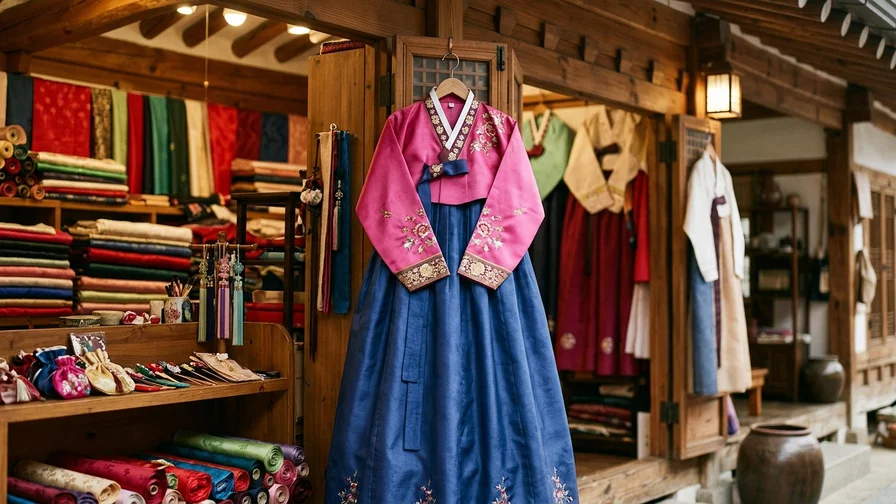
- Free admission rules: you must wear both a top (jeogori) and a bottom (skirt or trousers); everyday 한복 and modernized 한복 are accepted
- Rental shops: clustered near Donhwamun Gate, around Anguk Station, and at the entrance to Bukchon Hanok Village
- Rental cost: typically 15,000 won (about $11) to 30,000 won (about $21) for 2 hours, with most accessories such as hair ornaments and bags included
Getting There and Nearby Routes
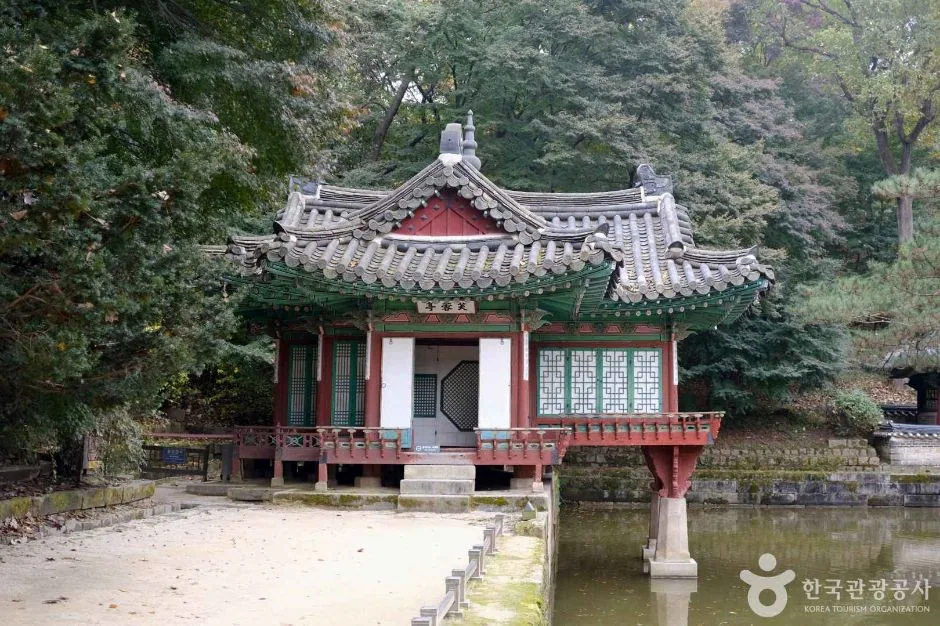
Changdeokgung sits in central Seoul, so it’s easy to reach by public transit and convenient to combine with major attractions.
- Address: 99 Yulgok-ro, Jongno-gu, Seoul (view on Google Maps)
- Subway: about a 5-minute walk from Exit 3 of Anguk Station (Line 3) to the main gate, Donhwamun (during the Donhwamun restoration, entry is through Geumhomun on the western side, so follow the on-site signs). You can also walk about 10 minutes from Exit 7 of Jongno 3-ga Station (Lines 1, 3, 5)
- Bus: get off at the Changdeokgung / Seoul Donhwamun Gugakdang stop (trunk lines 109, 151, 162, 171, 172, 272, 710 / branch line 7025)
- Recommended connecting routes:
- Changdeokgung → Jongmyo Shrine: just across the road to the south, the shrine of the Joseon kings’ spirit tablets, valued for its architecture and ancestral rites
- Changdeokgung → Bukchon Hanok Village: follow the western wall to reach a dense neighborhood of traditional hanok houses
- Changdeokgung → Insadong and Ikseon-dong: south of Anguk Station for traditional crafts and tea houses, and west through the alleys for cafés and restaurants
Meals and Cafés After Your Visit
The areas around Anguk Station, Bukchon, and Samcheong-dong are packed with proven restaurants and cafés, making the route after your visit smooth. Everything below is confirmed to be in operation (as of June 2026; many restaurants in the Bukchon area close on Sundays, so check the day of the week).
- Hanmoechon 📍: 24-4 Bukchon-ro, Jongno-gu, Seoul — a vegetable-focused Korean set meal (hanjeongsik) served in a hanok, with seasoned greens, savory pancakes, and stews laid out together as a Korean-style course meal. Closed Sundays
- Anjip 📍: 6-6 Bukchon-ro, Jongno-gu, Seoul — a home-style baekban eatery right beside Anguk Station; the signature dishes are kimchi-stew and soybean-paste-stew set meals, where you taste a Korean family’s everyday weekday table just as it is. Closed Sundays
- Samcheongdong Sujebi 📍: 101-1 Samcheong-ro, Jongno-gu, Seoul — a long-running spot since 1982; its signature dishes are sujebi (a Korean-style soup with hand-torn pieces of wheat dough) and potato pancakes made from 100% potato batter
- The Hanok That Smith Loves 📍: 22-7 Samcheong-ro, Jongno-gu, Seoul — Italian dining enjoyed in a hanok space; seasonal seafood pasta is the signature, a good alternative for days when Korean food feels like too much
- Onion Anguk 📍: 5 Gyedong-gil, Jongno-gu, Seoul — a bakery café converted from a hanok; its signature breads are pandoro (an Italian leavened bread dusted with powdered sugar like snow) and salt bread, a popular spot with long lines
- Dot Blanket 📍: 22 Yunboseon-gil, Jongno-gu, Seoul — a brunch café near Exit 1 of Anguk Station, centered on salads and open-faced toasts, well suited to a late breakfast
Practical Tips for Foreign Travelers
- Free guided tours of the palace grounds (as of June 2026; departing in front of the Howicheong opposite Injeongmun, about 50 minutes): English Tue–Sun 10:15, 13:15 / Chinese Tue, Thu, Sat 10:00 / Japanese Wed, Fri, Sun 11:00 / Korean every open day (closed Mondays) 09:30, 11:30, 13:30, 15:30 (an extra 16:30 from March–October). This is separate from the Huwon tour and requires no separate reservation
- Kakao T: Kakao T accepts overseas-issued cards (Visa, Mastercard, American Express, JCB), but sign-up needs SMS verification and some overseas SIMs don’t receive the code (verified October 2026). If verification fails, hail a taxi on the street or have your hotel book one. Show the driver “Changdeokgung” or “99 Yulgok-ro, Jongno-gu, Seoul”
- Traveler support service: the Korea Tourism Organization’s 1330 travel hotline offers 24/7, year-round multilingual service (dial 1330)
Frequently Asked Questions (FAQ)
- Can I visit Huwon without a guided tour?
No. To protect cultural heritage and the ecosystem, it’s allowed only on guide-led tours at set times. - Can I buy Huwon tickets on-site?
Yes. 50 tickets per session are sold same-day at the ticket office on a first-come basis, up to 15 minutes before that session’s entry. However, on peak-season weekends they often sell out by morning, so online advance booking is safer. - How long does it take to see both Changdeokgung and Huwon?
The main palace takes about 1 to 1.5 hours, and the Huwon tour about 90 minutes (shortened to about 70 minutes in July–August and December–February). Including transitions and rest, allow at least 3–4 hours. - Can I take photos or video inside the palace?
Photography for personal use is mostly allowed. Flash is prohibited inside the halls, and tripods may be restricted as they block foot traffic. - Are there restaurants or cafés inside the palace?
You cannot eat inside the palace, and bringing in food is prohibited. For meals, we recommend the restaurant districts around Anguk Station, Insadong, and Bukchon. - What’s it like to visit by wheelchair or stroller?
The main paths of the palace are mostly level, but some halls have steps. Huwon has many steep dirt paths and stairs, making it very difficult to navigate. - What’s the best season to visit?
Each has its charm: spring (April–May) for apricot and cherry blossoms, summer (July–August) for greenery and lotus flowers at Buyongji, autumn (October–November) for peak foliage in Huwon, and winter (December–February) for snowy scenery.
Hours, prices, and booking rules are subject to change, so it’s a good idea to double-check the latest information on the Royal Palaces & Tombs Center official information page before your visit (Changdeokgung main line 02-3668-2300).
Some photos © Korea Tourism Organization (KOGL Type 1)
Related reads in this series
- 17 UNESCO World Heritage Sites in Korea
- Haeinsa Janggyeong Panjeon & Tripitaka Koreana (UNESCO 1995)
- Gyeongju UNESCO World Heritage (1995, 2000)
- Jongmyo Shrine (UNESCO 1995)
- Andong Hahoe & Gyeongju Yangdong Villages (UNESCO 2010)
- Namhansanseong Fortress (UNESCO 2014)
- Baekje Historic Areas (UNESCO 2015)
- Sansa, 7 Buddhist Mountain Temples in Korea (UNESCO 2018)
- Bangudae Petroglyphs (UNESCO 2025)