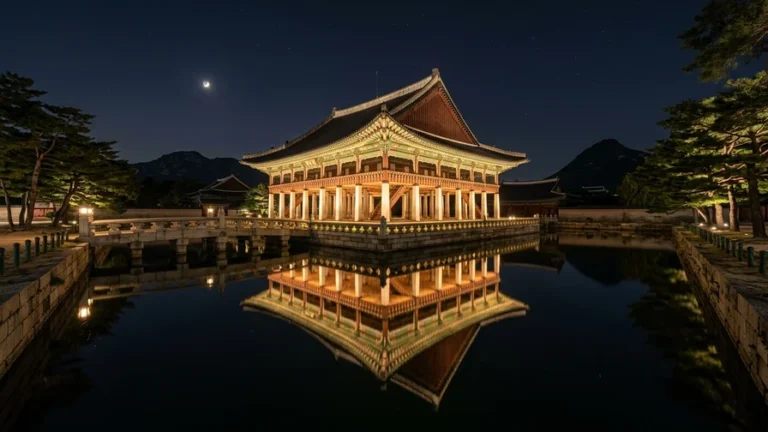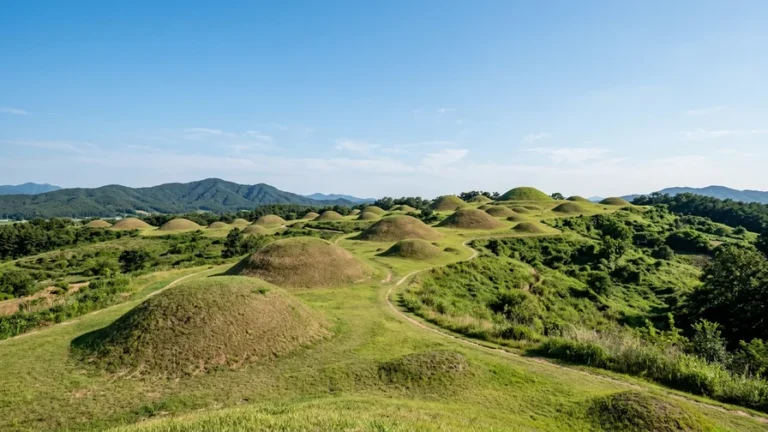
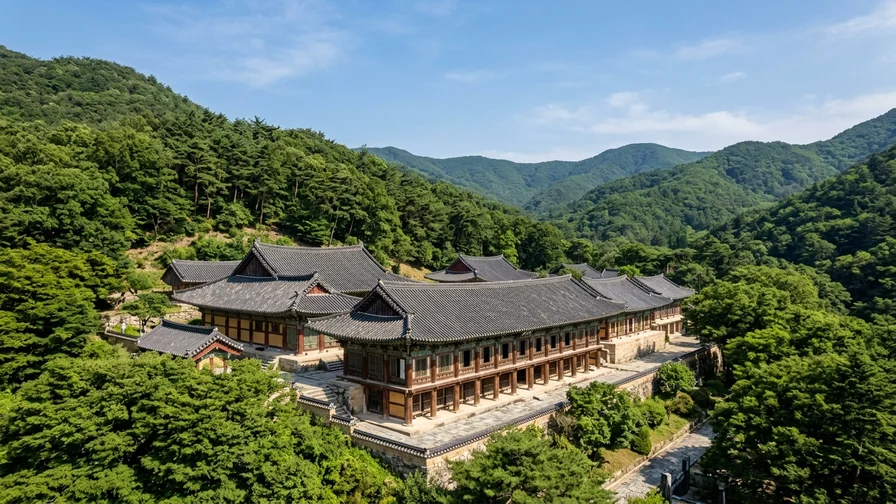
Haeinsa Janggyeong Panjeon & Tripitaka Koreana (UNESCO 1995)
Contents
- Korea’s First UNESCO Inscription in 1995 — What It Means
- The Tripitaka Koreana — 16 Years from 1236, 50 Million Characters
- The Architectural Science of Janggyeong Panjeon — 4 Principles That Made Centuries of Preservation Possible
- The Tour Route — Exterior Viewing Only (Iljumun → Bonghwangmun → Haetalmun → Gugwangnu → Daejeokgwangjeon → Janggyeong Panjeon exterior, 1–1.5 hours)
- Inside Beopbojeon Hall — Reservation Required, Every Sunday
- Visitor Information — Admission, Parking, Hours, English Assistance
- Transportation (Seoul, Daegu, Busan, Driving, Tips for International Travelers)
- Nearby Restaurants — The Chiin-ri Dining District
- Connecting to Gayasan National Park — Sorigil, the Gayasan Summit, and the Reservation-Based Manmulsang Course
- Templestay — How International Travelers Can Apply for a 2-Day, 1-Night Program
- Seasonal and Timing Tips
- Frequently Asked Questions (FAQ)
The Janggyeong Panjeon of Haeinsa Temple is a structure that has preserved the Tripitaka Koreana — over 50 million characters of Buddhist scripture carved onto 81,258 wooden printing blocks — for more than 770 years. As one of the first sites in Korea to be inscribed on the UNESCO World Heritage List in 1995, it is far more than a simple temple building; it is a facility where sophisticated preservation science is concentrated.
- Core heritage: The 81,258 woodblocks of the Tripitaka Koreana and the storage building, Janggyeong Panjeon. They are separately inscribed as a Memory of the World (2007) and a World Cultural Heritage Site (1995).
- Preservation science: Preserved for centuries using only natural ventilation and floor structure, without any artificial temperature or humidity control devices.
- Visitor information: General admission is free (the admission fee was abolished in May 2023). Entry inside the Janggyeong Panjeon is restricted. Up-close viewing inside Beopbojeon Hall is possible through a reservation-based tour held every Sunday.
Korea’s First UNESCO Inscription in 1995 — What It Means
In December 1995, the Haeinsa Temple Janggyeong Panjeon, along with Seokguram Grotto, Bulguksa Temple, and Jongmyo Shrine, became one of the first sites in Korea to be inscribed on the UNESCO World Cultural Heritage List (inscription no. 737). It is significant as the first time Korean cultural heritage was officially recognized worldwide for its value. The reason for inscription was not that it is an old wooden building, but that it is the most scientific and ingenious structure ever built for the preservation of the Tripitaka Koreana records.
- Janggyeong Panjeon (the building): Inscribed as a World Cultural Heritage Site in 1995.
- Tripitaka Koreana woodblocks: Inscribed as a Memory of the World in 2007 under the title “Printing woodblocks of the Tripitaka Koreana and miscellaneous Buddhist scriptures.”
- Rarity: A rare case in which a World Cultural Heritage Site and a Memory of the World coexist in one place.
The Tripitaka Koreana — 16 Years from 1236, 50 Million Characters
The Tripitaka Koreana is also called the Goryeo Daejanggyeong. It was created during the national crisis of the Mongol invasions, carrying the wish to overcome the country’s hardship through the power of the Buddha.
- Production period: Begun in 1236 (the 23rd year of King Gojong of Goryeo) and completed in 1251 (the 38th year of King Gojong). A total of 16 years.
- Number of woodblocks: 81,258 in total.
- Number of characters: Approximately 52 million.
- Errors and typos: Extremely rare. Despite the enormous volume, it is considered virtually free of errors.
- Materials: Wild cherry wood (about 64%), birch-leaf pear, and others. It was once thought to be birch, but this theory was revised through wood cell analysis.
- Processing: The felled timber is said to have been soaked in seawater, then boiled in salt water and dried in the shade. This was to prevent warping and decay.
- Condition: Passed down for over 770 years without loss.
The Architectural Science of Janggyeong Panjeon — 4 Principles That Made Centuries of Preservation Possible
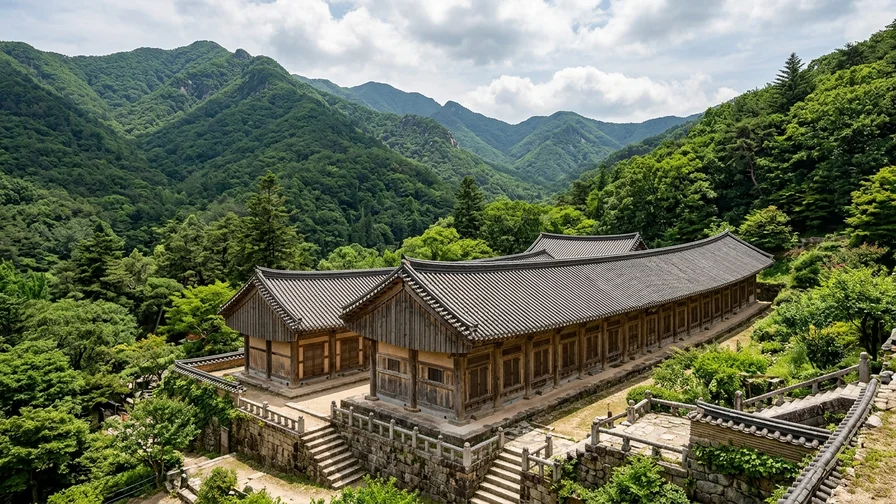
It was designed to keep the interior temperature and humidity constant using only natural principles, without modern technology. The current buildings were constructed around 1488 during the reign of King Seongjong of Joseon, making them the oldest structures at Haeinsa Temple. Four buildings — Sudarajang (south), Beopbojeon (north), Dongsagan Panjeon, and Seosagan Panjeon — are arranged in an elongated rectangle.
Ventilation Through Differing Window Sizes
- South wall: Small upper windows, large lower windows.
- North wall: Large upper windows, small lower windows.
- Air flow: Fresh air enters through the large lower windows on the south side, circulates between the panga (woodblock shelves), and warmed air is expelled through the large upper windows on the north side.
- Effect: 24-hour natural ventilation keeps the woodblocks in optimal condition.
Humidity Control Through Layered Flooring
- Structure: The ground was dug deep and layered with sand, lime powder, salt, and charcoal.
- Function: Absorbs moisture when humid, releases it when dry. Maintains optimal humidity without any artificial devices.
- Charcoal: Also serves to repel pests.
Location and Orientation
- Site: Near an altitude of 655m on Gayasan Mountain, the highest point within the Haeinsa Temple grounds.
- Environment: Frequently foggy, but airy throughout the year.
- Layout: Facing southwest. The arrangement was calculated based on the sun’s altitude and sunlight exposure, avoiding direct summer sunlight while letting in winter sun.
A Case Modern Technology Could Not Match
- In the 1970s, a modern concrete storage facility was built, and some woodblocks were experimentally relocated.
- Result: Mold and moisture problems occurred, and the woodblocks were returned to the original Janggyeong Panjeon.
- Significance: A prime example showing that the architectural science of Goryeo and Joseon artisans surpassed modern artificial control technology.
The Tour Route — Exterior Viewing Only (Iljumun → Bonghwangmun → Haetalmun → Gugwangnu → Daejeokgwangjeon → Janggyeong Panjeon exterior, 1–1.5 hours)
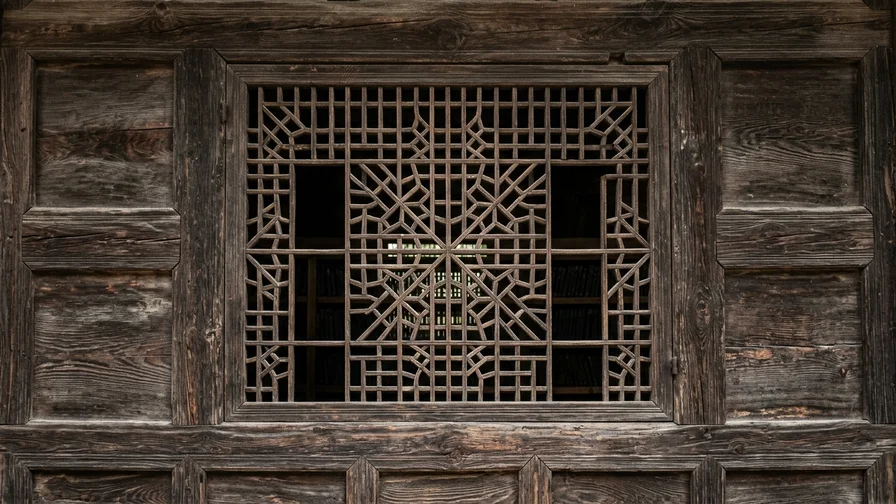
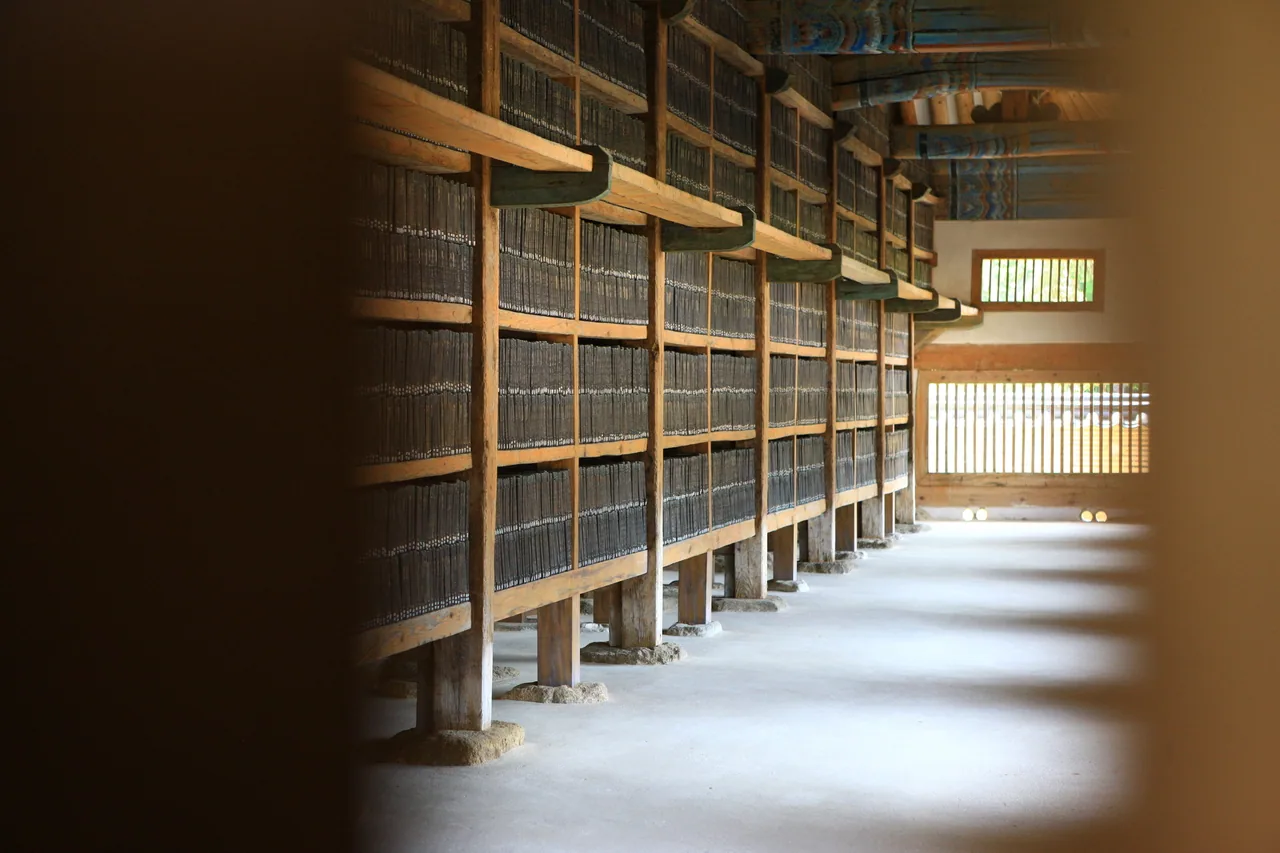
The very path from entering the grounds to reaching the Janggyeong Panjeon is a pilgrimage route. General visitors cannot enter inside and can only view the woodblock shelves through the lattice windows. The whole tour takes about 1 to 1.5 hours.
- Iljumun Gate: The first gate. It bears the plaque “Gayasan Haeinsa.”
- Bonghwangmun Gate: The second gate. The Four Heavenly Kings guard the temple on either side.
- Haetalmun Gate: The third gate. Its meaning is entering the world of liberation, freed from worldly afflictions.
- Gugwangnu Pavilion: A large pavilion behind Haetalmun Gate. Passing through it leads to the courtyard in front of Daejeokgwangjeon Hall.
- Daejeokgwangjeon Hall: The main worship hall. It enshrines Vairocana Buddha.
- Janggyeong Panjeon: At the highest point behind Daejeokgwangjeon Hall. You can approach up to the lattice windows at the entrance of Sudarajang and view the shelves of the Tripitaka woodblocks.
One thing you must see: The ventilation windows of differing sizes on the exterior walls of the Janggyeong Panjeon. On the south wall the lower windows are larger, while on the north wall the upper windows are larger, and this asymmetry is the key to a design that circulates air without machinery. Walking once around the building to compare the south and north windows lets you see the principle behind centuries of preservation with your own eyes.
Inside Beopbojeon Hall — Reservation Required, Every Sunday
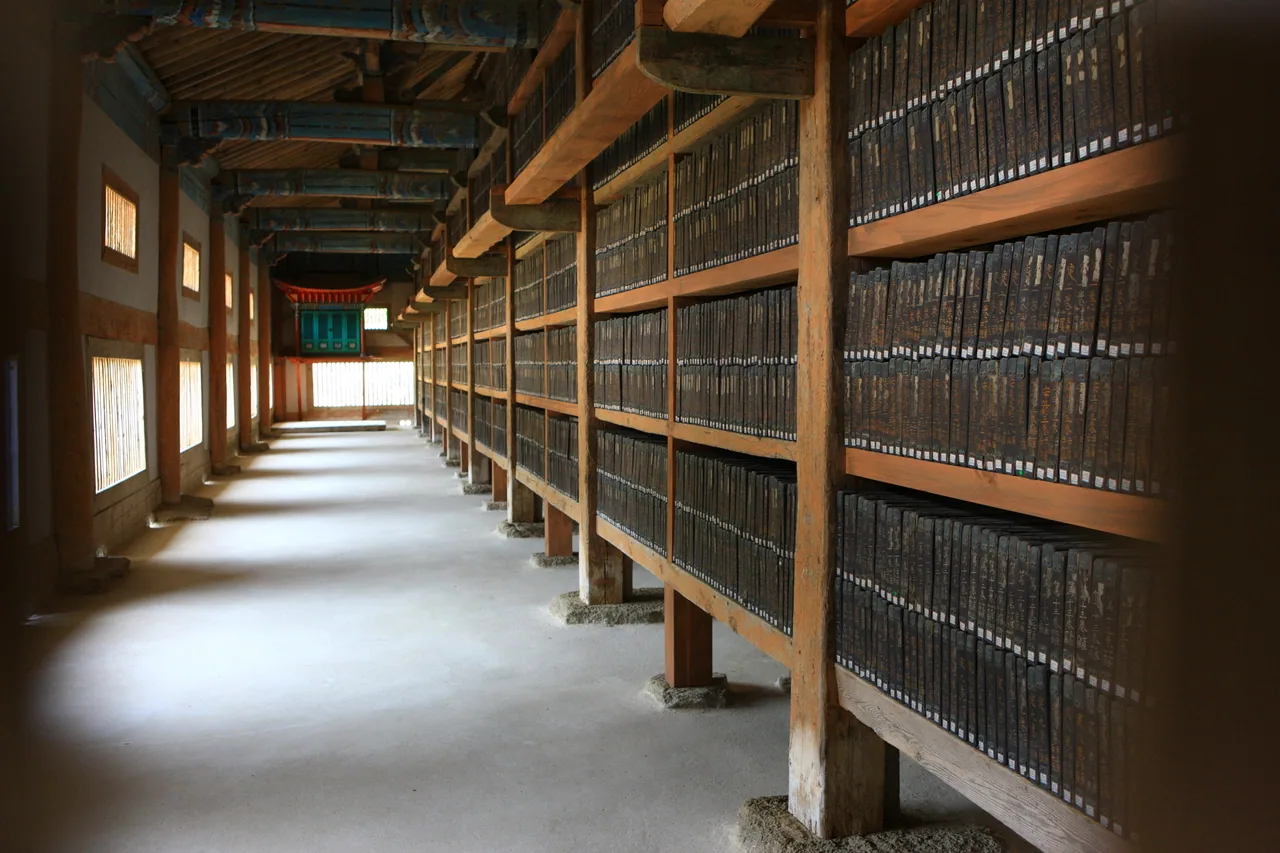
The interior of the Janggyeong Panjeon, long off-limits to the public, was first opened to general visitors starting June 19, 2021, through the “Tripitaka Koreana Reservation Tour.” It is a program in which a monk guides participants on a pilgrimage all the way inside Beopbojeon Hall. Capacity is very limited, so a reservation is essential. The following is based on the official Haeinsa Temple guidelines (confirmed as of June 2026).
- Operating schedule: Every Sunday at 10 a.m., once per day.
- How to apply: Online application only via the official Haeinsa Temple website. Phone reservations are not accepted.
- Reservation opens: Every Monday at noon. Applications must be made at least two weeks before the desired participation date.
- Number of participants: 10–20 people per session. If fewer than 10, that session is canceled. Only one person may apply per application.
- Eligibility: Elementary school age and above.
- Meeting point: In front of the World Cultural Heritage marker stone across from the Iljumun Gate at Haeinsa.
- Duration: 40–50 minutes. A pilgrimage through Iljumun, Bonghwangmun, and Daejeokgwangjeon to inside Sudarajang and Beopbojeon.
- Note: All photography inside and any contact with the woodblocks are strictly prohibited. Slippers, high heels, shorts, and sleeveless tops are not permitted.
- Inquiries: Haeinsa Temple Missionary Office, 055-934-3006.
Following the guide’s commentary, you can approach right up to the lattice windows inside Beopbojeon Hall and observe the Tripitaka woodblocks up close. Since it runs only once on Sundays, it is important to arrange your visit schedule around reservation availability.
Visitor Information — Admission, Parking, Hours, English Assistance
| Item | Details |
|---|---|
| Admission | The cultural heritage admission fee was abolished as of May 4, 2023, so it is free. |
| Parking fee | 4,000 won (about $3) for cars, 6,000 won (about $4.5) for large buses. Based on Hapcheon County guidelines, June 2026. |
| Viewing hours | Generally listed as roughly 08:30–18:00 (until 17:00 in winter), though it varies slightly by source. It is recommended to confirm with the temple office at 055-934-3000 before visiting. |
| Official inquiries | Haeinsa Temple Office 055-934-3000; Tripitaka Koreana tour reservation inquiries, Missionary Office 055-934-3006. |
| English travel info | 1330 Korea Travel Helpline (call 1330, 24 hours, multilingual support). |
Transportation (Seoul, Daegu, Busan, Driving, Tips for International Travelers)
Reaching Haeinsa by public transit takes some time. Going via Daegu is the most common route. The schedules and fares below are based on June 2026.
Departing from Seoul
- KTX: Seoul Station → Dongdaegu Station. About 1 hour 40 minutes to 1 hour 55 minutes; 43,500 won (about $31) for standard class before the roughly 10% KTX fare cut of September 1, 2026, so expect a lower fare now (verified October 2026). Operates around 80 times a day.
- Subway transfer: From Dongdaegu Station, take Daegu Metro Line 1 to Seobu Bus Terminal Station. About 25 minutes, 1,500 won (about $1) with a transit card.
- Intercity bus: Board the direct bus to Haeinsa at Daegu Seobu Terminal. 56 minutes per the schedule, fare 9,700 won (about $7; verified October 2026).
Departing from Busan
- KTX: Busan Station → Dongdaegu Station. About 45 minutes.
- From there: After arriving at Dongdaegu Station, follow the same subway and intercity bus transfers as the route from Seoul.
Note: There is currently no direct route from Busan Seobu (Sasang) Terminal to Haeinsa (as of June 2026). Going via Daegu is the most efficient.
Departing from Daegu (the most common route)
Taking the direct bus to Haeinsa from Daegu Seobu Intercity Bus Terminal is the most convenient. The schedule as of June 2026 is as follows.
- Frequency: 14 times a day. First bus at 06:40, last bus at 20:00. Roughly every 1 hour to 1 hour 20 minutes.
- Duration: 56 minutes per the schedule.
- Fare: 9,700 won (about $7; verified October 2026).
- Last bus back: The last bus to Daegu departs Haeinsa Intercity Bus Terminal at 19:20. For a day trip, you need to work backward from this time when planning your schedule.
- How to check: Search “Daegu Seobu → Haeinsa” on Tmoney Intercity Bus (txbus.t-money.co.kr) or Bustago (bustago.or.kr).
If Driving
- Route: Use the Haeinsa IC on the Gwangju-Daegu Expressway.
- Duration: About 20 minutes from the IC to Haeinsa.
- Navigation input: “Haeinsa” or “122 Haeinsa-gil, Gaya-myeon, Hapcheon-gun, Gyeongsangnam-do.”
Use the K.ride App; an IDP Is Required for Rental Cars
- Ride-hailing apps: Foreign visitors can use Kakao Mobility’s foreigner-focused taxi app K.ride, which lets you sign up with a Google or Apple account or an email and pay with an overseas-issued card (verified October 2026). The regular Kakao T app may require verification with a Korean mobile number.
- Rental cars: A valid International Driving Permit (IDP) is essential.
- Emergency help: If you have trouble with public transit, call the 1330 Korea Travel Helpline, available 24 hours with multilingual support.
Nearby Restaurants — The Chiin-ri Dining District
The Chiin-ri commercial district around the Haeinsa Intercity Bus Terminal is home to a cluster of restaurants specializing in mountain-vegetable cuisine. All are within walking distance. “Sanchae” means wild mountain greens, the staple menu of restaurants in this area. The prices below are based on June 2026.
1. Hyangto Sanchae Bonga Restaurant — Sanchae Set Meal
Hyangto Sanchae Bonga Restaurant 📍 is a Korean restaurant specializing in sanchae set meals. Around 15 wild-green side dishes from the Gayasan area are laid out on one table.
- Address: 24-10 Chiin 1-gil, Gaya-myeon, Hapcheon-gun, Gyeongsangnam-do
- Signature menu: Sanchae namul set meal, sanchae dolsot bibimbap — a Korean-style vegetable bibimbap of wild greens mixed with gochujang (red chili paste).
- Hours: 11:00–20:00
2. Haeinsa Samseong Restaurant — 70 Years of Sanchae Set Meals
Haeinsa Samseong Restaurant 📍 is a 70-year-old eatery within the commercial district. It grows much of its own wild-green ingredients.
- Address: 24-3 Chiin 1-gil, Gaya-myeon, Hapcheon-gun, Gyeongsangnam-do
- Signature menu: Sanchae set meal — a table spread including wild-green side dishes, grilled deodeok (a strongly aromatic grilled root vegetable), and dotori-muk (acorn-starch jelly). Dak-baeksuk (a restorative dish of a whole chicken boiled in broth) is also available.
- Hours: 11:00–19:00, inquiries 055-932-7276
3. Samil Restaurant — Pine Mushroom Soup Set Meal
Samil Restaurant 📍 is a local eatery known for its dishes featuring wild pine mushrooms and neungi (hedgehog mushrooms) in autumn. It opens early in the morning, making it suitable for a meal before hiking.
- Address: 19-1 Chiin 1-gil, Gaya-myeon, Hapcheon-gun, Gyeongsangnam-do
- Signature menu: Sanchae set meal 18,000 won; wild pine mushroom soup set meal 25,000 won — a clear-soup set meal made with pine mushrooms. Sanchae bibimbap 12,000 won.
- Hours: 08:00–18:00
4. Gobau Restaurant — Selected as a “Centennial Shop”
Gobau Restaurant 📍 was selected as a “Centennial Shop” (a certification for long-established, outstanding establishments) by the Ministry of SMEs and Startups. Its signature dishes are pine mushroom cuisine and sanchae set meals.
- Address: 1230-106 Chiin-ri, Gaya-myeon, Hapcheon-gun, Gyeongsangnam-do
- Signature menu: Sanchae set meal 15,000 won, pine mushroom soup set meal 25,000 won, sanchae bibimbap 10,000 won.
- Hours: 08:00–20:00, inquiries 055-932-7311
Vegans Should Confirm Anchovy Stock and Jeotgal When Ordering
- Sanchae jeongsik (sanchae set meal) and sanchae bibimbap are vegetarian-friendly thanks to their varied wild-green components.
- Note: Some restaurants may use animal-based ingredients such as anchovy stock or salted seafood (jeotgal) in the seasoning of greens or in broths (such as doenjang stew).
- Vegans: It is strongly recommended to confirm the use of animal-based ingredients when ordering.
- Cafés: The Chiin-ri district is centered on sanchae restaurants, so café options are nearly nonexistent. Realistically, plan to have coffee after returning to Daegu.
Connecting to Gayasan National Park — Sorigil, the Gayasan Summit, and the Reservation-Based Manmulsang Course
Haeinsa is located within Gayasan National Park, so you can combine temple sightseeing with enjoying nature.
Haeinsa Sorigil
- Section: Tripitaka Koreana Theme Park to Haeinsa, about 7.3 km along Hongnyudong Valley (per Hapcheon County official guidance).
- Duration: 2–3 hours on foot. A gentle slope and well-maintained path suitable for all ages.
- Admission: None.
Gayasan Summit (Udubong Peak)
- Summit: Udubong Peak (Sangwangbong), 1,430m above sea level. Some consider the adjacent Chilbulbong (1,433m) to be the highest peak.
- Duration: 4–5 hours round trip from Haeinsa.
- View: A wide-open vista of the surrounding mountains from the summit.
- What to bring: Comfortable shoes and plenty of water.
Manmulsang Course (Reservation Required)
A scenic spot called “Manmulsang” because its strange rock formations are said to take on ten thousand shapes. To protect the ecosystem, it operates on a reservation basis (as of June 2026).
- How to reserve: Reserve by 5 p.m. the day before your visit via the Korea National Park Service reservation system. The daily visitor cap can change from year to year, so confirm the current number with the Gayasan National Park Office (+82-55-930-8000).
- Reserved section: Baegundong Trail Support Center to Seoseongjae (3 km).
- Entry times: The official entry hours at the Baegundong Trail Support Center (Manmulsang section) are 04:00–13:00 from April to October and 05:00–12:00 from November to March (Korea National Park Service, verified October 2026).
- Note: The trailhead, Baegundong, is on the opposite side of Haeinsa (toward Seongju-gun). There is no public transit connection from Haeinsa, so a car or taxi is needed.
Templestay — How International Travelers Can Apply for a 2-Day, 1-Night Program
Haeinsa offers a Templestay where you can stay at the temple and experience Korean Buddhist culture and the life of a practitioner.
- How to apply: Search “Haeinsa” and book on the official Korea Templestay English website (eng.templestay.com).
- Day type: A short experience of core programs such as a temple tour and meditation.
- Experience type: 2 days and 1 night including Buddhist services, 108 prostrations, and tea conversation with a monk. The flagship program, “The Eighty-Thousand Stories of Knowing Myself,” departs every Saturday and includes a pilgrimage inside the Janggyeong Panjeon, which is normally restricted.
- Rest type: Stay freely and relax without a set program.
- Inquiries: Book and ask through the Haeinsa page on the official templestay.com site, or call the Templestay information center at 02-2031-2000 (verified October 2026).
Seasonal and Timing Tips
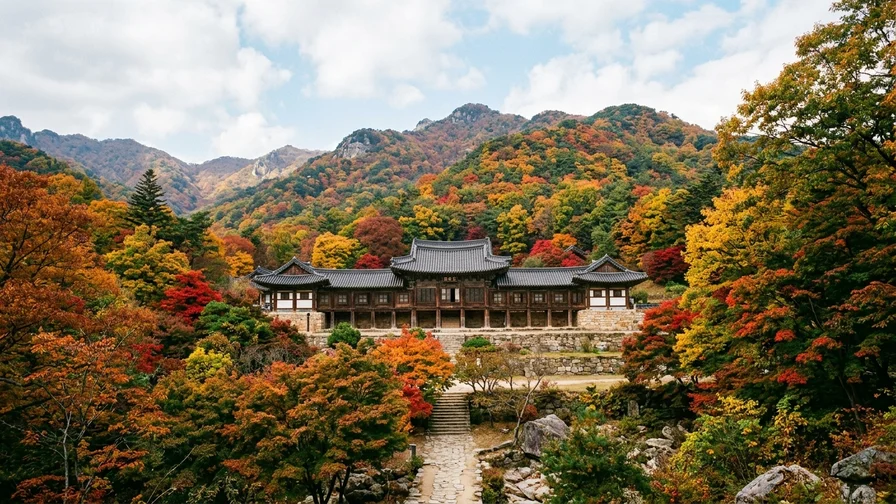
Haeinsa looks different in each season, but certain times are especially worth visiting.
- Late April to early May: Colorful lotus lantern decorations around Buddha’s Birthday.
- Mid-October to early November: The peak of autumn foliage on Gayasan. The fall colors along Sorigil are especially famous.
- Tripitaka Koreana Festival: Held irregularly. During the festivals in 2017 and 2019, there were exceptional cases when even the inner courtyard of the Janggyeong Panjeon, normally closed, was opened. It is recommended to check festival information before visiting.
Frequently Asked Questions (FAQ)
Q1: Can I touch the actual Tripitaka Koreana woodblocks or see them up very close?
A1: No. The woodblocks are preserved inside the Janggyeong Panjeon, and general visitors can only view them from outside through the lattice windows. The Sunday reservation tour lets you see them a little closer from inside Beopbojeon Hall, but direct contact is strictly forbidden.
Q2: How much is admission to Haeinsa?
A2: Since the cultural heritage admission fee was abolished on May 4, 2023, general admission is free. However, the parking fee (4,000 won for cars) is separate.
Q3: How long does it take to tour Haeinsa?
A3: Touring the grounds centered on the Janggyeong Panjeon takes about 1 to 1.5 hours. If you plan to trek Sorigil or hike Gayasan, allow from half a day to a full day.
Q4: Is it accessible by wheelchair or stroller?
A4: As a mountain temple, the grounds have many stairs and sloping paths, so there are considerable restrictions on wheelchair and stroller movement. The path to the Janggyeong Panjeon also includes stairs, making access difficult. The reservation tour is likewise not wheelchair-accessible due to the nature of the facilities.
Q5: Am I free to take photos or video within the temple? Is drone filming allowed?
A5: Personal commemorative photos are mostly allowed, but photographing inside the worship halls or photographing monks directly may be impolite. Photography inside the Janggyeong Panjeon is prohibited. Drone filming is strictly forbidden under national park and temple regulations.
Q6: Is there a dress code for visiting?
A6: There is no strict code for general visits, but as it is a sacred religious space, it is best to avoid excessive exposure (very short shorts, sleeveless tops, etc.). For the Janggyeong Panjeon reservation tour, shorts, sleeveless tops, slippers, and high heels will result in entry being denied, so take care. Since there is a lot of walking, comfortable shoes are recommended.
Q7: Where is the Haeinsa Seongbo Museum?
A7: The Haeinsa Seongbo Museum is a separate building along the approach road below the main temple. It preserves and exhibits the Buddhist cultural artifacts held by Haeinsa. Hours are Tuesday–Sunday 10:00–17:00 (last entry 16:30), closed every Monday. Admission is free (Haeinsa parking fee separate). Address: 1742-17 Gayasan-ro; phone 055-934-3150. (verified 2026-10-20) See the official site for details.
Some photos © Korea Tourism Organization (KOGL Type 1)
Related reads in this series
- 17 UNESCO World Heritage Sites in Korea
- Gyeongju UNESCO World Heritage (1995, 2000)
- Jongmyo Shrine (UNESCO 1995)
- Changdeokgung Palace & Secret Garden (UNESCO 1997)
- Andong Hahoe & Gyeongju Yangdong Villages (UNESCO 2010)
- Namhansanseong Fortress (UNESCO 2014)
- Baekje Historic Areas (UNESCO 2015)
- Sansa, 7 Buddhist Mountain Temples in Korea (UNESCO 2018)
- Bangudae Petroglyphs (UNESCO 2025)