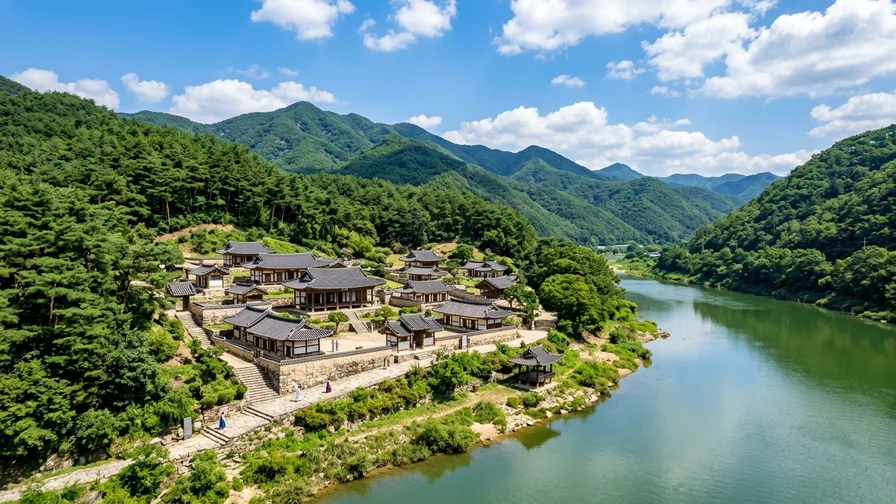
9 Korean Seowon Confucian Academies (UNESCO 2019)
목차
- The Full List of 9 Korean Seowon
- What the UNESCO Inscription Really Means: A Network, Not Just Buildings
- Detailed Visiting Guide to the 3 Recommended Sites for Foreign Travelers
- 5 Key Elements of Seowon Architecture
- Recommended Combined Trip: A 2-Day Itinerary in the Andong Area
- Practical Information for Foreign Travelers
- Frequently Asked Questions (FAQ)
Planning to visit all nine? Better to drop that idea by the end of this first line. Half of them sit in rural areas served by only a handful of buses a day. From the nine sites inscribed by UNESCO in 2019 as the “Korean Seowon (Korean Neo-Confucian Academies),” this guide picks three you can reach using only trains and city buses—bus timetables included. Seowon were the centers of Neo-Confucian education and social activity during Korea’s Joseon Dynasty, from the 16th to the 19th century.
Key Facts at a Glance
- Definition: Private regional institutions of higher education in the Joseon Dynasty, combining scholarly research, teaching, and ancestral rites for honored sages
- Significance: Evidence of an educational network that spread Neo-Confucianism and cultivated future talent
- Layout: A lecture hall + dormitories + shrine arranged to fit the natural terrain
- Traveler tip: Visiting all nine is unrealistic. This guide focuses on three with the best accessibility and surrounding attractions—Dosan Seowon (Andong), Oksan Seowon (Gyeongju), and Sosu Seowon (Yeongju)
- Information basis: The operating hours, fees, and bus timetables in this article are confirmed against official sources as of June 2026
The Full List of 9 Korean Seowon
Here is the basic information on all nine UNESCO-inscribed seowon. Public transport access to some is very limited, so be sure to factor this in when planning.
| Seowon Name (English) | Location (City) | Main Honored Scholar | Access & Notes |
|---|---|---|---|
| Sosu Seowon | Yeongju | An Hyang | Recommended. Korea’s first seowon. Accessible by bus from Yeongju Station. Easy to combine with Buseoksa Temple |
| Namgye Seowon | Hamyang | Jeong Yeo-chang | Car recommended. Public transport access is very difficult |
| Oksan Seowon | Gyeongju | Yi Eon-jeok | Recommended. Good access from central Gyeongju. Convenient by car or taxi. Free admission |
| Dosan Seowon | Andong | Yi Hwang | Highly recommended. The most famous and largest. Bus service from Andong Station. Rich in nearby attractions |
| Piram Seowon | Jangseong | Kim In-hu | Car essential. From Gwangju Songjeong Station; almost no public transport |
| Dodong Seowon | Daegu (Dalseong) | Kim Goeng-pil | Car recommended. Far from central Daegu with complicated transfers |
| Byeongsan Seowon | Andong | Ryu Seong-ryong | Recommended. Just a 10-minute drive from Hahoe Village—pair them. Watch for the unpaved access road |
| Museong Seowon | Jeongeup | Choe Chi-won | Car recommended. From Jeongeup Station; bus intervals are very long |
| Donam Seowon | Nonsan | Kim Jang-saeng | Car recommended. Taxi or bus from Nonsan Station; check bus intervals carefully |
What the UNESCO Inscription Really Means: A Network, Not Just Buildings
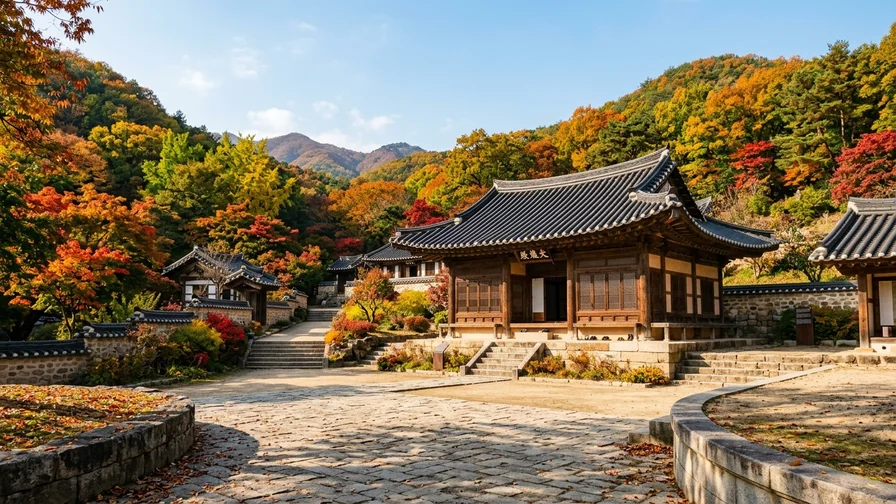
On July 6, 2019, at the 43rd session of the World Heritage Committee held in Baku, Azerbaijan, the “Korean Seowon” Neo-Confucian academies were inscribed under criterion (iii)—a unique testimony to a cultural tradition that is living or has disappeared (official UNESCO inscription page). The grounds for inscription were not individual architectural beauty but the educational value formed collectively by the nine seowon. The committee highly valued their role in spreading the intellectual system of Neo-Confucianism during the Joseon Dynasty, cultivating regional talent, and building scholarly networks.
- Autonomous institutions: Self-governing educational institutions beyond central government control
- Shaping opinion: Served as centers for forming political and public opinion
- Harmony with nature: Set against mountains and rivers—an architectural expression of the Neo-Confucian worldview
Detailed Visiting Guide to the 3 Recommended Sites for Foreign Travelers
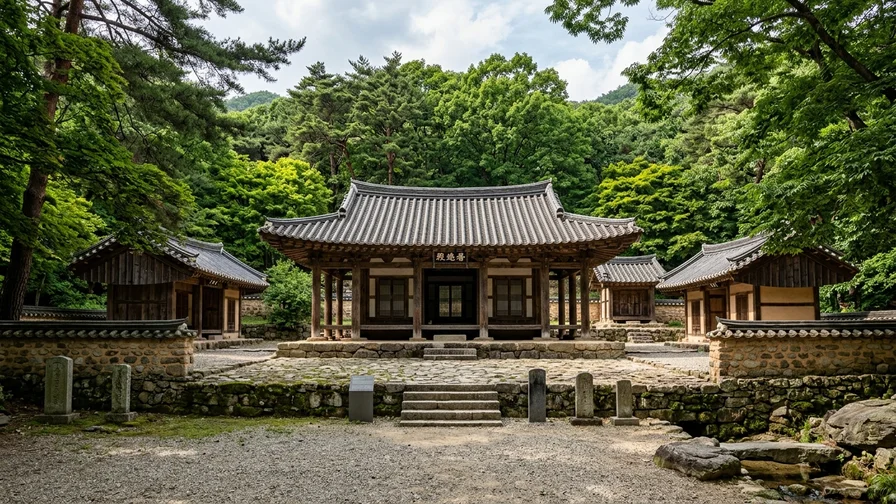
These three were chosen with travel routes, transport, and nearby attractions in mind. The information below is enough to plan your trip in full.
1. Dosan Seowon — Andong
This seowon grew out of Dosan Seodang (1561), the study where Toegye Yi Hwang (1501–1570) personally built and taught his students in his later years. After his death, his disciples added a shrine, completing the seowon in 1574. Yi Hwang appears on the 1,000-won banknote and is one of the most revered Confucian scholars in Korea. Of the nine seowon, this is the largest and most symbolic.
The heart of the visit is the contrast between two spaces. Tucked at the back of the courtyard, the small, modest Dosan Seodang is where Yi Hwang lived and taught during his lifetime; the formal seowon precinct unfolding behind it was added by later generations to honor their teacher. In the same courtyard you can see, side by side, the frugality of a living scholar and the reverence shown to him after death.
Details
- Address: 154 Dosanseowon-gil, Dosan-myeon, Andong-si, Gyeongsangbuk-do (Google Maps)
- Hours:
- Feb–Oct: 09:00–18:00 (last entry 17:30)
- Nov–Jan: 09:00–17:00 (last entry 16:30)
- Admission: Adults 2,000 won (about $1.5), youth/children 1,000 won (about $0.75)
- Official info: Andong City official Dosan Seowon page (check notices before visiting)
Transportation
Andong is about 2 hours from Seoul by KTX, ideal for a day trip or an overnight stay.
- Seoul to Andong: Take the KTX-Eum from Seoul’s Cheongnyangni Station to Andong Station, about 2 hours 10 minutes. One-way fare 25,100 won (about $19, standard class)
- From Andong Station / Andong Bus Terminal to Dosan Seowon: The station and terminal share the same building. Take the Express Bus No. 3 bound for Dosan Seowon
- Bus timetable (departing Andong Station): 08:15, 09:35, 12:15, 13:15, 16:15 — as of June 2026; check the Andong city bus information system (bus.andong.go.kr) for the latest schedule
- Return bus (departing Dosan Seowon): 09:40, 11:10, 14:10, 14:50, 17:40
- Travel time: about 45 minutes
- Fare: 1,700 won (about $1.3), transit cards accepted
- Get off at: Dosan Seowon terminus (the last stop)
- By taxi: About 35,000–40,000 won (about $27–31) from Andong Station, roughly 30 minutes
Nearby Restaurants
There are virtually no restaurants right in front of Dosan Seowon. Reliable eateries cluster in Yekki Village (a mural village famous for “Seonseong Susang-gil,” a deck walkway over the lake), about a 10-minute drive away. Eating in central Andong before heading out is also a practical option.
- Memilkkot Pimyeon 📍: A buckwheat specialist in Yekki Village. Memil-guksu is a noodle dish served in cold or warm broth, popular in summer; the grilled pollack set meal (hwangtae-gui) features seasoned, grilled dried pollack (address: 22 Seonseong 4-gil, Dosan-myeon, Andong-si, Gyeongbuk)
- Cafe Seowon 📍: A hanok café on the road to Dosan Seowon, perfect for a break before or after your visit. 11:00–19:00, closed Mondays (address: 2300 Toegye-ro, Dosan-myeon, Andong-si, Gyeongbuk)
- Andong Old Market Jjimdak Alley 📍: An alley inside Andong’s old market downtown, lined with dozens of specialists serving Andong jjimdak (Andong’s signature braised chicken and glass noodles in a soy-based sauce). Great for a hearty meal in town before catching the bus
Editor’s Tip
Express Bus No. 3 runs at very long intervals. Plan to go in on the 12:15 bus and come back on the 14:50 or 17:40—decide your return bus before you even arrive. A visit usually takes about 1 hour 30 minutes.
2. Oksan Seowon — Gyeongju
Located in Gyeongju, capital of the ancient Silla Dynasty, this seowon honors the Joseon-era scholar Hoejae Yi Eon-jeok (1491–1553). Admission is free, and it sits serenely beside a beautiful valley stream.
The highlight is the moment you sit on the lecture hall’s wooden floor and look out at the valley through the pillars of Mubyeonru Pavilion. True to its name—”the pavilion without boundaries”—the building doesn’t block the scenery but lets it flow through, embodying the harmony with nature that seowon architecture speaks of better than anywhere else. The broad flat rock in the stream beside the seowon is called Sesimdae, meaning “the rock for washing the mind.”
Details
- Address: 216-27 Oksanseowon-gil, Angang-eup, Gyeongju-si, Gyeongsangbuk-do (Google Maps)
- Hours: 09:00–18:00 (until 17:00 in winter, Oct–Mar)
- Closed: Open year-round (as of June 2026)
- Admission: Free
- Parking: Dedicated free parking available
- Programs: Free tea-ceremony experiences run on weekends 11:00–17:00 from May to October (per Gyeongju City official info)
Transportation
Gyeongju is convenient by KTX and bus, but Oksan Seowon is set apart from the city center, so a car or taxi is the most efficient option.
- Seoul to Gyeongju: KTX from Seoul Station to Gyeongju Station (renamed from “Singyeongju Station” in December 2023), about 2 hours 15 minutes
- From Gyeongju Station / Gyeongju Express Bus Terminal to Oksan Seowon:
- By bus: Take Bus No. 203 and get off at “Oksan Seowon.” Intervals of 70–100 minutes, about 50 minutes’ ride—not recommended for travelers
- By taxi: About 30 minutes from Gyeongju Station, around 25,000 won (about $19)
- By car / rental car: The best option. About 30 minutes from central Gyeongju, and convenient for linking with Bulguksa Temple, Seokguram Grotto, and more
Note: Foreign visitors renting a car must carry an International Driving Permit (IDP) along with their home-country driver’s license.
Nearby Restaurants
There are hardly any restaurants right in front of Oksan Seowon. The nearest dining area is downtown Angang-eup, a 10–15 minute drive away, and it’s also easy to fold this into Gyeongju’s city-center restaurant scene.
- Oebau 📍: In Angang-eup, a Korean beef specialist run by the same family for three generations since 1968. The mushroom-and-beef hot pot (beoseot hanu jeongol) simmers Korean beef and mushrooms in a rich broth at the table (address: 12 Guburang 3-gil, Angang-eup, Gyeongju-si, Gyeongbuk)
- Seungjin Restaurant 📍: A local favorite in Angang-eup serving a single dish—dwaeji duruchigi (spicy stir-fried pork). The seasoned pork is cooked at the table and finished with fried rice (address: 22 Bihwadong-gil, Angang-eup, Gyeongju-si, Gyeongbuk)
- Yeongyang Sutbul Galbi 📍: A Korean beef galbi specialist in central Gyeongju, opened in 1970 and designated a “Centennial Shop” (Baengnyeon Gage) by Korea’s Ministry of SMEs and Startups. Marinated, low-temperature-aged beef ribs are grilled directly over charcoal—Korean-style BBQ (address: 79 Bonghwang-ro, Gyeongju-si, Gyeongbuk)
- Sigol Ssambap 📍: A ssambap restaurant within walking distance of Daereungwon and Hwangnidan-gil. Ssambap is a set meal where you wrap seasoned bulgogi in fresh lettuce and greens; with its many side dishes, it’s great for newcomers to Korean food (address: 10 Gyerim-ro, Gyeongju-si, Gyeongbuk)
Editor’s Tip
Walk 10–15 minutes upstream along the valley from Oksan Seowon and you’ll reach Dongnakdang, where Yi Eon-jeok actually lived. If the seowon is the place that “honors” him, Dongnakdang is the place where he “lived”—seeing both is what completes your picture of the man. Continue further and you’ll find the National Treasure thirteen-story stone pagoda of the former Jeonghyesa Temple site, making for a fine half-day walking course.
3. Sosu Seowon — Yeongju
Built in 1543, this was Korea’s first seowon. It holds historic significance as the first “Saaek Seowon”—a seowon granted a royal name plaque and books bestowed by the king. It honors the Goryeo-era scholar An Hyang.
Pass through “Hakjasu,” a forest of centuries-old red pines at the entrance, and you’ll see the character “敬” (gyeong, “reverence”) carved in red on a rock by the Jukgyecheon Stream outside the wall. The character embodies reverence and focus—the core attitude of Neo-Confucian study—summing up in a single word what was once taught here.
Details
- Address: 2740 Sobaek-ro, Sunheung-myeon, Yeongju-si, Gyeongsangbuk-do (Google Maps)
- Hours: Mar–May and Sep–Oct 09:00–18:00; Jun–Aug 09:00–19:00; Nov–Feb 09:00–17:00
- Closed: Open year-round (as of June 2026)
- Admission: Adults 3,000 won (about $2.3), youth 2,000 won, children 1,000 won (combined ticket for Sosu Seowon, Sosu Museum, and Seonbichon)
- Official info: Yeongju City official Sosu Seowon page (check before visiting)
Transportation
Yeongju is a smaller city than Andong or Gyeongju, but Sosu Seowon pairs nicely with other heritage sites.
- Seoul to Yeongju: KTX-Eum from Seoul’s Cheongnyangni Station to Yeongju Station, about 1 hour 45 minutes
- From Yeongju Station / Yeongju Bus Terminal to Sosu Seowon:
- By bus: Take Bus No. 27 and get off at “Sosu Seowon,” 13 runs a day, about 30 minutes. The same line continues to Buseoksa Temple (as of June 2026)
- By taxi: About 20 minutes from Yeongju Station, around 20,000 won (about $15)
Nearby Restaurants
Sunheung-myeon is famous for muk (acorn/buckwheat jelly) and gijitteok, so right around Sosu Seowon you can sample local specialties found only in this area.
- Seonbichon Jonggajip 📍: Right next to the Sosu Seowon / Seonbichon ticket office, within walking distance. Sanchae bibimbap tops rice with seasonal wild greens from Sobaeksan, mixed with red chili paste—a vegetable-forward bowl; cheonggukjang is a hearty stew of richly fermented soybeans, made here with Yeongju’s specialty “Buseok-tae” beans. Closed Mondays (address: 2796 Sobaek-ro, Sunheung-myeon, Yeongju-si, Gyeongbuk)
- Sunheung Traditional Mukjip 📍: About a 5-minute drive from Sosu Seowon, a place that has made just one dish—mukbap—since the 1970s. Mukbap is a rustic dish of soft buckwheat jelly cut into strips, served in broth and topped with kimchi and seaweed flakes (address: 21 Sunheung-ro 39beon-gil, Sunheung-myeon, Yeongju-si, Gyeongbuk)
- Sunheung Gijitteok 📍: A rice-cake shop perfect for a post-meal snack, designated a “Centennial Shop” by the Ministry of SMEs and Startups. Gijitteok (jeungpyeon) is a fluffy, slightly tangy steamed rice cake made by fermenting rice-flour batter with makgeolli—a local specialty here (address: 2657 Sobaek-ro, Sunheung-myeon, Yeongju-si, Gyeongbuk)
- Buseoksa Restaurant 📍: On the way to the Buseoksa Temple ticket office, opened in 1972 and designated a local specialty restaurant by Yeongju City. The salted mackerel set (gan-godeungeo) features grilled salt-cured mackerel—an inland regional specialty that’s savory, rich, and pairs perfectly with rice (address: 317 Buseoksa-ro, Buseok-myeon, Yeongju-si, Gyeongbuk)
Editor’s Tip
Sosu Seowon is about 15 minutes by taxi from the UNESCO World Heritage Site Buseoksa Temple (inscribed 2018), and Bus No. 27 that passes Sosu Seowon continues all the way to Buseoksa, so you can connect the two on the same bus. Visiting both in a single day is highly recommended. Buseoksa’s Muryangsujeon Hall is one of the most beautiful wooden structures in Korea.
5 Key Elements of Seowon Architecture
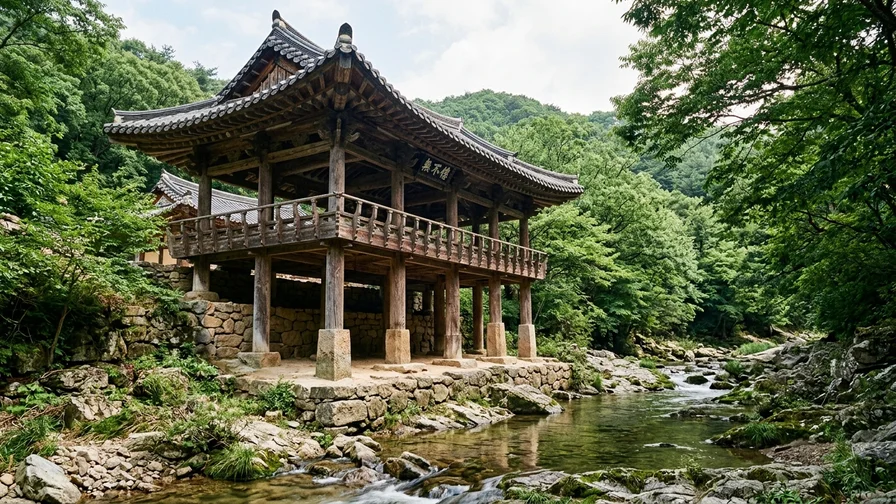
Seowon spaces are laid out according to set rules. Most follow the “jeonhak-humyo” (learning in front, shrine behind) principle—the educational space at the front, the ritual space at the rear.
- Gangdang (Lecture Hall): The central building, the place for lectures and debate, with an open wooden-floored hall
- Dongjae and Seojae: Student dormitories positioned to the east and west of the lecture hall’s front courtyard
- Sadang (Shrine): The most sacred space, where the spirit tablets of honored sages are enshrined and rites are held, placed high at the back
- Nugak (Pavilion): A two-story building at the entrance or a scenic spot, where scholars rested, composed poetry, and admired the natural scenery. Mandaeru Pavilion at Byeongsan Seowon and Mubyeonru Pavilion at Oksan Seowon are prime examples
- Oesammun: The main outer gate at the entrance to the seowon
Recommended Combined Trip: A 2-Day Itinerary in the Andong Area
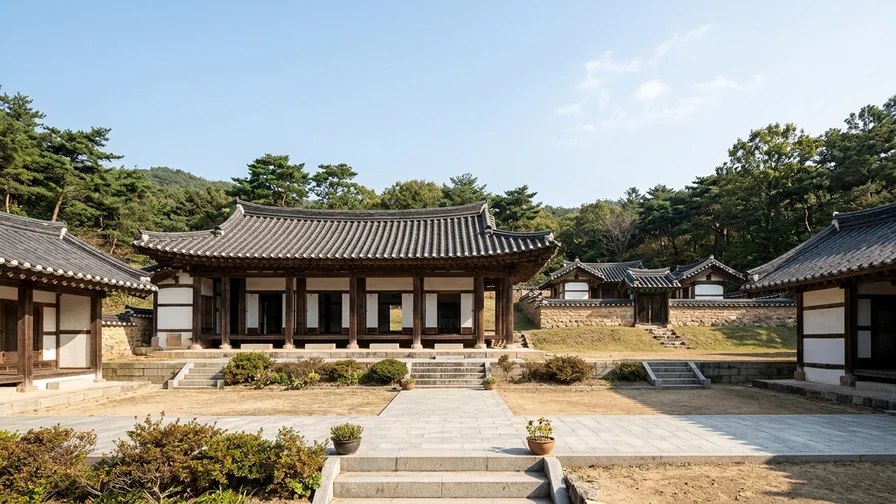
Beyond Dosan Seowon, Andong holds two more UNESCO World Heritage Sites, making it an appealing destination for foreign travelers. One thing to watch—Dosan Seowon (northeast of the city) and Byeongsan Seowon (west of the city) lie in opposite directions, about an hour apart by car, so bundling them into one day wrecks your route. The standard move is to pair Byeongsan Seowon with Hahoe Village, a 10-minute drive away.
- Day 1: Dosan Seowon
- Morning: Arrive in Andong by KTX from Seoul’s Cheongnyangni Station
- Lunch: Andong jjimdak (soy-braised chicken) at Andong Old Market Jjimdak Alley
- Afternoon: From Andong Station, take Express Bus No. 3 at 12:15 or 13:15 to Dosan Seowon; about 2 hours for the visit
- Late afternoon: Return to the city on the 14:50 or 17:40 bus (calling a taxi out here is hard, so keep to the bus times)
- Evening: Stay overnight in central Andong
- Day 2: Hahoe Village and Byeongsan Seowon
- Morning: Take Bus No. 210 from in front of Andong Station to Hahoe Folk Village (inscribed 2010), a folk village where residents still actually live; stroll through, then climb Buyongdae Cliff for a sweeping view of the village
- Lunch: A grilled salted mackerel set meal at Hahoe Village’s market
- Afternoon: A roughly 10-minute taxi ride to Byeongsan Seowon, where Mandaeru Pavilion overlooks the Nakdonggang River and a sheer cliff—an unforgettable view. If you enjoy walking, the “Confucian Culture Trail” linking Hahoe Village and Byeongsan Seowon (about 1 hour; avoid it after rain or when walking alone) is also lovely. The access road to Byeongsan Seowon is unpaved, so arrange your return taxi in advance
- Evening: Return to Seoul by KTX from Andong Station
Practical Information for Foreign Travelers
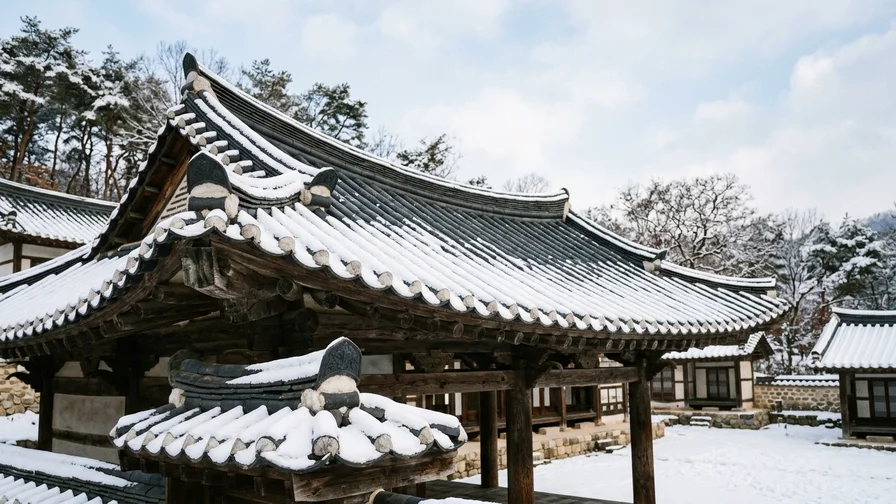
- Language and signage: Most sites have English signs. Major seowon such as Dosan Seowon offer English-speaking cultural docents at set times; check the website or call before visiting
- Hands-on programs: Oksan Seowon runs free tea-ceremony experiences on weekends from May to October. The Seonbi Culture Training Center (dosansunbi.kr) in the Dosan Seowon area offers seonbi (scholar) culture experiences open to foreigners by advance reservation
- Taking off shoes: You must remove your shoes when stepping onto the floors of the lecture hall and dormitories; shoe storage is provided at the entrance
- Photography: Allowed in most areas, but may be prohibited inside the shrine—check the signage
- Transport apps and payment: Kakao T supports registering overseas-issued cards, and Uber works too. The real variable isn’t the app but the cars—in rural areas like Dosan-myeon or Angang-eup, you can call all you like and still rarely find a taxi. The safe approach is to take a taxi from the city center and arrange your return trip (and whether to charter it round-trip) with the driver in advance. Ticket offices generally accept cards, but it’s wise to carry some small cash as well
- When you need help: The Korea Tourism Organization’s 1330 Korea Travel Helpline offers interpretation in English, Chinese, and Japanese plus tourist information, 24/7 year-round. Dial 1330 from your phone to connect (when roaming, +82-2-1330)
Show this to your taxi driver
- Please take me to Dosan Seowon — “Dosan Seowon-euro ga juseyo”
- Please take me to Oksan Seowon — “Oksan Seowon-euro ga juseyo”
- Please take me to Sosu Seowon — “Sosu Seowon-euro ga juseyo”
- Can you pick me up here again in two hours? — “Yeogiseo du sigan hue dasi tae-ureo wa jusil su innayo?”
Frequently Asked Questions (FAQ)
- Do I have to visit all nine seowon?
No. Unless you’re here for academic purposes, a deeper visit to one to three sites with efficient routes is far more rewarding. We recommend planning around the three picks (Dosan, Oksan, Sosu) or the two in Andong (Dosan, Byeongsan). - How long does it take to tour one seowon?
On average 1 hour to 1 hour 30 minutes. To take in the scenery at a relaxed pace, plan for about 2 hours. - Are the seowon ever closed?
Oksan Seowon and Sosu Seowon are open year-round (as of June 2026). Dosan Seowon has no announced regular closing days, but there may be temporary closures for events, so check the official page before visiting. - Can visitors with reduced mobility, such as wheelchair users, visit?
It’s difficult. Old wooden buildings, high thresholds, and sloped unpaved dirt paths make wheelchair and stroller access very limited. - What’s the best season to visit?
Spring (April–May) and autumn (October–November) are the most beautiful. Summer is hot and rainy, while winter is cold but offers serene snow-covered scenery. - Can I stay overnight at a seowon?
Most do not offer lodging. You can do a hanok (traditional Korean house) stay at Andong’s Hahoe Village or near some seowon, but separate reservations are required. - What is Neo-Confucianism?
A branch of Confucian philosophy exploring human nature and the principles of the universe. For 500 years of the Joseon Dynasty it was the state’s governing ideology and the foundation of social order. Seowon were the spaces where Neo-Confucian values—education, ethics, and social responsibility—were taught and put into practice.
Related Reading on This Topic
- 17 UNESCO World Heritage Sites in Korea
- The 40 Royal Tombs of the Joseon Dynasty (UNESCO 2009)
- Haeinsa Janggyeong Panjeon & Tripitaka Koreana (UNESCO 1995)
- Gyeongju UNESCO World Heritage (1995, 2000)
- Jeju Volcanic Island and Lava Tubes (UNESCO 2007)
- Jongmyo Shrine (UNESCO 1995)
- Changdeokgung Palace & Secret Garden (UNESCO 1997)
- Suwon Hwaseong Fortress & Haenggung Palace (UNESCO 1997)
- Gochang, Hwasun & Ganghwa Dolmen Sites (UNESCO 2000)
- Andong Hahoe & Gyeongju Yangdong Villages (UNESCO 2010)
- Namhansanseong Fortress (UNESCO 2014)
- Baekje Historic Areas (UNESCO 2015)
- Sansa, 7 Buddhist Mountain Temples in Korea (UNESCO 2018)
- Getbol, Korea's 4 Tidal Flats (UNESCO 2021)
- Gaya Tumuli, 7 UNESCO Sites (UNESCO 2023)
- Bangudae Petroglyphs (UNESCO 2025)