Suwon Hwaseong Fortress & Haenggung Palace (UNESCO 1997)
목차
- What the 1997 Inscription Means — Planned City and Military Architecture
- The Four Gates and the 5.5km Wall — Walking Route (Clockwise, About 2–3 Hours)
- Hwaseong Haenggung — King Jeongjo’s Temporary Palace
- The Hwaseong Tourist Train Route
- Transport — From Seoul and Around Suwon
- Nearby Restaurants and Dining Areas
- Tips for Choosing Season and Time
- Practical Tips for International Travelers
- Frequently Asked Questions (FAQ)
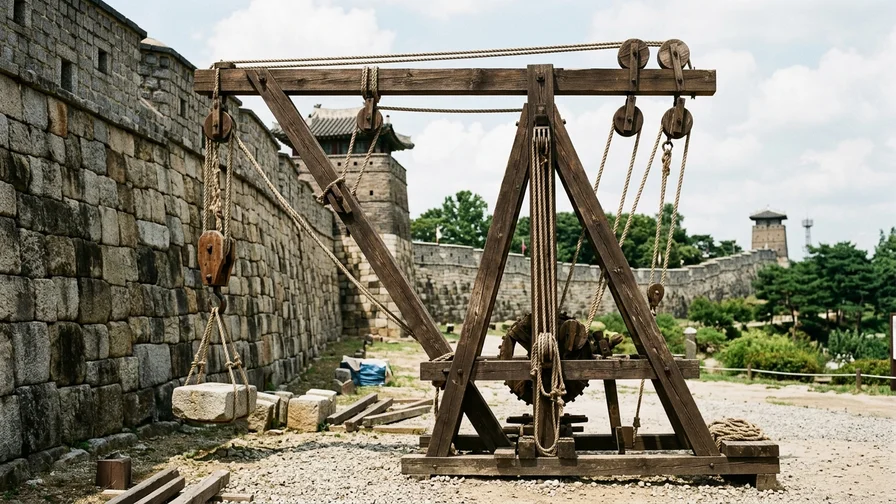
Suwon Hwaseong Fortress is a 5.5km-long walled city begun in 1794 and completed in 1796 by King Jeongjo, the 22nd monarch of the Joseon Dynasty. It represents the pinnacle of the era’s construction technology: using the Geojunggi, a crane-like lifting device designed by the scholar Jeong Yak-yong, a project that would normally have taken ten years was finished in just two years and nine months. This guide lays out the key information and route so that international travelers departing from Seoul can explore Suwon Hwaseong Fortress and Haenggung Palace efficiently in a single day.
- Key facts: Inscribed on the UNESCO World Heritage List in 1997, featuring a 5.5km wall and a temporary palace inside
- Getting there: Train from Seoul Station to Suwon Station in about 30 minutes (KTX, ITX-Saemaeul, Mugunghwa) or about an hour on Line 1, followed by a 15–20 minute city bus ride
- Things to do: Walk the fortress wall (free), tour Haenggung Palace (paid ticket), watch the Martial Arts 24 Skills demonstration (free), and dine on Suwon’s famous fried chicken street
What the 1997 Inscription Means — Planned City and Military Architecture
The UNESCO inscription of Suwon Hwaseong Fortress is not simply about preserving an aging wall. It meets two of the listing criteria, (ii) and (iii) (see the official UNESCO World Heritage listing page).
- Criterion (ii): Exhibits an important interchange of human values on developments in architecture, technology, and town planning within a given period or cultural area
- Criterion (iii): An outstanding example of an architectural ensemble, structure, technological complex, or landscape that illustrates a significant stage in human history
Hwaseong is a new type of defensive structure that synthesized 18th-century military theory and construction techniques from both East and West. Its notable features include:
- Wall structure: A mix of stone and brick to strengthen defenses
- Poru: Artillery bastions
- Gongsimdon: Hollow watchtowers
- Bongdon: Beacon mound
- Urban character: More than a military base, it was a commercial city and a reform-minded new town envisioned by King Jeongjo
This originality in both town planning and construction technology is the core of why it was recognized as having outstanding universal value.
The Four Gates and the 5.5km Wall — Walking Route (Clockwise, About 2–3 Hours)
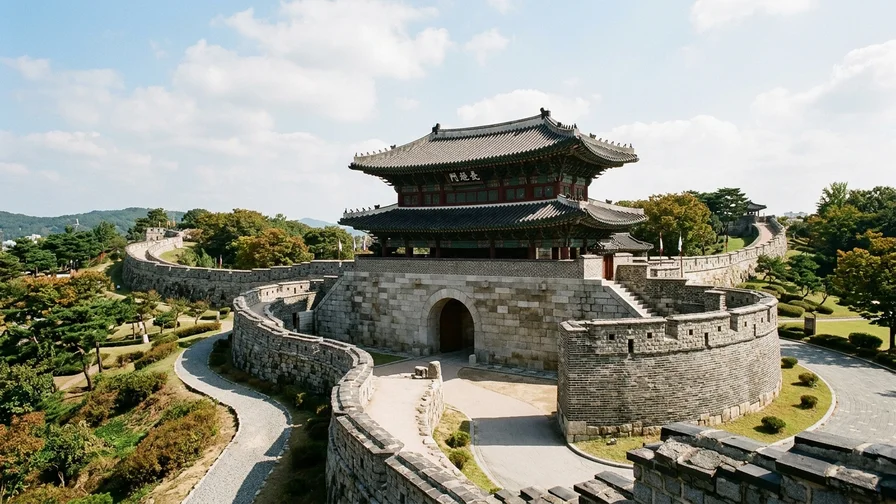
- Admission: Walking the wall is free — the former 1,000 won entry fee was fully abolished in April 2022. As an open section, evening strolls are also possible
- Total length: About 5.5km
- Time needed: 2–3 hours at an adult walking pace
- Difficulty: Mostly flat, with some stairs and uphill stretches — comfortable shoes are essential
- Recommended direction: Clockwise
1. Starting Point: Paldalmun Gate (South Gate)
- Paldalmun is the only one of the four gates detached from the wall, standing in the middle of a road
- It sits next to Suwon Nammun Market, the busiest area
- Excellent access thanks to many bus routes stopping here
- The wall entrance is easy to spot — head west toward Hwaseomun Gate
2. Western Section: Paldalmun → Hwaseomun Gate (West Gate)
- Gentle slopes, perfect for the start of your walk
- Views over the city where the old and new downtown blend together
- Seojangdae: The command post at Hwaseong’s highest point, with the best views
- Hwaseomun: A designated Treasure (former designation No. 403), with a distinctive crescent-shaped barbican open on only one side
3. Northern Section: Hwaseomun → Janganmun Gate (North Gate) → Changnyongmun Gate (East Gate)
- Hwahongmun Gate: A water gate with seven arches spanning the Suwoncheon stream
- Banghwasuryujeong Pavilion: On a hill beside Hwahongmun, this is Hwaseong’s signature scenic structure
- Janganmun: Hwaseong’s main gate (North Gate), larger in scale than Seoul’s Namdaemun
- Yeonmudae: A former military training ground where you can now try gukgung (traditional Korean archery) — 3,000 won for 10 arrows, ages 7 and up, open 09:30–17:30 in summer (March–October) and 09:30–17:00 in winter, with a lunch break from 12:00–13:00 (as of June 2026)
The one thing you absolutely must see along the wall is Banghwasuryujeong. This unique building served as both a military watchtower and a banquet pavilion, and its setting beside the Yongyeon pond below is widely considered the most beautiful scene in all of Hwaseong. Walking clockwise, you’ll come across it naturally, so set aside plenty of time here for photos and a rest.
4. Eastern and Southern Sections: Changnyongmun → Back to Paldalmun
- Close-up views of modern Suwon’s downtown just outside the wall
- When you finish walking, it’s an easy transition to a meal at Paldalmun Market or the fried chicken street
Hwaseong Haenggung — King Jeongjo’s Temporary Palace
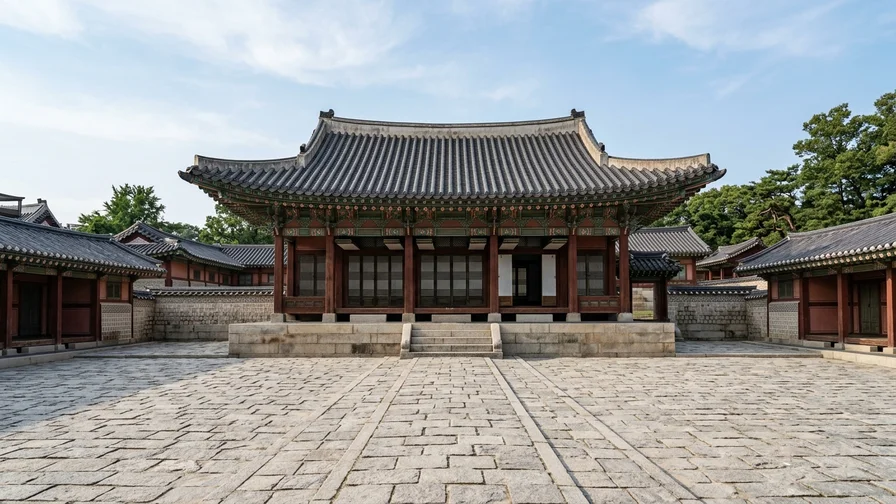
Hwaseong Haenggung (Royal Temporary Palace) is the temporary palace where King Jeongjo stayed when he visited the tomb of his father, Crown Prince Sado. It is regarded as the largest of Korea’s temporary palaces. Admission is separate from the free wall walk. The information below is based on the official guidance of the Suwon Cultural Foundation as of June 2026 (Suwon Cultural Foundation visitor information).
- Location: 825 Jeongjo-ro, Paldal-gu, Suwon-si, Gyeonggi-do (Hwaseong Haenggung)
- Hours: 09:00 – 18:00 (last entry 17:00, one hour before closing), open year-round
- Admission:
- Adults: 2,000 won (about $1.50)
- Soldiers and teens: 1,500 won
- Children: 1,000 won
Main Highlights and Events
- Bongsudang Hall: The central building, site of the 60th-birthday banquet for Lady Hyegyeong
- Yuyeotaek: King Jeongjo’s office
- Nangnamheon: A resting space
- Each building features models and explanations depicting daily life of the period
The one thing you shouldn’t miss at the palace is Bongsudang Hall. This is the very building where King Jeongjo held the 60th-birthday banquet for his mother, Lady Hyegyeong, in 1795 — the stage for the most magnificent feast a Joseon king ever hosted outside the royal palace. Viewed together with its interior models, the entire purpose of the temporary palace becomes clear at a glance.
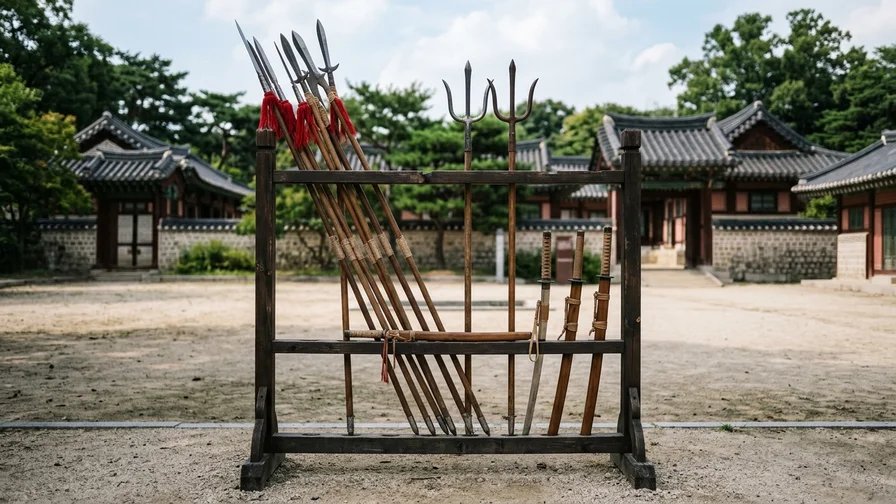
Martial Arts 24 Skills Demonstration: A martial arts display by soldiers of the Jangyongyeong, Joseon’s elite royal guard. The dynamic performance with spears, swords, and bows takes place in the plaza in front of Sinpungnu Gate. Admission is free (the Haenggung Palace entry fee is separate).
- Schedule: Year-round, Tuesday–Sunday at 11:00 (closed Mondays), with an additional 14:00 performance on Saturdays and Sundays (as of June 2026)
- Note: The performance is regularly suspended during the hottest and coldest seasons, and is canceled or shortened on days when the temperature exceeds 33°C or fine-dust levels are severe — check the Suwon Cultural Foundation performance guide before visiting
Night opening: In 2026, the palace opens 18:00–21:30 (last entry 21:00) every Friday–Sunday and on public holidays from May 1 to November 1. Lighting and media art create an atmosphere quite different from daytime. Check the schedule and book tickets at the Suwon Cultural Foundation night-opening guide.
The Hwaseong Tourist Train Route
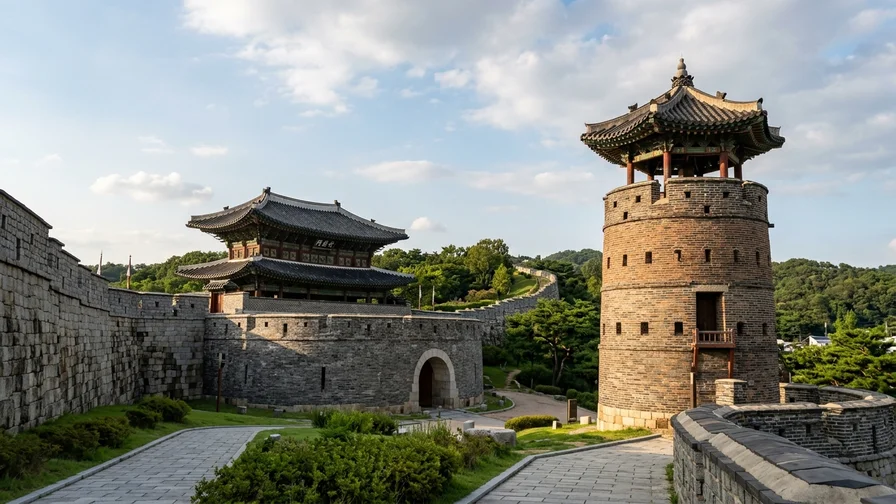
If walking the entire wall feels like too much, the Hwaseong Tourist Train is a good alternative. It’s a sightseeing train designed after the automobile that Emperor Sunjong rode and a royal palanquin. The details below are based on the official guidance of the Suwon Cultural Foundation as of June 2026 (Hwaseong Tourist Train guide).
- Route: A loop starting at Yeonmudae — Yeonmudae → Hwahongmun (stop available) → Janganmun → Hwaseomun (stop available) → Maehyanggyo (stop available) → Yeonmudae, about 30 minutes per loop
- Operating hours: Tuesday–Sunday 09:40–17:00, departures every 20 minutes (closed Mondays)
- Fares: Adults 6,000 won (about $4.60), soldiers and teens 3,500 won, children 2,000 won
- Boarding: Board in front of the Yeonmudae ticket office, up to 36 passengers per trip — it often sells out early during peak weekend periods
- Suspension conditions: Does not run on snowy or rainy days or when a fine-dust warning is in effect
- Features: Commentary is available in English, Chinese, and Japanese, making it useful for international travelers. Note, however, that it is a different experience from walking on top of the wall, and there is currently no route departing from Haenggung Palace, so you’ll need to go to Yeonmudae to board
If you’d like to look down on the fortress from the sky, there’s also the tethered helium balloon Flying Suwon operating near Changnyongmun (as of June 2026, weekday adult tickets from 19,000 won on the booking site). It is often grounded depending on weather such as wind, so check the official site for that day’s operating status.
Transport — From Seoul and Around Suwon
From Seoul to Suwon Station
| Mode | Departure Station (example) | Time | Notes |
|---|---|---|---|
| KTX | Seoul Station | About 25–30 min | 8,400 won in standard class. Only trains routed via the conventional Gyeongbu line stop at Suwon Station — check the timetable. The SRT does not stop at Suwon Station |
| ITX-Saemaeul / Mugunghwa | Seoul Station / Yongsan Station | About 30–35 min | ITX-Saemaeul 4,800 won, Mugunghwa 2,700 won — the best value, with reserved seating |
| Metropolitan Subway Line 1 | Seoul Station / City Hall Station, etc. | About 60–70 min | The cheapest (around 2,000 won by transit card), but slower with many stops |
| Metropolitan Subway Shinbundang Line | Gangnam Station / Sinsa Station | About 40 min | Convenient from the Gangnam area, but requires a bus transfer at Gwanggyo Jungang Station toward Haenggung Palace |
Fares are for standard class and are subject to change (as of June 2026). Check the latest timetables and fares at KORAIL (korail.com).
From Suwon Station to Haenggung Palace, Janganmun, and Yeonmudae
Bus routes based on the official guidance of the Suwon Cultural Foundation (June 2026, how to reach key points).
- Haenggung Palace: From the stop in front of the Novotel at Suwon Station Exit 4, take bus 11 or 13 → get off at the “Hwaseong Haenggung / Suwon Seongji” stop (about 15–20 min); or take bus 60 or 7-2 from Exit 7, or bus 700-2 from platform 7 of the Suwon Station transfer center
- Janganmun: From Suwon Station Exit 7, take bus 60, 7-2, 777, or 900, etc. → get off at the “Jangan Park” stop
- Yeonmudae (tourist train, archery experience): From Exit 7, take bus 60 or 7-2, or bus 700-2 from the transfer center → get off at the “Changnyongmun / Yeonmudae” stop
By taxi, it’s about 3km from Suwon Station to Haenggung Palace, roughly 6,000–7,000 won. International travelers may run into trouble using the Kakao T app due to Korean phone number and card verification issues, but hailing a taxi on the street is doable.
Nearby Restaurants and Dining Areas
1. Suwon Nammun Market
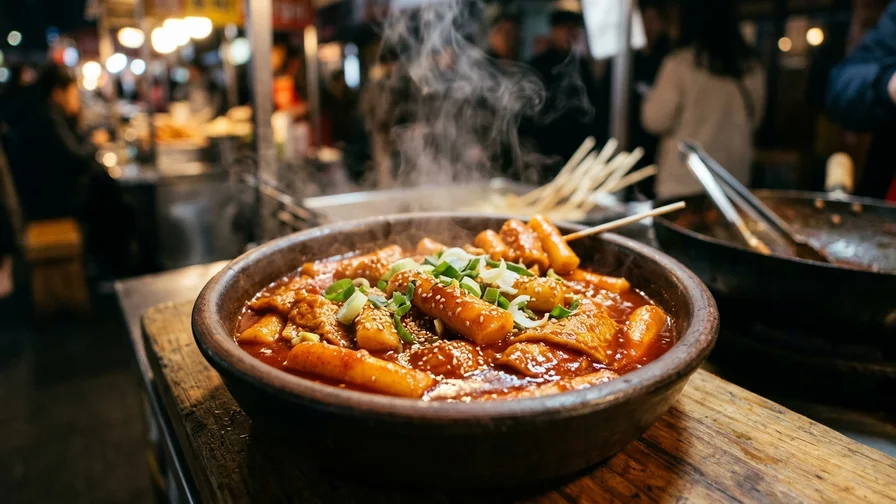
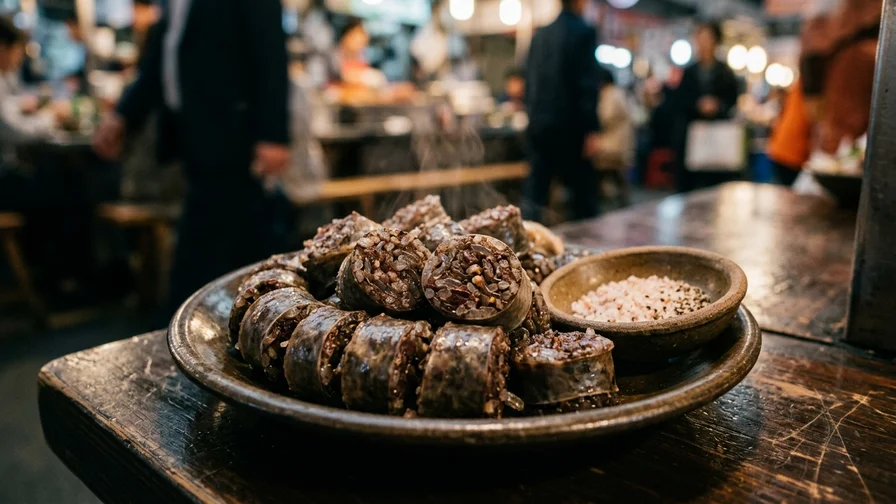
This is a coalition of nine markets surrounding Paldalmun Gate. It’s a lively traditional market where you can taste cheap street food and bunsik (Korean snack-bar fare) such as Spicy Rice Cakes (떡볶이, tteokbokki), Korean Blood Sausage (순대, sundae), and fritters. If you’re after Fish Cake (어묵, eomuk) snacks, Nammun Maeun Odeng 📍 near the market is a great choice.
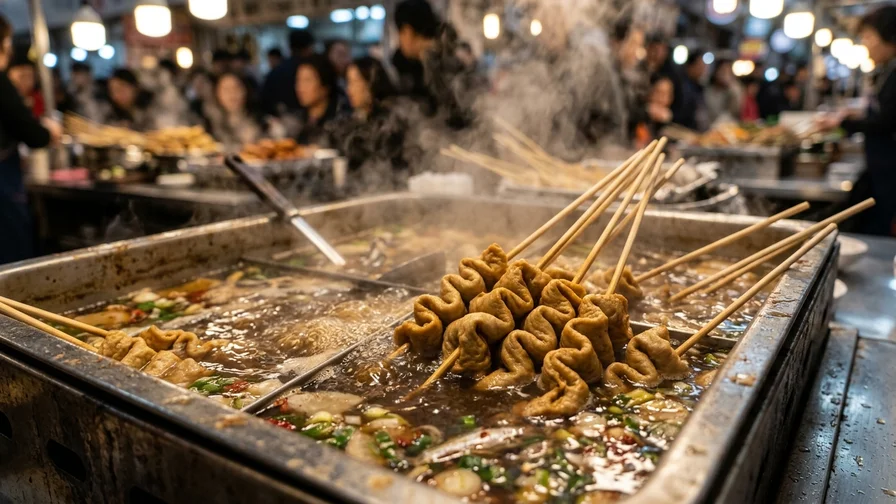
- Spot: Suwon Nammun Market
- Snacks: Nammun Maeun Odeng (15 Jungbu-daero 3beon-gil, Paldal-gu, Suwon-si, Gyeonggi-do; closed Mondays) — spicy fish-cake skewers for 1,200 won, a market signature of rich-broth fish cakes topped with a spicy house sauce
2. Suwon Tongdak (Fried Chicken) Street
This famous street is a 10-minute walk from Haenggung Palace. It has been around since the 1970s and is known for old-style whole fried chicken cooked in cast-iron cauldrons. The crispy texture and generous portions are the hallmark, and many shops serve fried gizzards or fried chicken feet for free. Popular shops have long lines in the evening, so visiting before 5 p.m. is recommended.
- Spot: Suwon Tongdak Street
- Chicken: Yongsung Tongdak Main Branch 📍 (15 Jeongjo-ro 800beon-gil, Paldal-gu, Suwon-si, Gyeonggi-do; closed Tuesdays) — the largest shop on the street, whose signature is old-style fried chicken cooked whole
- Chicken: Jinmi Tongdak 📍 (21 Jeongjo-ro 800beon-gil, Paldal-gu, Suwon-si, Gyeonggi-do; closed Mondays) — a fixture of the street since 1982, with cast-iron fried whole chicken around 20,000 won, enough to share between two
- Chicken: Jangan Tongdak 📍 (42 Paldalmun-ro 3beon-gil, Paldal-gu, Suwon-si, Gyeonggi-do; open year-round) — strong on richly seasoned chicken, with grilled whole garlic and grilled gizzards served on the house
3. Haenggung-dong Cafe Street
This is an area where trendy cafes and restaurants gather in the alleys around Haenggung Palace and the fortress wall. Options range from cafes with wall views to cafes set in converted houses, making it ideal for a rest after touring the fortress.
- Spot: Haenggung-dong Cafe Street
- Dessert: Chu Plus 📍 (26 Hwaseomun-ro 45beon-gil, Paldal-gu, Suwon-si, Gyeonggi-do) — a churro specialty shop whose signatures are the original churros for 3,500 won and an ice cream set (churros are freshly fried Spanish stick doughnuts)
- Coffee shop: De Atmos 📍 (9-8 Hwaseomun-ro 31beon-gil, Paldal-gu, Suwon-si, Gyeonggi-do) — a cafe in a converted red-brick house, with rooftop views over the alleys of Haenggung-dong and a signature almond cream latte
4. A Galbi Meal
Suwon is also famous for marinated beef short ribs (Suwon wang-galbi). If you’d like a Korean galbi meal a short distance from the palace area, Namsuwon Galbi 📍 is a good option.
- Galbi: Namsuwon Galbi (631 Gwonseon-ro, Gwonseon-gu, Suwon-si, Gyeonggi-do; within walking distance of Maegyo Station on the Suin-Bundang Line) — a long-established galbi restaurant in Suwon, serving charcoal-grilled pork and beef ribs paired with house-made naengmyeon
Tips for Choosing Season and Time
- Spring (April): Cherry blossoms in full bloom along the wall — one of the most beautiful times to visit
- Autumn (September–October): The best weather for walking, with the Suwon Hwaseong Cultural Festival and the re-enactment of King Jeongjo’s royal procession in early October
- Summer (June–August): Hot and humid — early morning or late afternoon visits are recommended
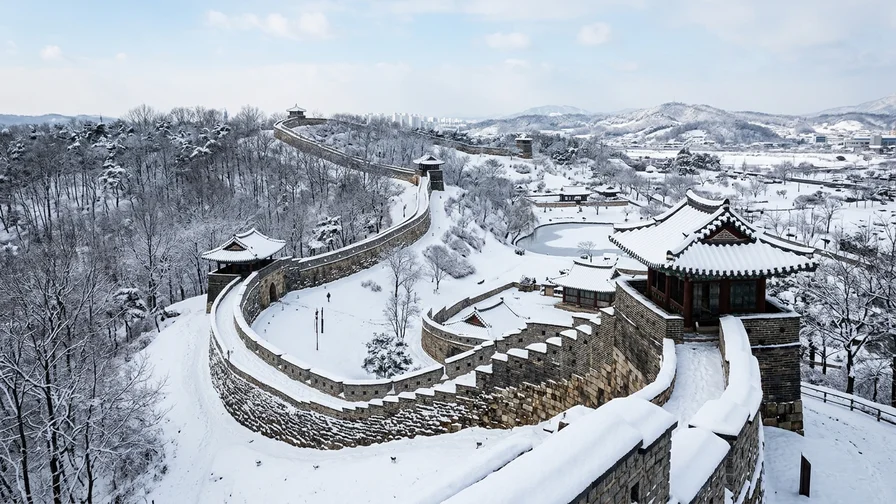
- Winter (December–February): Cold but quiet with fewer visitors, offering the unique experience of the snow-covered fortress
Practical Tips for International Travelers
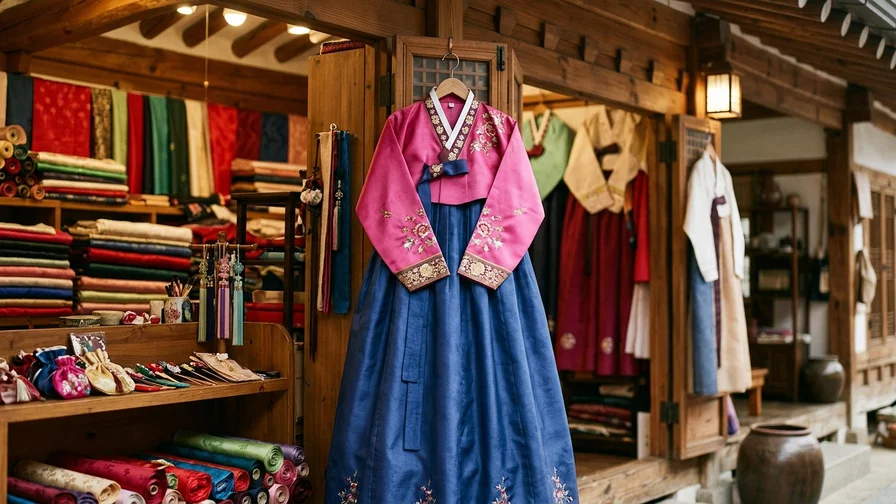
Editor’s tip: There are many 한복 (Hanbok, traditional Korean clothing) rental shops around Haenggung Palace. Taking photos at Haenggung Palace and along the wall while wearing 한복 is a popular activity, and there’s even a perk: wearing 한복 (including modernized hanbok) gets you free admission to Haenggung Palace. (Check the current policy when you visit.)
- Combination ticket: Covers admission to three sites — Haenggung Palace, the Suwon Hwaseong Museum, and the Suwon Museum — for 4,000 won (adults), 2,500 won (soldiers and teens), and 1,000 won (children) (as of June 2026) — economical if you visit two or more sites; check the latest fares at Suwon Hwaseong tourism information
- Tourist information for foreigners: Tourist Interpretation Hotline 1330 (English, Chinese, Japanese, 24 hours); for Suwon city administrative inquiries, the Suwon Human Call Center at 1899-3300 (weekdays 08:30–18:30)
- Driving: If you drive yourself, an International Driving Permit (IDP) is required, but with limited parking and complex traffic, public transport is recommended
Frequently Asked Questions (FAQ)
- Q1: How many hours do I need in total to see Suwon Hwaseong Fortress?
- A1: Walking the full wall (about 2.5 hours), touring Haenggung Palace (about 1.5 hours), and including a meal, you’ll need at least 5–6 hours. It’s best to plan for a full, relaxed day.
- Q2: Is walking the wall very tiring?
- A2: Most of it has gentle slopes, but there are many stairs around Seojangdae and some of the ammun (secret gates). For the elderly or young children, we recommend taking the tourist train or visiting specific sections such as Banghwasuryujeong.
- Q3: Can I pay by credit card?
- A3: Credit cards are accepted for Haenggung Palace admission and at most restaurants and cafes. However, some small stalls at Nammun Market only take cash, so it’s wise to carry a little cash.
- Q4: Can I fly a drone within the fortress?
- A4: Suwon Hwaseong falls within a no-fly zone due to its proximity to a military facility (an air force base). Flying a drone without permission is illegal and strictly prohibited.
- Q5: Are restrooms and amenities well provided?
- A5: Public restrooms at major points such as the four gates, Haenggung Palace, and Yeonmudae are well maintained. Benches are placed along the wall for resting.
- Q6: Is the site accessible by wheelchair or stroller?
- A6: The interior of Haenggung Palace is mostly flat and accessible by wheelchair and stroller. The wall path, however, has many stairs and unpaved stretches, making it very difficult. For wheelchair space on the tourist train, it’s best to inquire in advance (Yeonmudae ticket office 031-228-4686).
This information is current as of June 2026 and is subject to change, so please confirm the latest hours and fares at the Suwon Cultural Foundation (swcf.or.kr) or Suwon Hwaseong Tourism (visitsuwon.or.kr) before your visit.
Related Reading on This Topic
- 17 UNESCO World Heritage Sites in Korea
- The 40 Royal Tombs of the Joseon Dynasty (UNESCO 2009)
- Haeinsa Janggyeong Panjeon & Tripitaka Koreana (UNESCO 1995)
- Gyeongju UNESCO World Heritage (1995, 2000)
- 9 Korean Seowon Confucian Academies (UNESCO 2019)
- Jeju Volcanic Island and Lava Tubes (UNESCO 2007)
- Jongmyo Shrine (UNESCO 1995)
- Changdeokgung Palace & Secret Garden (UNESCO 1997)
- Gochang, Hwasun & Ganghwa Dolmen Sites (UNESCO 2000)
- Andong Hahoe & Gyeongju Yangdong Villages (UNESCO 2010)
- Namhansanseong Fortress (UNESCO 2014)
- Baekje Historic Areas (UNESCO 2015)
- Sansa, 7 Buddhist Mountain Temples in Korea (UNESCO 2018)
- Getbol, Korea's 4 Tidal Flats (UNESCO 2021)
- Gaya Tumuli, 7 UNESCO Sites (UNESCO 2023)
- Bangudae Petroglyphs (UNESCO 2025)