Namhansanseong Fortress (UNESCO 2014)
Contents
- The 2014 Inscription — Fortress Architecture and Traces of Diplomacy
- The 1636 Manchu Invasion and 47 Days — King Injo’s Surrender
- Getting There — Sanseong Station (Line 8) and Macheon Station (Line 5)
- The Four Main Gates and Sueojangdae
- Haenggung — The King’s Temporary Palace
- Restaurants Nearby (Sanseong Rotary’s dak-baeksuk and sanchae jeongsik)
- Seasonal Tips
- Practical Tips for International Travelers
- Frequently Asked Questions (FAQ)
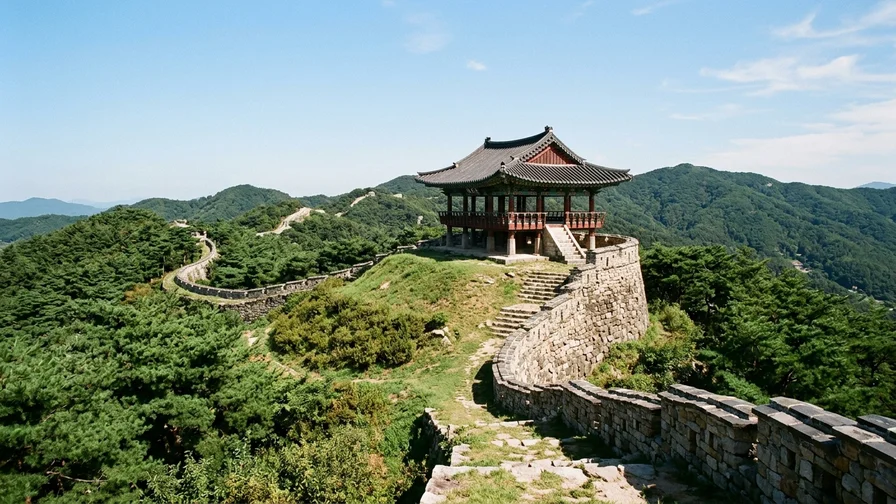
Namhansanseong Fortress, a UNESCO World Heritage site, sits about 25km southeast of Seoul and is reachable in 19 minutes by subway plus a 25-minute bus ride from Jamsil Station. It was the stage of a 47-day siege in 1636 during the Manchu invasion, when King Injo held out against the Qing army, and today it offers roughly 12km of walls (main fortress and outer fortifications combined) to walk along as a day trip.
- Inscription: UNESCO World Heritage Site (UNESCO World Heritage, 2014, ref. no. 1439), a military relic showcasing the characteristics of Joseon-era mountain fortress construction
- Access: Reachable by bus from Sanseong Station on Seoul Subway Line 8, or on foot via Macheon Station on Line 5 — perfect for a day of trekking and history
- Fees: The walls and trails are free (admission fees abolished as of January 1, 2007); only Namhansanseong Haenggung (Royal Palace) charges a fee (adults 2,000 won)
- What to see: Wall-trekking courses (1 hr 20 min – 3 hr 20 min) plus a tour of the temporary palace, Haenggung
The 2014 Inscription — Fortress Architecture and Traces of Diplomacy
The World Heritage value of Namhansanseong Fortress goes beyond a simple military installation: it represents a concentration of East Asian military architecture and the international politics of its era. It’s a layered heritage site that preserves traces of expansions and renovations across multiple periods.
- Origins: Believed to stand on the site of Jujangseong Fortress, dating to the 12th year of King Munmu of Unified Silla (672)
- Present form: A major reconstruction begun in 1624 (King Injo’s 2nd year) and completed in 1626 (his 4th year)
- Blended techniques: Traditional Joseon fortress-building methods combined with some structural elements from Chinese and Japanese fortifications
- Artillery Bastion (poru): Found in certain sections, designed to respond to the new warfare of the gunpowder age
- Temporary capital function: Planned as a temporary capital to replace Hanyang (old Seoul) in emergencies, with capacity for about 4,000 people
- Internal facilities: Spaces for the Jongmyo Shrine and Sajikdan Altar, plus the royal palace and administrative buildings
The 1636 Manchu Invasion and 47 Days — King Injo’s Surrender
The key event for understanding the history of Namhansanseong Fortress is the Manchu invasion of 1636. The conflict between Emperor Taizong of Qing, who demanded a lord-vassal relationship, and the Joseon court, which refused, erupted into war.
- Background: Joseon rejected the demand for a lord-vassal relationship from Later Jin (later the Qing Dynasty)
- Invasion: A Qing army of 120,000 crossed the Yalu River and pushed rapidly south
- The retreat: With the route to Ganghwa Island cut off, King Injo and his court took refuge inside Namhansanseong
- Length of the siege: December 14, 1636 to January 30, 1637 (lunar calendar), a total of 47 days
- Breaking point: Brutal cold, food shortages, and word of defeated relief forces all compounded
In the end, King Injo went out through Seomun (the West Gate) and performed a ceremony of surrender to the Qing emperor at Samjeondo, in what is now Songpa-gu, Seoul. The event is known as the “Humiliation of Samjeondo” and is recorded as one of the greatest ordeals in Joseon history.
Namhansanseong is thus both a place of fierce resistance and one shadowed by the tragedy of defeat and surrender.
Getting There — Sanseong Station (Line 8) and Macheon Station (Line 5)
A day trip is entirely doable with public transport alone, and access is excellent even without a car. There are two routes: the Sanseong Station route, an easy bus ride up, and the Macheon Station route, a walk up on foot.
By Subway and Bus (from Sanseong Station)
- Get off at Sanseong Station on Subway Line 8, about 19 minutes from Jamsil Station
- Use the bus stop in front of Exit 2
- Take Bus No. 9 (the main line); on weekends and holidays, Bus 9-1, which goes straight to the fortress, also runs. Bus 52 stops at the same place but runs very infrequently
- After about 25 minutes, get off at the terminus, Sanseong Rotary, the gathering point for the palace, the restaurant district, and the visitor center
- The fare is 1,650 won with a transit card (Gyeonggi-do regular city bus, as of June 2026); use a T-money card for transfer discounts from the subway
Because traffic on the mountain road often stretches out the intervals between buses, it’s best to check the real-time bus arrival info on KakaoMap or Naver Map, or the position of Bus 9 on Gyeonggi Bus Information (gbis.go.kr), before heading to the stop. Taxis can be hailed via Kakao T and climb the same mountain road as the bus — check the estimated fare in advance using KakaoMap directions.
Walking Up from Sanseong Station
- Time required: About 1 hour to 1 hour 30 minutes
- Route: Sanseong Station Exit 2 → Namhansanseong signpost → Sanseong Waterfall → Bulmangbi (Memorial Stele) → Nammun (South Gate), along Course 1 of the Seongnam Nubi Trail (Namhansanseong Trail)
- South Gate → Sanseong Rotary: About 10 minutes
Hiking Up from Macheon Station (West Gate Course)
- Start: Exit 1 of Macheon Station on Subway Line 5
- Route: Macheon Station → Cheongunsa Temple → Namhansanseong Meeting Plaza → Seomun (Uikmun, West Gate), about 3km
- Time required: About 1 hour 30 minutes to the West Gate; the gentle grade and well-maintained trail make it manageable even for beginners
- Highlight: Views over central Seoul the moment you reach the West Gate, then a wall-path connection to Sueojangdae
Recommended Trekking Courses (Official Trails)
- Course 1 (easy): Sanseong Rotary → North Gate → West Gate → Sueojangdae → South Gate → Sanseong Rotary, about 3.8km, 1 hr 20 min
- Course 5 (full loop): East Gate → North Gate → West Gate → Sueojangdae → South Gate → East Gate, about 7.7km, 3 hr 20 min — passing all four main gates and Sueojangdae, with different cityscapes at each point
- Planning your day: Add a palace visit (about 1 hour) for a half-day, or include the walk up from Macheon Station for a full day
The Four Main Gates and Sueojangdae
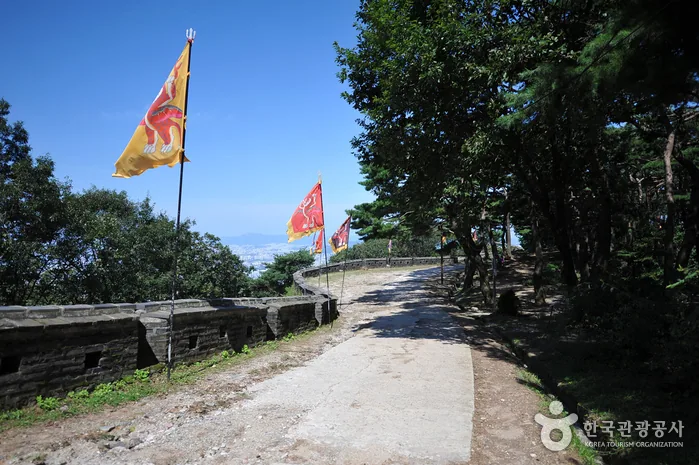
Four main gates stand in the four cardinal directions. Each gate carries its own distinct role and history.
- South Gate (Nammun) – Jihwamun: The largest of the four gates, the de facto main entrance and royal passage; the shortest distance from Sanseong Rotary
- West Gate (Seomun) – Uikmun: The gate through which King Injo went out to surrender; its gentle slope doubled as a supply route, and it’s a renowned spot for sunsets and night views toward Seoul
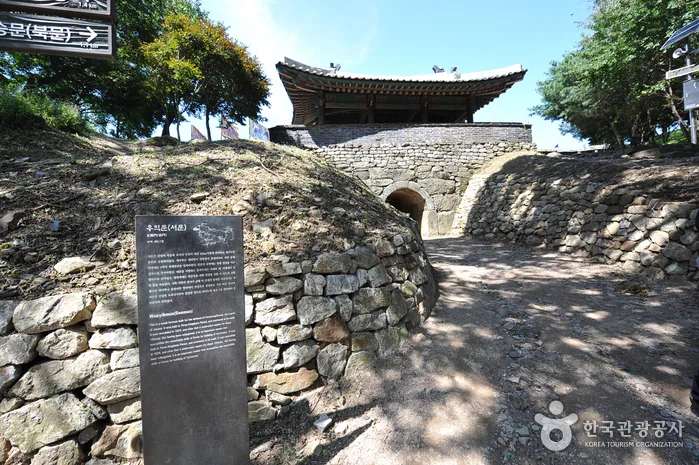
- North Gate (Bukmun) – Jeonseungmun: A battleground of the Manchu invasion; its name expresses a wish for victory, though the actual history was one of defeat, and it served a small-scale military purpose
- East Gate (Dongmun) – Jwaikmun: At the lowest elevation, used as a route for daily supplies and a gateway toward Hanam and Gwangju
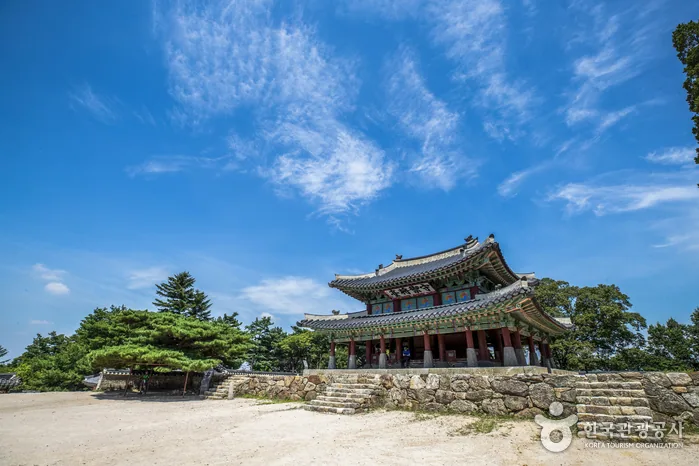
Sueojangdae (Command Post)
- Location: On the western side of the fortress, at the highest point of 497m above sea level
- Function: A military command post overlooking the fortress interior, central Seoul, and the surrounding area
- Status: The only one of the original five command posts to survive; initially a single-story pavilion (Seojangdae), it was expanded to two stories in 1751 (the 27th year of King Yeongjo)
- Mumangnu: A plaque reading “Mumangnu” hangs inside the second floor, meaning “never forget” — a reminder of King Injo’s ordeal during the Manchu invasion and the thwarted northern expedition of his son, King Hyojong; a spot well worth pausing for along the wall path
Haenggung — The King’s Temporary Palace
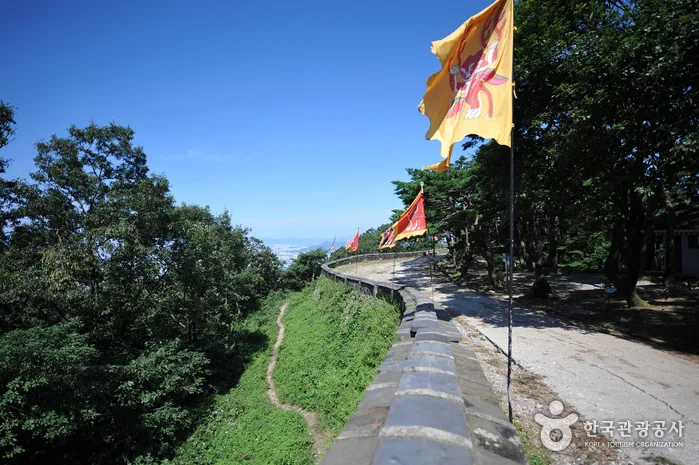
Namhansanseong Haenggung was a facility where the king could stay temporarily and conduct state affairs in an emergency. Unlike other temporary palaces built for rest or royal tomb visits, it was designed from the start for wartime use.
- What makes it special: It had the character of a temporary capital, even including buildings to enshrine the Jongmyo Shrine and Sajikdan Altar
- History: King Injo stayed here for 47 days during the Manchu invasion, and later it served as a stopover on royal tomb visits to Yeoju and Icheon
- Today: Though reconstructed, it faithfully recreates the basic structure of a Joseon-era royal palace; the main gate is Hannamnu, a two-story gate pavilion built in 1798
- Don’t miss: Beneath the lower palace site, a large Unified Silla building foundation was excavated — the remains of a presumed storehouse measuring 18m east to west and 53.5m north to south are on open display, and the roof tiles found here weigh about 19kg each, four times that of ordinary tiles. It’s a spot where 1,000-year-old Silla relics lie layered beneath the courtyard of a Joseon palace
| Item | Details |
|---|---|
| Admission | Adults (19–64) 2,000 won (about $1.50), youth (7–18) 1,000 won, free for ages 6 and under and 65 and over — the walls and trails themselves are entirely free |
| Hours | Summer (Apr–Oct) 10:00–18:00, winter (Nov–Mar) 10:00–17:00; ticket sales end 30 minutes before closing |
| Closed | Every Monday (open as normal if Monday is a public holiday) |
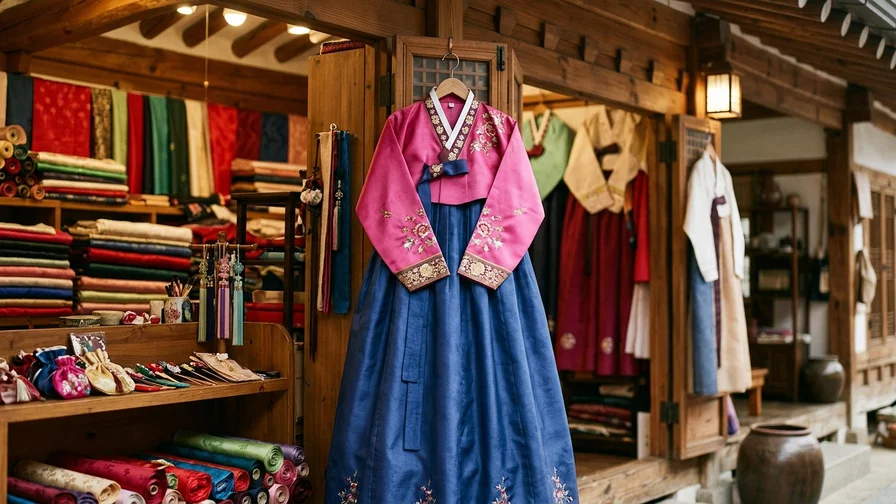
| Free admission | 한복 (traditional Korean dress) wearers, Gyeonggi-do residents (with ID), and others |
Check the official website before visiting: Hours and closing days may change. Before visiting, we recommend checking the latest information on the official Gyeonggi-do Namhansanseong World Heritage Center website.
Restaurants Nearby (Sanseong Rotary’s dak-baeksuk and sanchae jeongsik)
After your trek, you can grab a meal at the restaurant district around Sanseong Rotary. This area is known as “Baeksuk Street” for its concentration of restaurants specializing in dak-baeksuk (whole-chicken soup).
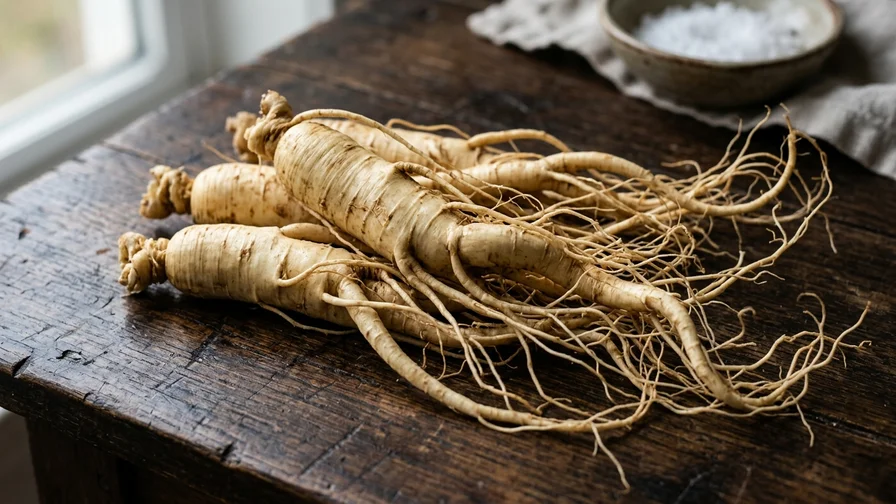
- Dak-baeksuk: A traditional restorative dish of a whole chicken slow-simmered with glutinous rice, jujubes, and 인삼 — perfect for replenishing energy after a hike
- Nurungji-baeksuk: A variation in which nurungji (scorched rice from the bottom of an iron pot) is added to the broth and cooked into a savory porridge — the signature style of this neighborhood
- Eomnamu-baeksuk: Baeksuk simmered with branches of the eomnamu (castor aralia) tree used in herbal medicine, with a subtle medicinal aroma
- Sanchae jeongsik: A set meal of wild-mountain-vegetable side dishes, rice, and stew, centered on fresh vegetables
The following are verified, real restaurants. Baeksuk dishes run about 60,000–80,000 won for a whole free-range chicken, enough for 3–4 people to share (as of June 2026). Since baeksuk takes over 30 minutes to cook after ordering, it’s best to order as soon as you sit down.
| Name | Address | Signature Dish |
|---|---|---|
| Seokchon 📍 | 33 Namhansanseong-ro 780beon-gil, Namhansanseong-myeon, Gwangju-si, Gyeonggi-do | Abalone nurungji free-range baeksuk, dak-bokkeumtang (chicken braised in a spicy sauce) |
| Sanseong Daega 📍 | 11-12 Namhansanseong-ro 792beon-gil, Namhansanseong-myeon, Gwangju-si, Gyeonggi-do | Eomnamu-baeksuk — featured on the TV food show Wednesday Gourmet (a popular Korean restaurant-review program); closed Mondays |
| Cheongsuga 📍 | 23 Namhansanseong-ro 780beon-gil, Namhansanseong-myeon, Gwangju-si, Gyeonggi-do | Free-range chicken herbal baeksuk, duck herbal baeksuk |
| Obaengnyeon Nurungji Baeksuk 📍 | 731-22 Namhansanseong-ro, Namhansanseong-myeon, Gwangju-si, Gyeonggi-do (formerly Wandojip) | Free-range chicken nurungji baeksuk, open 10:00–20:00 |
Most are clustered near the Sanseong Rotary parking lot, so they’re easy to find. On Mondays the palace is closed and some restaurants also take the day off, so if you’re visiting on a Monday it’s safer to check whether a restaurant is open by phone or a map app beforehand.
Seasonal Tips
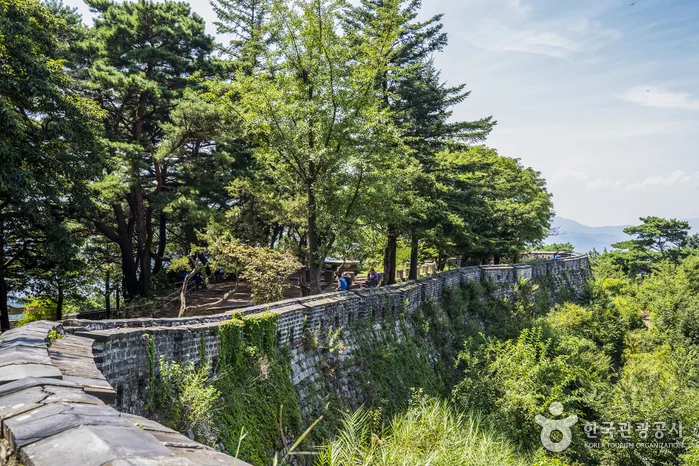
Autumn Foliage (mid-October to early November)
- Peak: Mid-October to early November, when the wall paths turn red and gold with autumn leaves
- Crowds: Visitors concentrate here, and weekends can be fairly busy
Night Views
- Spot: Near the West Gate, with views of the southeastern Seoul skyline including Lotte World Tower
- Safety: Night trekking is risky; a flashlight or headlamp is essential, and going with an experienced companion is recommended
- Note: Check public transport’s last-service times before heading down — confirm the last departure of Bus 9 that day on KakaoMap or Gyeonggi Bus Information
Practical Tips for International Travelers
- Transit card: A rechargeable T-money card makes the subway-plus-Bus-9 transfer easy; the bus fare is 1,650 won with a card (as of June 2026)
- Clothing and shoes: Sneakers or hiking shoes suitable for mountain trekking are a must; bring a light jacket for temperature changes
- Water and snacks: There are no shops along the wall paths, so prepare water and snacks before setting off from Sanseong Rotary
- Taxi-hailing apps: Kakao T accepts overseas-issued cards (Visa, Mastercard, American Express, JCB), but sign-up needs SMS verification and some overseas SIMs don’t receive the code (verified October 2026). If verification fails, use the 1330 Travel Hotline (with foreign-language support) or a taxi waiting at Sanseong Rotary
- If driving: A rental car requires an International Driving Permit (IDP); the parking lot near the palace charges 1,500–3,000 won for small cars on weekdays and 2,500–5,000 won on weekends and holidays (as of June 2026), but public transport is recommended given weekend congestion
Frequently Asked Questions (FAQ)
- Q1: How long does it take to see Namhansanseong?
- A: Touring just the palace takes about 1 hour, while a full loop of the walls (official Course 5, about 7.7km) takes about 3 hours 20 minutes. Add 1–2 hours if you walk up from Sanseong or Macheon Station.
- Q2: Is the trekking course very strenuous?
- A: It’s a real fortress trail, not a flat park path. Uphills and downhills alternate, but the trail is well-maintained, so beginners can manage it. That said, it may feel somewhat tough if you don’t exercise much.
- Q3: Is there an admission fee?
- A: The walls and trails are free (admission fees were abolished in 2007). Only Namhansanseong Haenggung charges a fee, 2,000 won for adults, and it’s free if you wear hanbok.
- Q4: When is the best season to visit?
- A: Spring (April–May) and the peak-foliage autumn (October–November) are the most popular. Summer is hot and humid, and winter can be slippery with snow, so take care for safety.
- Q5: Can I use credit cards?
- A: Credit cards are accepted at the palace ticket office and at most restaurants, cafés, and convenience stores around Sanseong Rotary.
- Q6: Is there information in English?
- A: You can pick up an English information map at the visitor center at Sanseong Rotary or the palace ticket office. English signboards are installed at major points.
- Q7: Can I visit with a wheelchair or stroller?
- A: Access is possible up to Sanseong Rotary and the palace entrance, but the wall paths are made of stairs and unpaved dirt trails, making wheelchairs or strollers nearly impossible to use.
Before visiting, check the palace hours and closing days on the Gyeonggi-do Namhansanseong World Heritage Center website (gg.go.kr), and the last departure of Bus 9 on KakaoMap or Gyeonggi Bus Information (gbis.go.kr).
Some photos © Korea Tourism Organization (KOGL Type 1)
Related reads in this series
- 17 UNESCO World Heritage Sites in Korea
- Haeinsa Janggyeong Panjeon & Tripitaka Koreana (UNESCO 1995)
- Gyeongju UNESCO World Heritage (1995, 2000)
- Jongmyo Shrine (UNESCO 1995)
- Changdeokgung Palace & Secret Garden (UNESCO 1997)
- Andong Hahoe & Gyeongju Yangdong Villages (UNESCO 2010)
- Baekje Historic Areas (UNESCO 2015)
- Sansa, 7 Buddhist Mountain Temples in Korea (UNESCO 2018)
- Bangudae Petroglyphs (UNESCO 2025)