Gaya Tumuli, 7 UNESCO Sites (UNESCO 2023)
목차
- What the 2023 Inscription Means: The Gaya Confederacy Revisited
- The Complete List of All 7 Gaya Tumuli
- 3 Top Picks for International Travelers: Gimhae, Goryeong, and Haman
- A Summary of the Remaining 4 Burial Complexes
- Gaya: Exchanges with Silla, Baekje, and Japan
- Recommended 2-Day Regional Route (Busan, Gimhae → Haman → Goryeong)
- Information on Nearby Museums
- Practical Tips for International Travelers
- Frequently Asked Questions (FAQ)
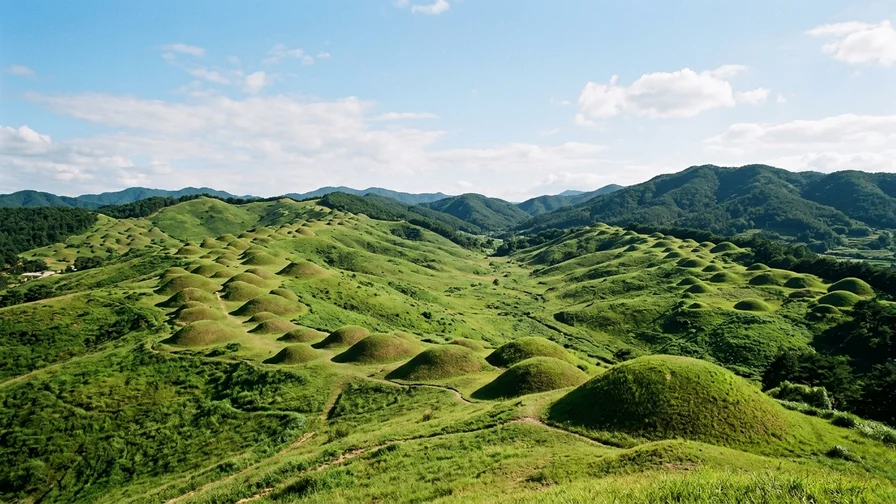
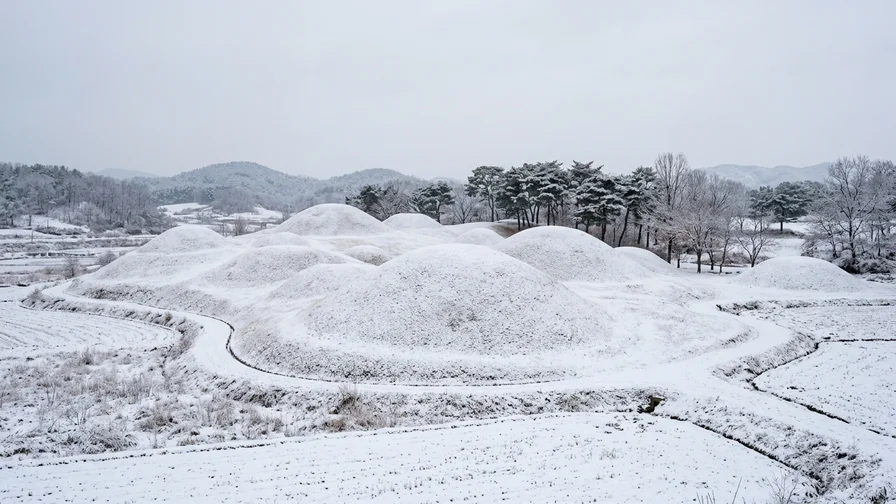
In September 2023, South Korea inscribed its 16th UNESCO World Cultural Heritage Site. These are the Gaya Tumuli, the burial mounds of Gaya, an ancient political confederacy that existed in the southern Korean Peninsula between the 1st and 6th centuries (UNESCO official inscription page). Rather than a single site, it is a Serial Property that bundles together burial mound complexes scattered across 7 different regions, serving as evidence of Gaya’s distinctive civilization and history. This guide introduces all 7 burial complexes, but focuses on the 3 most easily reached by public transport for international travelers (Gimhae, Goryeong, and Haman), including bus frequencies and fares.
- Key Takeaway 1: A complex of ancient Gaya Confederacy burial sites spread across 7 regions (Gimhae, Haman, Goryeong, Changnyeong, Goseong, Hapcheon, Namwon)
- Key Takeaway 2: Inscribed as a UNESCO World Heritage Site in 2023 (Criterion iii), gaining international recognition for Gaya’s distinct civilization separate from Silla and Baekje
- Key Takeaway 3: The 3 most accessible sites by public transport are Daeseong-dong in Gimhae (near Busan), Jisan-dong in Goryeong (near Daegu), and Marisan in Haman (near Masan)
- Information Basis: The operating hours, admission fees, bus frequencies, and fares in this article are confirmed from official sources as of June 2026
What the 2023 Inscription Means: The Gaya Confederacy Revisited
The Gaya Confederacy was a league of several small states that flourished in the southern Korean Peninsula during the Three Kingdoms period, when Goguryeo, Baekje, and Silla competed for dominance. Unlike the Three Kingdoms, which developed into centralized ancient states, Gaya maintained a unique political system in which each regional small state coexisted within a horizontal network. Backed by outstanding ironworking technology, Gaya carried out active maritime trade and maintained close exchanges with surrounding regions, including Japan.
- Historical Gap: Often called the “Forgotten Kingdom” due to its failure to unify, its absorption by Silla in the mid-6th century, and the scarcity of records
- Significance of the Inscription: The 7 regional burial complexes clearly prove Gaya’s existence and culture
- Excavated Artifacts: Iron armor, gold crowns, and pottery demonstrate a level of technology and culture on par with the Three Kingdoms
Characteristics of the Gaya Confederacy: Rather than a centralized kingdom, it was a coalition of several small states (Geumgwan Gaya, Ara Gaya, Daegaya, and others). Each burial complex served as the center of a small state, and the scale of the tombs and their grave goods allow us to understand the social structure and power relations of the time.
The Complete List of All 7 Gaya Tumuli
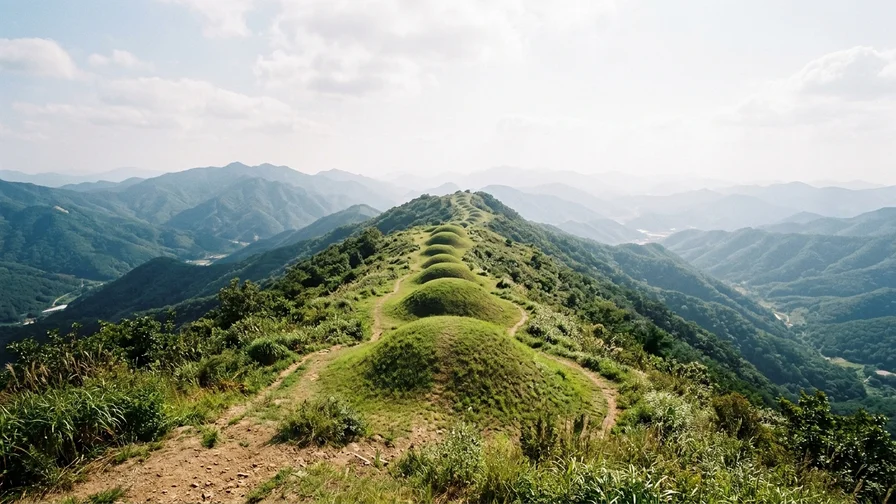
The Gaya Tumuli are not a single site but include all 7 burial complexes that remain at the centers of the Gaya Confederacy’s major small states. Each complex reflects a geographic and political center.
| Burial Complex Name | Location | Affiliated Gaya State | Highlights | Accessibility |
|---|---|---|---|---|
| Daeseong-dong Tumuli, Gimhae | Gimhae, Gyeongsangnam-do | Geumgwan Gaya | Early Gaya center, evidence of international trade | Excellent (30 min by light rail from Busan) |
| Marisan Tumuli, Haman | Haman, Gyeongsangnam-do | Ara Gaya | A massive procession of tombs along a 1.9 km ridge, where horse armor was excavated | Good (25 min by intercity bus from Masan, 5 times daily) |
| Jisan-dong Tumuli, Goryeong | Goryeong, Gyeongsangbuk-do | Daegaya | 704 mounded tombs, the largest Gaya burial complex, with confirmed human sacrifice practices | Good (about 40 min by bus from Daegu, 25 times daily) |
| Gyo-dong and Songhyeon-dong Tumuli, Changnyeong | Changnyeong, Gyeongsangnam-do | Bihwa Gaya | Adjacent to Silla, a fusion of two cultures | Moderate (by bus from Daegu or Changwon) |
| Songhak-dong Tumuli, Goseong | Goseong, Gyeongsangnam-do | So Gaya | A maritime trade hub with a distinctive tomb style | Moderate (by bus from Tongyeong or Jinju) |
| Okjeon Tumuli, Hapcheon | Hapcheon, Gyeongsangnam-do | Dara-guk | Splendid metalwork, with the excavation of a ring-pommel sword decorated with dragon and phoenix motifs | Moderate (by bus from Daegu, right next to Hapcheon Museum) |
| Yugok-ri and Durak-ri Tumuli, Namwon | Namwon, Jeonbuk State | Presumed Gimun | Adjacent to Baekje, the western boundary of Gaya’s sphere of influence | Moderate (by bus or taxi from downtown Namwon) |
3 Top Picks for International Travelers: Gimhae, Goryeong, and Haman
While all 7 burial complexes have great historical value, for international travelers with limited time and transport options, we first recommend the 3 sites that are easy to reach from KTX stations or major airports. These three were the centers of Geumgwan Gaya, Daegaya, and Ara Gaya, respectively—the core of the Gaya Confederacy.
1. Daeseong-dong Tumuli, Gimhae (Geumgwan Gaya): Ideal for a Day Trip from Busan
The Daeseong-dong Tumuli in Gimhae are the burial mounds of the ruling class of Geumgwan Gaya, the early leader of the Gaya Confederacy. Located close to Gimhae International Airport and directly connected to downtown Busan by light rail, it offers the best accessibility of all 7 sites.
- What to see: A burial complex on a low hill, well suited for a leisurely stroll
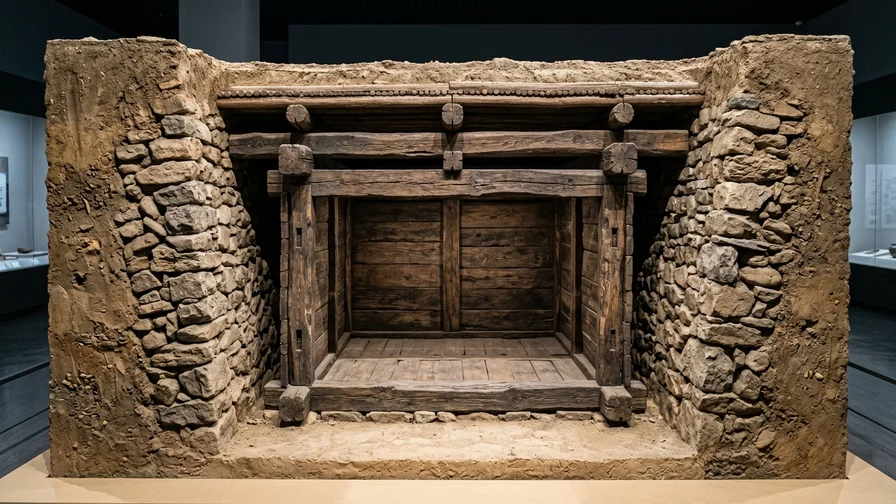
- Daeseong-dong Tumuli Museum: An exhibition hall that preserves the excavation site, allowing a vivid look at the interior structure of the tombs
- Gimhae National Museum: A comprehensive collection of artifacts from across Gaya, including exquisite iron armor and pottery
- The one piece you must see: The spiral-shaped bronze ornaments (pahyeong-donggi) at the Daeseong-dong Tumuli Museum—Japanese-style artifacts found only at Daeseong-dong in all of Korea, providing direct evidence that Gaya traded across the sea with Wa (ancient Japan) while exporting iron. Seen side by side with the bronze cauldrons of northern nomadic origin, the breadth of Geumgwan Gaya’s trade network truly hits home
- Operating Information (as of June 2026):
- Burial complex: Open 24 hours, free, year-round
- Both museums: 09:00–18:00, free admission, closed every Monday (Gimhae National Museum is also closed on January 1, and on Lunar New Year’s Day and Chuseok day)
- Getting there:
- Transfer to the Busan-Gimhae Light Rail Transit at Sasang Station on Busan Subway Line 2
- Get off at Museum Station; about 30 minutes, 1,800 won (about $1.40) with a transit card
- From Exit 2, the Gimhae National Museum is about a 10-minute walk; from there it’s another 10-minute walk to the Daeseong-dong Tumuli and the Daeseong-dong Tumuli Museum (all three are connected along one route)
- Restaurants nearby:
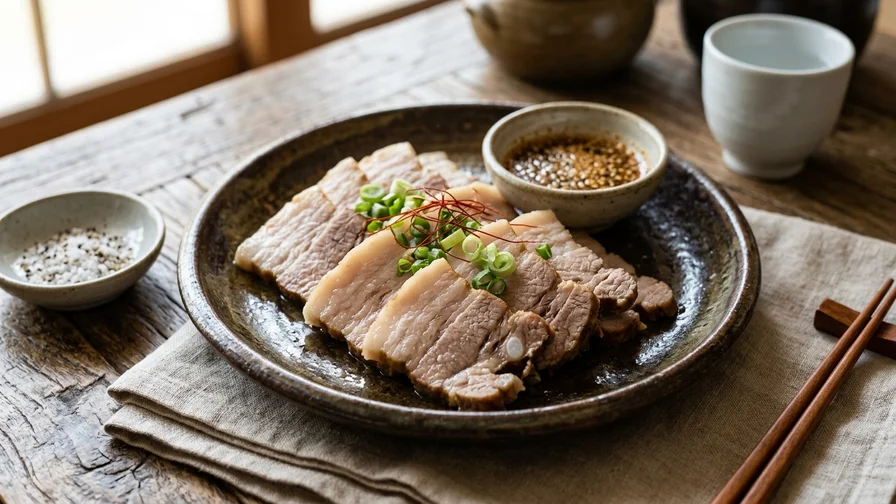
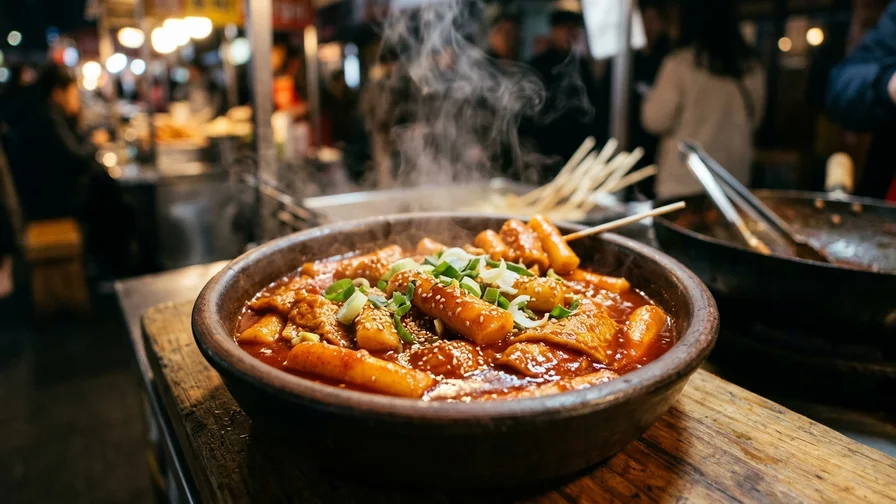
Gimhae is the home of dwaeji-gukbap (a rich pork soup served with rice, made with Boiled Pork Slices (수육, suyuk)) and dwitgogi, grilled specialty cuts of pork. In the market alleys, snack-bar Spicy Rice Cakes (떡볶이, tteokbokki) is also popular. The three places below are in the city center (Naeoe-dong, Bonghwang-dong), just one or two light rail stops away. Expect to budget about 9,000 won (about $7) to 15,000 won (about $11.50) per meal.
- Jeongeunine Ssal Tteokbokki 📍 (snack-bar Spicy Rice Cakes (떡볶이, tteokbokki) — rice cakes simmered in gochujang sauce with freshly fried tempura, Oedong Market, 8 Hambak-ro 101beon-gil, Gimhae, closed Sundays)
- Ogine Dwitgogi 📍 (dwitgogi — charcoal-grilled specialty pork cuts that originated in Gimhae, 24 Gwangwandae-ro 1204beon-gil, Gimhae, opens at 5 PM for dinner only, closed Mondays)
- Bambi Gonggi 📍 (dessert café — daily-changing desserts and coffee, on the Bongridan-gil café street, 32 Garak-ro 23beon-gil, Gimhae, closed Sundays)
Editor’s Tip: Gimhae is perfect for a half-day or full-day itinerary during a Busan trip. The light rail offers fast, affordable travel with no traffic. Allow about 3–4 hours to explore the burial complex and both museums.
2. Jisan-dong Tumuli, Goryeong (Daegaya): A Majestic View Along the Ridge
The Jisan-dong Tumuli in Goryeong are the royal-class tombs of Daegaya, which led the later Gaya Confederacy. Stretching like a giant procession of 704 mounded tombs along the Jusan ridge, it is the largest in scale and the most visually overwhelming of the Gaya burial complexes.
- What to see:
- Daegaya Museum and the Royal Tombs Exhibition Hall: Recommended to visit first
- The one piece you must see: Inside the Royal Tombs Exhibition Hall—Tomb No. 44 at Jisan-dong, the first large-scale human-sacrifice (sunjang) tomb confirmed in Korea, is recreated at full scale. You can step inside and look down at the 32 stone-lined sacrifice chambers arranged like a folding fan around the tomb owner’s stone chamber. The structure of Korea’s largest human-sacrifice tomb, where more than 37 people were buried together, takes shape at a single glance
- Climb the walking trail behind the museum to the summit for a view of downtown Goryeong and the tombs
- Operating Information (as of June 2026):
- Burial complex: Open 24 hours, free, year-round
- Museum and exhibition hall: March–October 09:00–18:00, November–February 09:00–17:00, closed every Monday, combined ticket 2,000 won for adults (about $1.50, including the Royal Tombs Exhibition Hall and the Ureuk Museum)
- Getting there:
- Arrive at Dongdaegu Station by KTX
- Take Subway Line 1 to Seobujeongnyujang Station (formerly Seongdangmot Station); Exit 3 connects directly to the Daegu Seobu Intercity Bus Terminal
- From the Seobu terminal, take an intercity bus bound for Goryeong — 25 times daily (first bus 06:40, last bus 20:00), about 40 minutes, 3,700 won (about $2.80)
- From the Goryeong Intercity Bus Terminal, it’s about a 5-minute taxi ride (around the base fare) or a 20-minute walk to the Daegaya Museum
- Restaurants nearby:
There are hardly any restaurants within the Daegaya Museum grounds; eateries are clustered around the Goryeong Intercity Bus Terminal and the Daegaya-eup area. The region is famous for strawberries, but for a meal we recommend the proven spots below.
- Nogwonga 📍 (Korean set meal, soy-marinated grilled beef — served with hot-pot rice and an array of side dishes, 10-6 Janggiteo-gil, Daegaya-eup, Goryeong-gun, Gyeongbuk)
- Daewon Sikdang 📍 (ginseng acorn sujebi — hand-torn acorn dough dumplings in a warm broth topped with ginseng, 691 Daegaya-ro, Ssangnim-myeon, Goryeong-gun, Gyeongbuk, about 10 minutes by car from the museum, closed Mondays)
- Jinmidang Bakery 📍 (60-year-old chapssal-tteok — Korean-style mochi filled with red bean paste, popular as a snack and gift, 8-1 Sijang-gil, Daegaya-eup, Goryeong-gun, Gyeongbuk, open 09:00–16:00, closes early when sold out)
3. Marisan Tumuli, Haman (Ara Gaya): An Endless Ridgeline of Tombs
The Marisan Tumuli in Haman are the royal-class burial mounds of Ara Gaya. Large mounded tombs line a low ridge that stretches 1.9 km from north to south, and including unexcavated tombs, the total is estimated at over 1,000.
- What to see:
- Haman Museum: Recommended to visit beforehand to learn about Ara Gaya’s history and artifacts
- The one piece you must see: The horse armor excavated from the Magapchong tomb — a rare example of iron armor covering the horse from head to body that survives almost entirely intact, designated a Treasure in 2020. Together with the flame-patterned pottery distinctive to Ara Gaya, pierced with flame-shaped openings, it is the signature artifact of this museum
- The gently sloping Marisan Tumuli walking trail, with views of the surrounding scenery from atop the ridge
- Operating Information (as of June 2026):
- Burial complex: Open 24 hours, free, year-round
- Museum: March–October 09:00–18:00, November–February 09:00–17:00 (last entry 30 minutes before closing), free admission, closed every Monday and on January 1, Lunar New Year’s Day, and Chuseok day
- Getting there:
- Arrive at Masan Station by KTX
- From Masan Station, head to the Masan Intercity Bus Terminal (in Hapseong-dong) by taxi (base fare) or local bus
- From the Masan Intercity Bus Terminal, take an intercity bus bound for Haman — only 5 times daily, so checking the schedule is essential (as of June 2026: 08:10, 09:00, 13:00, 15:50, 20:50 / check the latest timetable on the official Masan Terminal site), 25 minutes, 2,600 won (about $2)
- If the timing doesn’t work, take a rural bus bound for Gaya-eup from the same terminal (about 50 min, about 2,900 won; search routes at Haman County public transport information) or a taxi (about 25 min, metered)
- From the Haman Intercity Bus Terminal (Gaya-eup), it’s about a 5-minute taxi ride (around the base fare) to the Haman Museum and Marisan Tumuli
- Restaurants nearby:
Eateries are clustered within the same Gaya-eup as the museum, around the Haman County Office. Haman is famous for sogogi-gukbap (a spicy beef-and-radish soup served over rice), once cooked and sold at market stalls.
- Hamseong Sikdang 📍 (chueotang — a light soup of ground freshwater fish boiled with dried radish greens, 16 Malsan-ro, Gaya-eup, Haman-gun, Gyeongnam, at the Haman County Office intersection, 5 minutes by taxi from the museum)
- Yetgeujip 📍 (hand-cut noodles — kalguksu made from hand-rolled dough cut by knife, 16-20 Bangmok 1-gil, Gaya-eup, Haman-gun, Gyeongnam)
- Daegu Sikdang 📍 (beef gukbap, bulgogi — located in Haman-myeon, the original home of Haman beef gukbap, about 10 minutes by car from Gaya-eup, closed Mondays)
A Summary of the Remaining 4 Burial Complexes
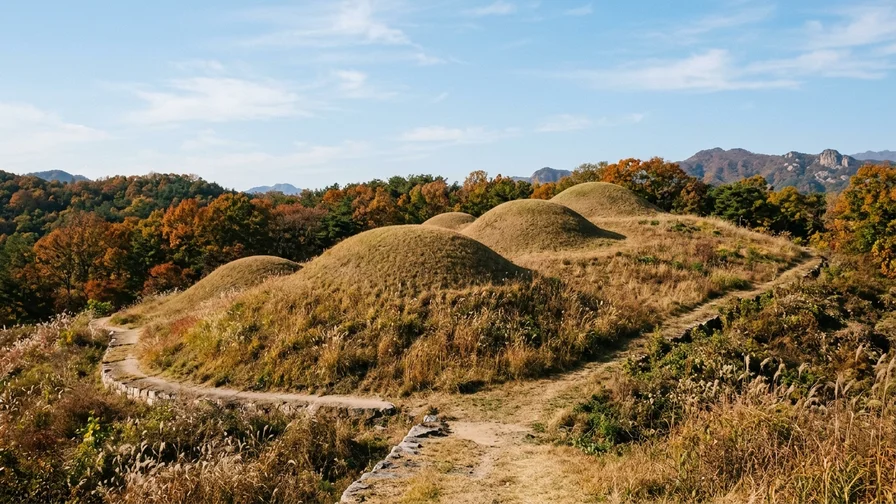
Beyond the 3 sites above, the other 4 burial complexes each have their own distinctive character. They are worth considering if you have a rental car or are doing an in-depth trip to a specific region.
- Gyo-dong and Songhyeon-dong Tumuli, Changnyeong: Bihwa Gaya tombs adjacent to Silla, with numerous excavations of human remains from sacrificial burials and gilt-bronze crown ornaments, showing the influence of Silla culture
- Songhak-dong Tumuli, Goseong: The center of the maritime kingdom of So Gaya, with the distinctive structure of multiple burial chambers within a single mound and traces of trade
- Okjeon Tumuli, Hapcheon: The tombs of the Dara-guk ruling class, where dragon-and-phoenix-patterned swords and Roman glass were excavated; the Hapcheon Museum, dedicated to displaying these finds, is right next door
- Yugok-ri and Durak-ri Tumuli, Namwon: At the western edge of Gaya’s sphere of influence on the boundary with Baekje, the tombs of a Gaya power presumed to be Gimun, where both Gaya-style and Baekje-style pottery were excavated together
Gaya: Exchanges with Silla, Baekje, and Japan
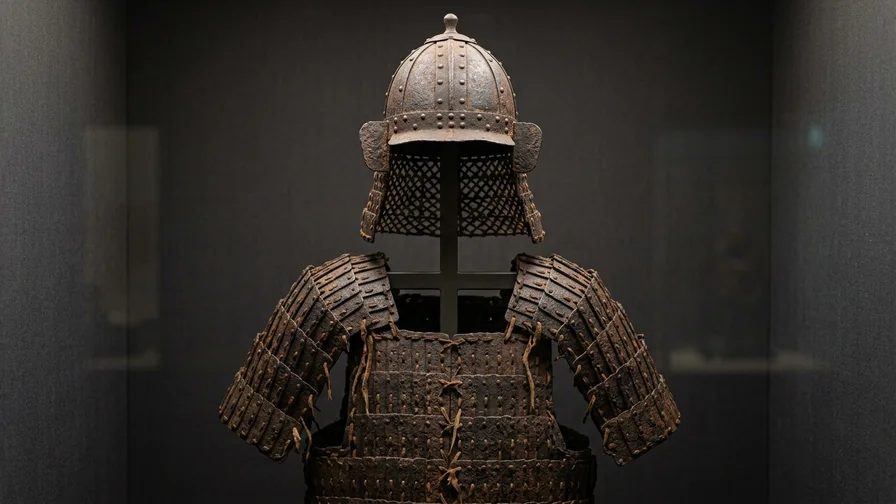
Backed by abundant iron production and outstanding ironworking technology, Gaya engaged in active exchanges with neighboring states. Gaya’s iron weapons, armor, and farming tools were major trade goods exported to Nangnang (a commandery of China’s Han dynasty) and Wa (ancient Japan). In particular, many artifacts showing Gaya influence have been found in Japan, providing important clues for the study of ancient Korea–Japan relations. Gaya also maintained complex diplomatic relations with Silla and Baekje, at times competing and at times cooperating. This history of exchange is confirmed by the various foreign-style artifacts excavated from the tombs.
Recommended 2-Day Regional Route (Busan, Gimhae → Haman → Goryeong)
Here is a 2-day course for efficiently visiting the 3 core burial complexes by public transport. Since buses to Haman run only 5 times a day, the trick is to fix your transfer times first and build the rest of the schedule around them.
- Day 1 (Morning): Daeseong-dong Tumuli, Gimhae
- Transfer to the Busan-Gimhae Light Rail Transit at Sasang Station on Busan Subway Line 2, and get off at Museum Station
- Visit the Daeseong-dong Tumuli, the Daeseong-dong Tumuli Museum, and the Gimhae National Museum (about 4 hours)
- Day 1 (Afternoon): Travel to Haman and Stay Overnight
- Take an intercity bus bound for Masan from the Gimhae Passenger Terminal (19 times daily, about 40 minutes)
- At the Masan Intercity Bus Terminal, transfer to the 15:50 intercity bus to Haman (25 minutes; reconfirm the time before departure)
- After arriving in Haman, check into your accommodation; we recommend staying in downtown Haman or in Masan for easier transport
- Day 2 (Morning): Marisan Tumuli, Haman
- Visit the Haman Museum and the Marisan Tumuli (about 3 hours)
- Day 2 (Afternoon): Travel to Goryeong and Sightseeing
- Travel from Haman to Masan, then take a bus to the Daegu Seobu Intercity Bus Terminal (about 1 hour 30 minutes) — since buses departing from Haman are infrequent, check the times at the terminal the day before
- At the Daegu Seobu terminal, transfer to an intercity bus bound for Goryeong (25 times daily, about 40 minutes)
- After arriving in Goryeong, take a taxi and visit the Daegaya Museum and the Jisan-dong Tumuli (about 3 hours)
- After your visit, return from the Goryeong terminal to the Daegu Seobu terminal (mind the last bus), then take the KTX from Dongdaegu Station to your next destination
Editor’s Tip: This itinerary involves long travel times and can feel a bit tight. If you want a more relaxed trip, we recommend planning a 3-day, 2-night schedule, or splitting the visit into Gimhae–Haman and Daegu–Goryeong segments. The Haman leg in particular has infrequent buses, so splitting the visit feels much more comfortable in practice.
Information on Nearby Museums
When visiting a burial complex, also stopping by the nearby museum that displays the excavated artifacts can greatly deepen your understanding.
- Gimhae National Museum: A museum specializing in Gaya culture, with a comprehensive collection of artifacts from Gaya’s founding to its fall
- Address: 190 Gayaui-gil, Gimhae, Gyeongsangnam-do
- Website: gimhae.museum.go.kr
- Daegaya Museum: Located right below the Jisan-dong Tumuli in Goryeong, focusing on the history and culture of Daegaya
- Address: 1203 Daegaya-ro, Daegaya-eup, Goryeong-gun, Gyeongsangbuk-do
- Website: goryeong.go.kr/daegaya
- Haman Museum: Located at the entrance to the Marisan Tumuli, holding the Magapchong horse armor and flame-patterned pottery
- Address: 153-31 Gobun-gil, Gaya-eup, Haman-gun, Gyeongsangnam-do
- Website: haman.go.kr/museum.web
Practical Tips for International Travelers
- Transport: The KTX high-speed train is best for travel between cities, while intercity buses are used to reach smaller towns, with terminals usually located in the city center. You can check intercity bus timetables and book tickets via Bustago (bustago.or.kr) or the TmoneyGO app
- Kakao T: Korea’s leading taxi-hailing app; many foreign-issued credit cards cannot be registered for in-app payment, but you can hail a taxi normally and pay directly by card or cash when you get off
- Rental Car: Since the burial complexes are scattered, a rental car allows for free and flexible travel; be sure to carry a valid International Driving Permit (IDP)
- 1330 Tourist Hotline: Dial 1330 for the Korea Tourism Organization’s multilingual information service (24 hours, year-round)
Frequently Asked Questions (FAQ)
- Q1: How long does it take to look around one burial complex?
- A: Walking the burial complex itself takes about 1 hour to 1 hour 30 minutes. If you also visit the adjacent museum, we recommend planning for at least 3–4 hours.
- Q2: Is there an admission fee?
- A: The outdoor areas of all 7 burial complexes are free. The museums in Gimhae and Haman are also free; only the Daegaya Museum in Goryeong charges a small admission fee with a combined ticket of 2,000 won for adults (as of June 2026).
- Q3: When is the best season to visit?
- A: Since there’s a lot of outdoor activity, spring (April–May) and autumn (September–October), with their mild weather, are best. Summer is hot and humid, and winter can be cold.
- Q4: Is it okay to visit with children?
- A: The burial complex areas are made up of wide grassy fields and hills, like a park where kids can run and play. Since the historical significance may be hard to grasp, we recommend taking advantage of the museums’ hands-on programs.
- Q5: Do I need a guided tour?
- A: It’s not essential. Each burial complex and museum is well equipped with signage in Korean and English. If you want deeper explanations, we recommend checking before your visit on each region’s culture-and-tourism website whether a Culture & Tourism Commentator program is available for booking (advance reservation required).
- Q6: Can I climb up onto the tombs?
- A: Absolutely not. The tombs are sacred burial sites and protected heritage. You must use only the designated paths and walking trails, and any damage can be subject to legal punishment.
The Gaya Tumuli are a distinctive heritage that conveys the weight of time, different from a magnificent royal palace or temple. Walking among the hundreds of tombs rising along the ridge, we hope you feel the breath of Gaya—the forgotten kingdom that ruled the southern Korean Peninsula 1,500 years ago.
Related Articles Worth Reading
- 17 UNESCO World Heritage Sites in Korea
- The 40 Royal Tombs of the Joseon Dynasty (UNESCO 2009)
- Haeinsa Janggyeong Panjeon & Tripitaka Koreana (UNESCO 1995)
- Gyeongju UNESCO World Heritage (1995, 2000)
- 9 Korean Seowon Confucian Academies (UNESCO 2019)
- Jeju Volcanic Island and Lava Tubes (UNESCO 2007)
- Jongmyo Shrine (UNESCO 1995)
- Changdeokgung Palace & Secret Garden (UNESCO 1997)
- Suwon Hwaseong Fortress & Haenggung Palace (UNESCO 1997)
- Gochang, Hwasun & Ganghwa Dolmen Sites (UNESCO 2000)
- Andong Hahoe & Gyeongju Yangdong Villages (UNESCO 2010)
- Namhansanseong Fortress (UNESCO 2014)
- Baekje Historic Areas (UNESCO 2015)
- Sansa, 7 Buddhist Mountain Temples in Korea (UNESCO 2018)
- Getbol, Korea's 4 Tidal Flats (UNESCO 2021)
- Bangudae Petroglyphs (UNESCO 2025)