Jongmyo Shrine (UNESCO 1995)
Contents
- The Main Hall Restoration Is Complete — A Sacred Space Reopens
- The Meaning of Korea’s First UNESCO Inscription
- Jeongjeon and Yeongnyeongjeon — Comparing the Two Spaces
- Visitor Guide — Hours, Fees, and Reservations
- Jongmyo Daeje — First Sunday of May and First Saturday of November
- The Key to Understanding Jongmyo — Confucianism and Ritual Culture
- Getting There and Location
- Nearby Restaurants and Walking Routes
- Visiting Etiquette
- Frequently Asked Questions (FAQ)
Jongmyo Shrine is the royal ancestral shrine of the Joseon Dynasty, a place that still hosts living ceremonies. Unlike the colorful palaces, it was designed for one purpose alone — ancestral rites — and has carried out the same ritual on the same spot for more than 600 years since it was founded in 1395. In 1995 it became Korea’s first site inscribed on the UNESCO World Heritage List.
- What it is: A Confucian shrine enshrining the spirit tablets of Joseon kings and queens, designated a UNESCO World Heritage Site in 1995
- How to visit: Varies by day — guided, timed tours on weekdays (Mon, Wed, Thu, Fri); free self-guided viewing on Saturdays, Sundays, public holidays, and Culture Day (the last Wednesday of each month)
- Biggest event: Jongmyo Daeje, held on the first Sunday of May every year (the autumn rite falls on the first Saturday of November), a UNESCO Intangible Cultural Heritage
- Latest news: Restoration of the Main Hall ran from 2020 to April 2025; the spirit tablets returned with the Hwananje rite on April 20, 2025, and normal visiting is now possible
The Main Hall Restoration Is Complete — A Sacred Space Reopens
There’s one piece of news you absolutely need to know before planning your visit. Jeongjeon, the central building of Jongmyo Shrine, has reopened after its first full restoration in about 30 years. Google Maps and older travel pages still say “under construction,” which causes confusion, but the entire site is now open for normal viewing.
| Date | What happened |
|---|---|
| May 2020 | Restoration of the Main Hall begins; general access restricted |
| June 2021 | 49 spirit tablets temporarily moved to the former Seonwonjeon at Changdeokgung Palace |
| April 2025 | Roughly five years of restoration work completed |
| April 20, 2025 | The Hwananje rite held — the first in 155 years since 1870 |
| May 4, 2025 | The first Jongmyo Daeje held after the restoration |
Hwananje Details (2025-04-20)
- 11:30 AM — The Godongga rite held at the former Seonwonjeon at Changdeokgung Palace
- 2:00 PM — The return procession departs Changdeokgung Palace
- Procession route: Changdeokgung → Gwanghwamun → Sejong-daero Intersection → Jonggak Station → Jongmyo
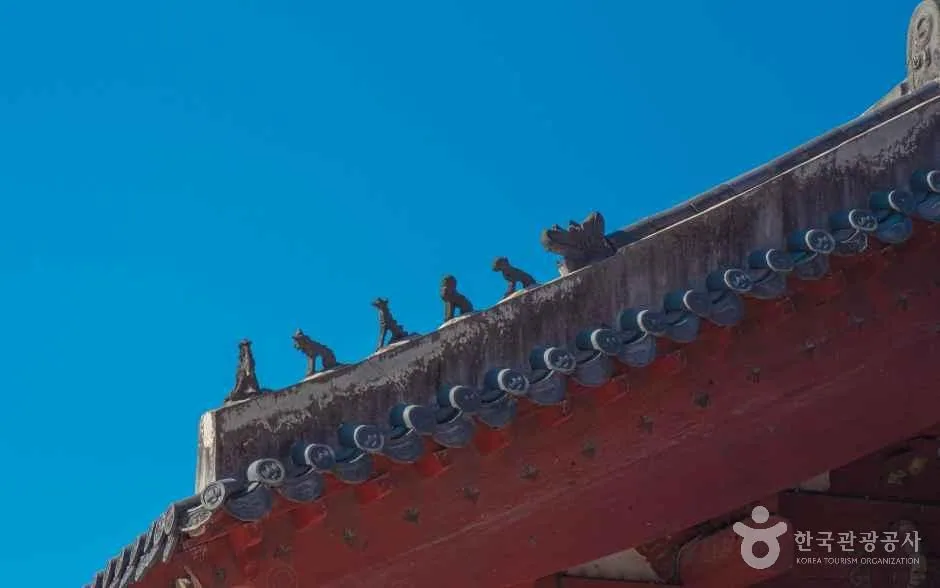
- Restoration details: About 70,000 handmade roof tiles fully relaid, cement mortar replaced with handmade bricks, and the dancheong (traditional decorative painting) restored using traditional methods
You can plan your schedule around this article instead of the outdated information floating around online. The reopened Main Hall now shows crisper colors in its dancheong and tiles, but its essence as a ritual space sustained for 600 years remains unchanged.
The Meaning of Korea’s First UNESCO Inscription
UNESCO recognized Jongmyo as a “living heritage” whose function and ceremony have continued unchanged since its 14th-century founding. The assessment went beyond the value of the architecture alone to encompass the entire ritual that has carried on without interruption for 600 years.
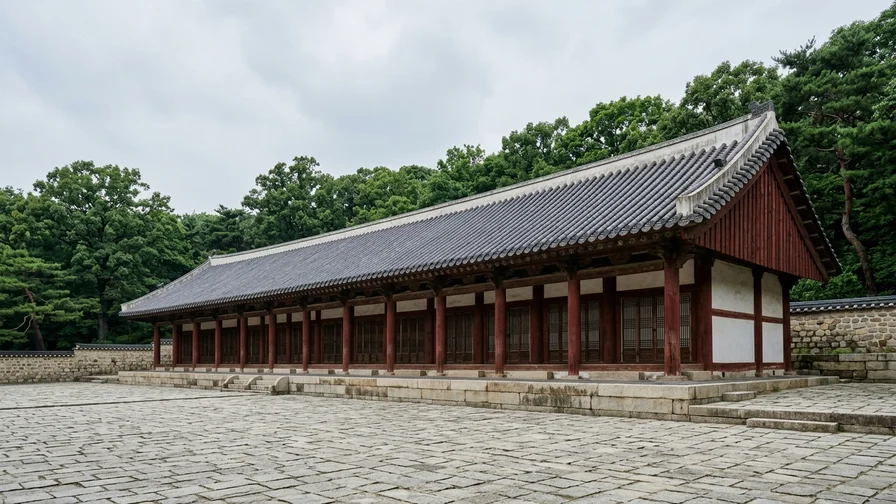
- Original architecture: A horizontally elongated Main Hall built for the single purpose of ancestral rites, with dancheong and ornamentation deliberately omitted, expressing sanctity through structure and spatial feeling alone
- Fusion of the tangible and intangible: A complete union of architecture (the shrine), ceremony (the Jongmyo Jerye ritual), music (the Jongmyo Jeryeak), and dance (the Ilmu) — a rare case worldwide
- Historical authenticity: Destroyed during the Japanese invasions of 1592–1598, it was rebuilt as a top priority right after King Gwanghaegun’s accession in 1608, and was expanded sideways as the number of spirit tablets grew while keeping its original form
For reference, the Jongmyo Jerye ritual and the Jongmyo Jeryeak music were separately inscribed as UNESCO Intangible Cultural Heritage in 2001.
Jeongjeon and Yeongnyeongjeon — Comparing the Two Spaces
The key spaces are Jeongjeon and Yeongnyeongjeon, where the spirit tablets are enshrined. They look similar on the outside, but they differ in the rank of those enshrined and in their roof structure. Comparing the two buildings is the heart of the visit.
Jeongjeon (the Main Hall)
| Enshrined | 49 tablets in 19 chambers (19 kings + 30 queens) |
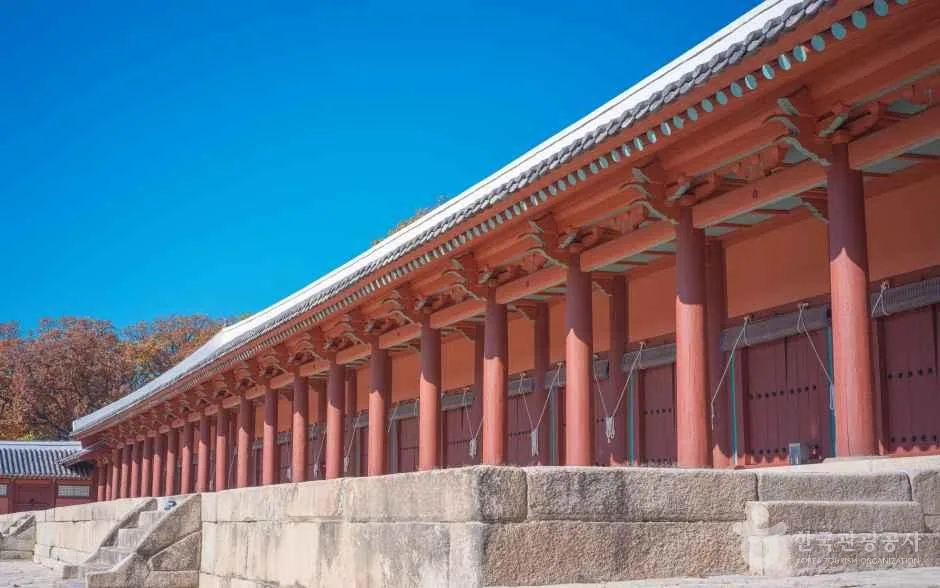
| Structure | 19 chamber bays connected horizontally under a single roof |
| Length | About 101 m, one of the longest wooden buildings in Korea |
| First tablet | Taejo, founder of Joseon |
- How it was expanded: The building was extended sideways each time a king’s tablet was added
- Woldae: The broad stone terrace in front of the Main Hall, the stage for music and dance during the rites, finished with roughly hewn flagstones (bakseok)
- What to look for: Its overwhelming horizontality, the repeating columns, and the weight created by the absence of decoration — the highest formality expressed through restraint
Yeongnyeongjeon (the Hall of Eternal Peace)
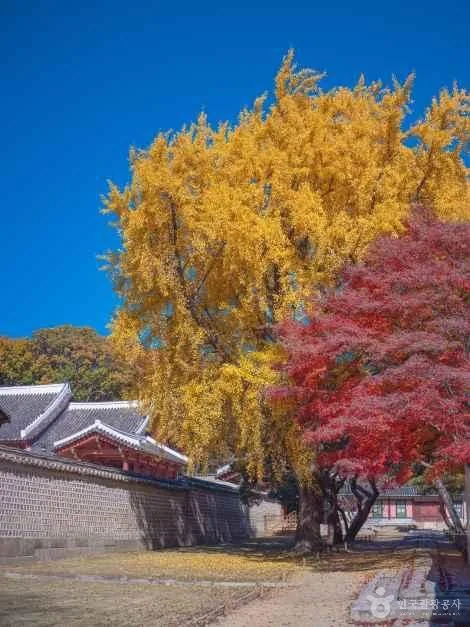
This is a separate shrine that enshrines the kings and queens not placed in Jeongjeon, along with posthumously honored kings. Its name carries the meaning “may ancestors and descendants together rest in eternal peace,” and it stands to the west of the Main Hall.
| Total enshrined | 34 tablets in 16 chambers |
| King tablets | 16 (7 reigning kings + 8 posthumously honored kings + 1 Crown Prince Uimin) |
| Queen tablets | 17 |
| Crown princess tablet | 1 |
- Structure: A central main chamber of 4 bays + 6 side chambers on each side that extend like wings
- Difference from Jeongjeon: The central main chamber’s roof sits one level higher than the side chambers — a visual expression of spatial hierarchy
- What to look for: Compare Jeongjeon’s horizontality with Yeongnyeongjeon’s centrally focused structure
Visitor Guide — Hours, Fees, and Reservations
Unlike the other palaces, Jongmyo strictly divides its visiting methods by day of the week. This is the first thing to check before you go. (The hours and fees below are as of June 2026; we recommend reconfirming on the official Royal Palaces and Tombs Center website just before your visit.)
Operating Hours and Closed Days
| Season | Hours | Last admission (self-guided days) |
|---|---|---|
| Feb–May, Sep–Oct | 09:00–18:00 | 17:00 |
| Jun–Aug | 09:00–18:30 | 17:30 |
| Nov–Jan | 09:00–17:30 | 16:30 |
- Regular closing day: Every Tuesday (if Tuesday is a public holiday, it opens and closes instead on the next non-holiday)
- Self-guided days (Saturday, Sunday, public holidays, and “Culture Day” on the last Wednesday of each month): last admission = 1 hour before closing (as in the table above)
- Timed-tour days (Mon, Wed, Thu, Fri): in practice, the last admission is the final Korean-language tour at 16:20 (up to the 16:40 session from March to September)
Visiting Methods by Day
| Category | Weekdays (Mon, Wed, Thu, Fri) | Sat, Sun, holidays, Culture Day |
|---|---|---|
| Method | Timed guided tour only | Self-guided |
| Entry | Group entry led by a guide only | Free entry with no time limit |
| Duration | About 1 hour | 1–1.5 hours |
| Best for | Travelers who want explanations | Photography, leisurely viewing |
| Free Korean tours | Included in the timed tour | 5 times on Saturdays and holidays (10, 11, 13, 14, 15:00); on Sundays and Culture Day, same as the timed-tour schedule |
| Foreign-language tours | Available (see table below) | English tours run on Sundays and Culture Day (10:00, 12:00, 14:00, 16:00); none on Saturdays and public holidays (verified October 2026) |
- Foreign-language sessions give priority to foreign visitors — Korean nationals not accompanying a foreigner cannot join
- Sundays are also self-guided days — you can enter freely without a reservation (note that many older posts list Sundays as timed-tour days)
- Self-guided days are busier than weekdays
Timed-Tour Schedule (Mon, Wed, Thu, Fri)
| Language | Tour times |
|---|---|
| Korean | 09:20, 10:20, 11:20, 12:20, 13:20, 14:20, 15:20, 16:20 (plus 16:40 from March to September) |
| English | 10:00, 12:00, 14:00, 16:00 |
| Japanese (日本語) | 09:40, 11:40, 13:40, 15:40 |
| Chinese (中文) | 11:00, 15:00 |
Check the latest schedule just before visiting: Tour times may change. We recommend checking the latest schedule on the official Korea Heritage Service Royal Palaces and Tombs Center website (royal.khs.go.kr visiting hours guide) just before your visit. Arrive at the ticket booth at least 10 minutes before your chosen session to get your ticket.
Admission Fees
| Category | Fee |
|---|---|
| Korean nationals aged 25–64 | 1,000 won |
| Korean nationals aged 24 and under, 65 and over | Free |
| Foreigners aged 19–64 | 1,000 won (about $0.75) |
| Foreigners aged 18 and under, 65 and over | Free |
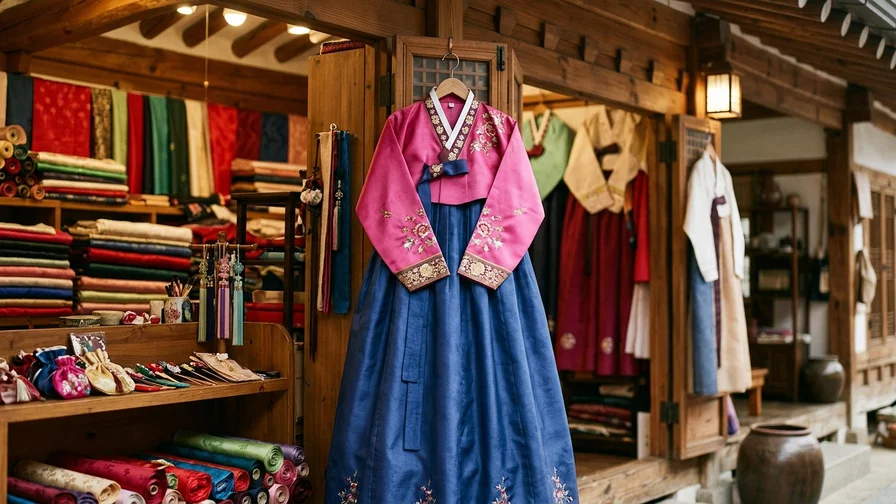
| Those wearing Hanbok (한복, hanbok) (traditional Korean attire) | Free |
Integrated Ticket (Royal Palace Pass)
- Price: 6,000 won
- Validity: 6 months from the date of purchase
- Benefit: One visit each to the four grand palaces (Gyeongbokgung, Changdeokgung, Changgyeonggung, Deoksugung) and Jongmyo
- Note: Changdeokgung’s Secret Garden (Huwon) is not included — it requires a separate booking
- Cheaper than buying individual tickets if you plan to visit several palaces
Online Advance Reservation
- Timed tours: 200 people per session (100 online reservations + 100 on-site tickets)
- Reservation period: from 30 days to 4 days before your desired date (verified October 2026)
- Reservation site: royal.khs.go.kr (Korea Heritage Service, Royal Palaces and Tombs Center)
- Advance reservation required for groups of 10 or more
- Foreign-language tours at popular times can sell out — reservation recommended
Jongmyo Daeje — First Sunday of May and First Saturday of November
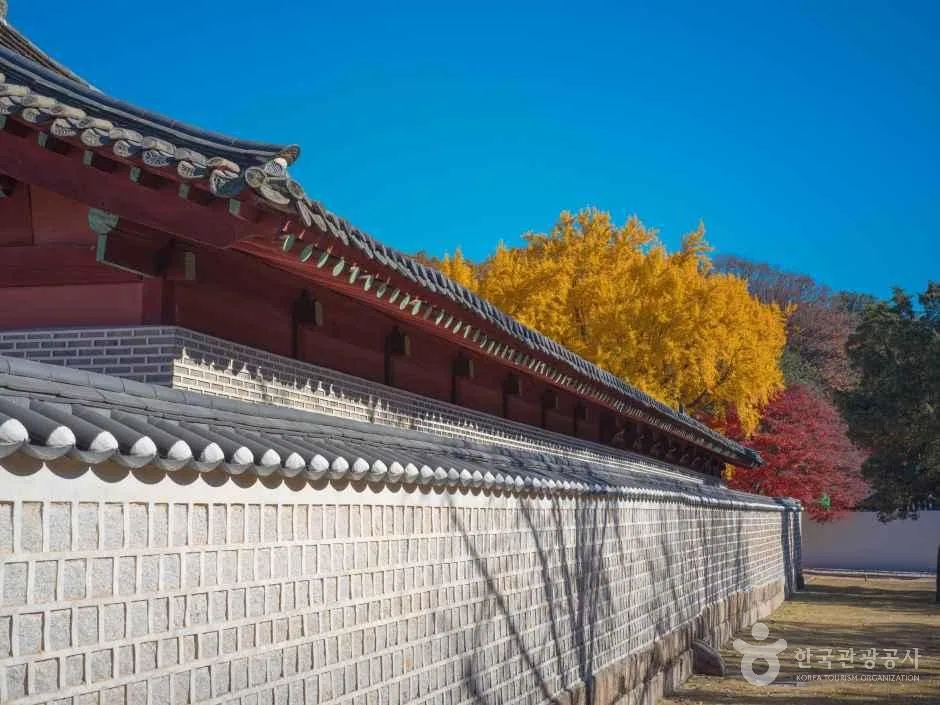
Jongmyo Daeje is the most formal and largest of the Joseon state rituals. The Jongmyo Jerye ceremony and the Jongmyo Jeryeak music are performed together, giving you a chance to witness a living tradition firsthand. The spring rite (Chunhyang Daeje) takes place on the first Sunday of May each year, and the autumn rite (Chuhyang Daeje) on the first Saturday of November. The 2026 spring rite was held on May 3, and the actual program for that day is below. It follows nearly the same framework every year, so you can use it as a reference for planning your next visit.
| Program for Sunday, May 3, 2026 | Details |
|---|---|
| 10:00–12:00 | Rite at Yeongnyeongjeon |
| 11:00–12:00 | Royal procession — departs Gwanghwamun at Gyeongbokgung, passing Sejong-ro Intersection and Jongno before arriving at Jongmyo |
| From 13:00 | Visitor entry for the Jeongjeon rite |
| 14:00–16:30 | Main rite at Jeongjeon (the central ceremony) |
| 16:30–17:30 | Post-rite program — viewing the chambers of Jeongjeon |
- Jeongjeon rite seating = pre-reserved seats + on-site first-come seats (2026 bookings opened first-come on Ticketlink about 2 weeks before the event)
- Reservation announcements are posted each spring and autumn on the Royal Palaces and Tombs Center ritual schedule page
- Visiting without a reservation, you can still view from outside the Jeongjeon walls or in parts of the Yeongnyeongjeon area
- Royal procession (Eoga-haengnyeol): Departs Gyeongbokgung Palace → Sejong-ro Intersection → Jongno → Jongmyo, with hundreds of people marching with flags and ceremonial regalia, free to watch from anywhere along the route
- The rite: Held at Jeongjeon and organized by the Jeonju Yi Royal Family Association, honoring ancestors through food offerings and bows
- Jongmyo Jeryeak and Ilmu: Instrumental music and dance performed according to fixed rules at each stage of the rite
The Jongmyo Jeryeak Musical Heritage
- “Botaepyeong” and “Jeongdaeeop” — composed by King Sejong the Great in 1447 as court banquet music (hoeryeak)
- King Sejo ordered its revision, and it was officially adopted as Jongmyo Jeryeak in 1464 (the 10th year of Sejo’s reign)
- Inscribed as UNESCO Intangible Cultural Heritage in 2001
- Transmitted in nearly original form for about 560 years
Visiting info: The rite is open to the public, but the interior of Jeongjeon is cramped, so viewing may be limited. If you want a good spot, check the advance-reservation notices on royal.khs.go.kr. Without a reservation, you may only be able to view from outside the Jeongjeon walls or in parts of the Yeongnyeongjeon area.
The Key to Understanding Jongmyo — Confucianism and Ritual Culture
When foreign travelers step into the Jongmyo courtyard, the first question they ask is: “Why have rites been held for dead kings for over 600 years?” The answer lies in Confucianism, the philosophy that underpinned Korean society for six centuries — and above all in filial piety (hyo).
To truly appreciate the value of Jongmyo, you need to understand this cultural grammar underneath it.
- Ancestor veneration: Not worshiping ancestors as gods, but a rite of honoring and remembering them as one would in life
- Filial piety on a national scale: As the great parent of the nation, the king conducted rites for past kings to affirm the royal family’s legitimacy and pray for the country’s well-being
- A tradition that continues today: It connects to the family Charye rites held on Lunar New Year (Seollal) and Korean Thanksgiving (Chuseok)
Getting There and Location
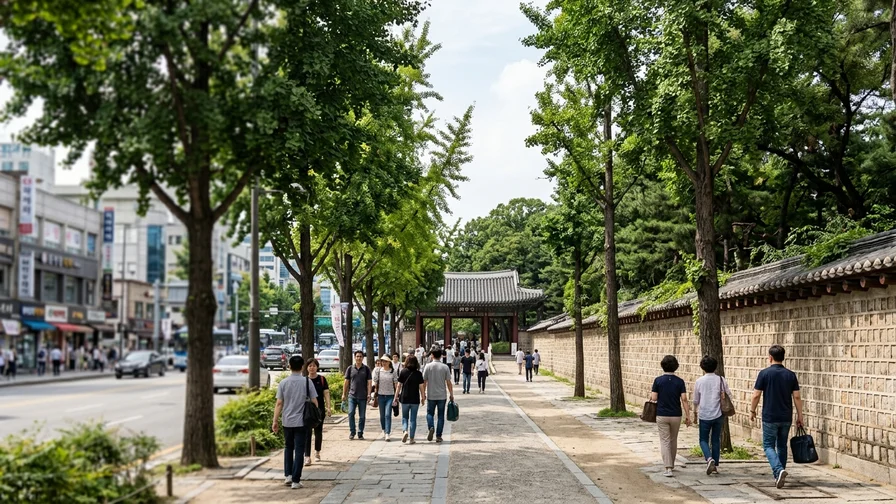
Located in the heart of Jongno, Jongmyo is excellent for public transit access. (As of June 2026.)
| Address | 157 Jong-ro, Jongno-gu, Seoul |
| Subway | Jongno 3-ga Station (Lines 1, 3, 5) |
| Closest exit | Exit 11 — about 280 m (a 5-minute walk) to the main gate (Oedaemun). Closest when using Lines 1 and 3 |
| If using Line 5 | Exit 8 is closest, about a 5-minute walk |
| Bus | Get off at the “Jongno 4-ga, Jongmyo” median bus stop — trunk (blue) buses 101, 103, 143, 150, 201, 260, 262, 270, 271, 370, 720, 721; branch (green) bus 7212 |
- Bus routes may change — we recommend checking real-time routes on Naver Map or Kakao Map
The Changgyeonggung Connecting Gate — A Shortcut Open Only on Self-Guided Days
Changgyeonggung Palace and Jongmyo, split apart in 1932 when the Japanese colonial authorities cut through with Yulgok-ro, were reconnected in July 2022 after 90 years. The road was buried underground and a restored palace-wall path was built on top, so you can now walk between Jongmyo’s northern Buksinmun Gate and Changgyeonggung’s Yulgok-ro entrance.
- Open days: Open only on self-guided days (Saturday, Sunday, public holidays, and Culture Day) — passage is not possible on timed-tour days (Mon, Wed, Thu, Fri)
- Open hours: 09:00–17:00 at Buksinmun Gate (Feb–May and Sep–Oct), until 17:30 from June to August, and until 16:30 from November to January (as of June 2026)
- Fees: The 1,000-won admissions for Jongmyo and Changgyeonggung are separate — buy them at the self-service ticket machines at each gate
- On weekends, walking Jongmyo → Changgyeonggung → Changdeokgung in order lets you tie all three heritage sites into one day with no wasted backtracking for tickets
Long-Established Eateries Within Walking Distance
These are nearby long-established restaurants where you can grab a meal within walking distance after visiting Jongmyo.
- Woo Lae Oak 📍 — A long-established Pyongyang-style cold noodle (naengmyeon) restaurant opened in 1946, a regular Michelin Guide pick, at 62-29 Changgyeonggung-ro, Jung-gu, Seoul; closed every Monday
- Samhaejip 📍 — A long-established specialist in jokbal (braised pig’s trotters) and bossam (boiled pork wraps), famous for its oyster bossam in winter, at 16-15 Supyo-ro 20-gil, Jongno-gu, Seoul
Nearby Restaurants and Walking Routes
Surrounded by Changdeokgung, Ikseon-dong, Gwangjang Market, and Insadong, Jongmyo makes it easy to combine meals and sights into a single route. We’ve organized the closest restaurants by attraction.
① Toward Changdeokgung — 10 minutes north of Jongmyo on foot
- Changdeokgung Palace — about a 10-minute walk from Jongmyo’s main gate to Donhwamun Gate
- Recommended to combine Changdeokgung and its Secret Garden (Huwon) after visiting Jongmyo
- The integrated ticket covers up to the main grounds of Changdeokgung — the Secret Garden requires a separate booking
② Toward Gwangjang Market — 10 minutes east of Jongmyo on foot
This route gets you the cheapest meals at a lively traditional market.
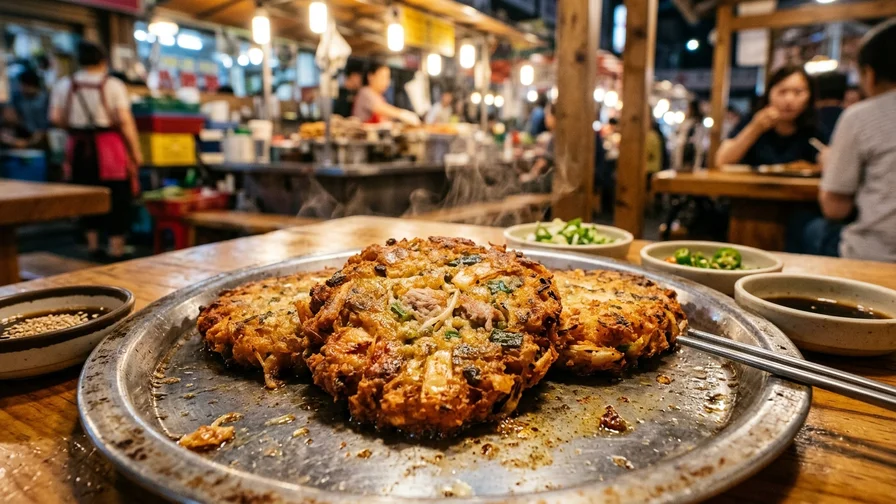
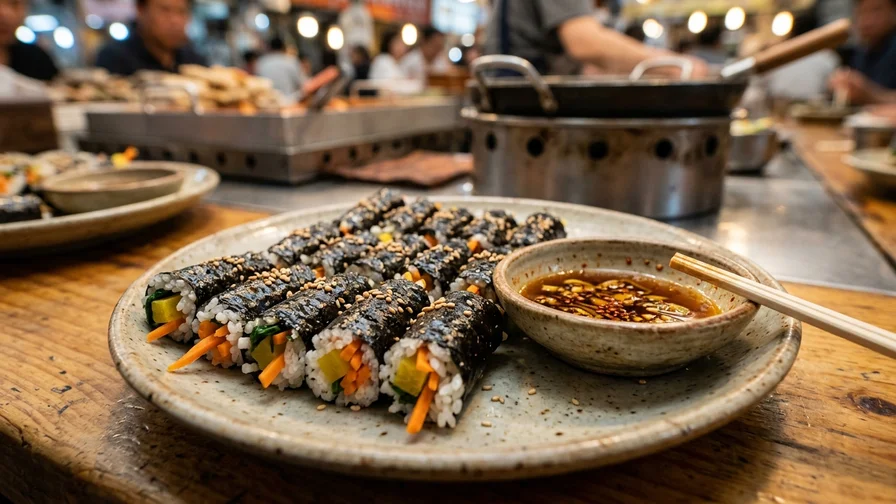
- Gwangjang Market — Seoul’s flagship traditional market, with street food like Mung Bean Pancake (빈대떡, bindae-tteok) (savory mung bean pancakes) and Mini Seaweed Rice Rolls (마약김밥, mayak-gimbap) (bite-sized “addictive” seaweed rice rolls)
- Sunhuine Bindaetteok 📍 — A long-established spot famous for its Mung Bean Pancake (빈대떡, bindae-tteok) and “addictive” makgeolli, at 5 Jong-ro 32-gil, Jongno-gu, Seoul
- Bakgane Bindaetteok 📍 — Mung bean Mung Bean Pancake (빈대떡, bindae-tteok) and meat patties griddled to order, at 7 Jong-ro 32-gil, Jongno-gu, Seoul
- Prices (as of June 2026): a plate of bindaetteok 5,000–6,000 won, a bowl of makgeolli about 4,000 won — varies by shop
③ Toward Ikseon-dong — across from Jongno 3-ga Station, 10 minutes on foot
A trendy street where hanok cafés and restaurants are packed into narrow alleys.
- Ikseon-dong Hanok Village — distinctive cafés and restaurants, popular with younger crowds
- Cheongsudang 📍 — A dessert café with a hanok atmosphere; its signature is the stone-mill stone-drip coffee and yakgwa (traditional honey cookie) set, at 31-9 Donhwamun-ro 11na-gil, Jongno-gu, Seoul
- The Ikseon-dong Hanok Village area has many hanjeongsik (Korean set-meal) restaurants, about 25,000–50,000 won per person; reservations recommended on weekends
④ Toward Insadong — 15 minutes west of Jongmyo on foot
A street gathering traditional crafts, galleries, and temple cuisine.
- Insadong — a street of traditional crafts, galleries, and teahouses
- Balwoo Gongyang 📍 — temple cuisine run directly by the Jogye Order, a fully vegan (plant-based) course menu, at 56 Ujeongguk-ro, Jongno-gu, Seoul
Balwoo Gongyang — Details
| Location | 56 Ujeongguk-ro, Jongno-gu, Seoul (5th floor of the Templestay Information Center) |
| Phone | 02-733-2081 |
| Hours | Mon–Sat 11:30–21:00 (break 15:00–18:00, last order 19:40); closed Sundays |
| Seonsik course | 36,000 won (weekday lunch only) |
| Wonsik course | 50,000 won |
| Maeumsik course | 70,000 won |
- No meat or pungent vegetables (the five — green onion, garlic, chives, etc.), with courses centered on seasonal vegetables (prices as of June 2026)
- All seating is in private rooms — reservation by phone or website recommended
Food Allergy and Vegetarian Information
| Food | Things to note |
|---|---|
| Mung Bean Pancake (빈대떡, bindae-tteok) | Main ingredient is mung bean; pork is often added to the batter |
| Mini Seaweed Rice Rolls (마약김밥, mayak-gimbap) | Seaweed, pickled radish, carrot + sesame oil and sesame seeds. Some versions add Fish Cake (어묵, eomuk) |
| Injeolmi and rice cakes (Tteok) | Glutinous rice + soybean powder. Some rice cakes add nuts (walnut, pine nut) |
| Hanjeongsik | Salted shrimp and anchovy stocks are common — note for vegans and those with seafood allergies |
| Temple cuisine | Safest for vegans, but uses plenty of soy (tofu, Soybean Paste (된장, doenjang) soybean paste), nuts, and sesame |
| Makgeolli | A fermented rice wine, but some products add barley — note for those with gluten allergies |
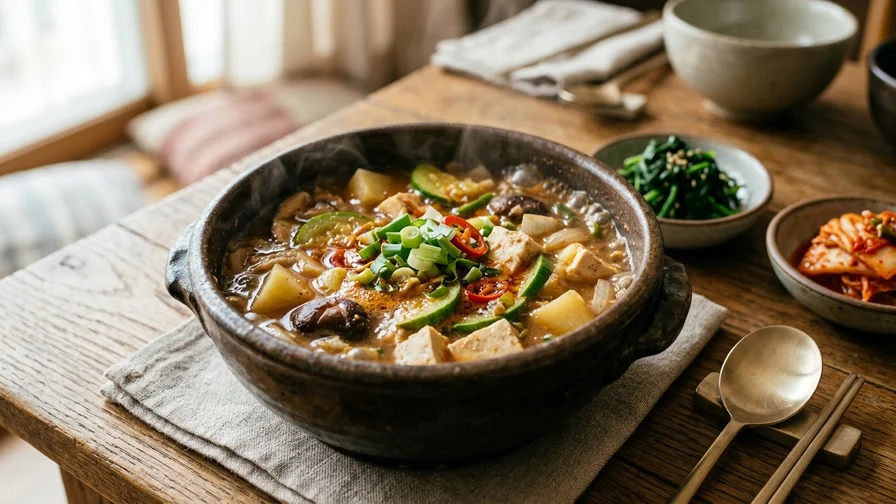
Payment and Transit Tips
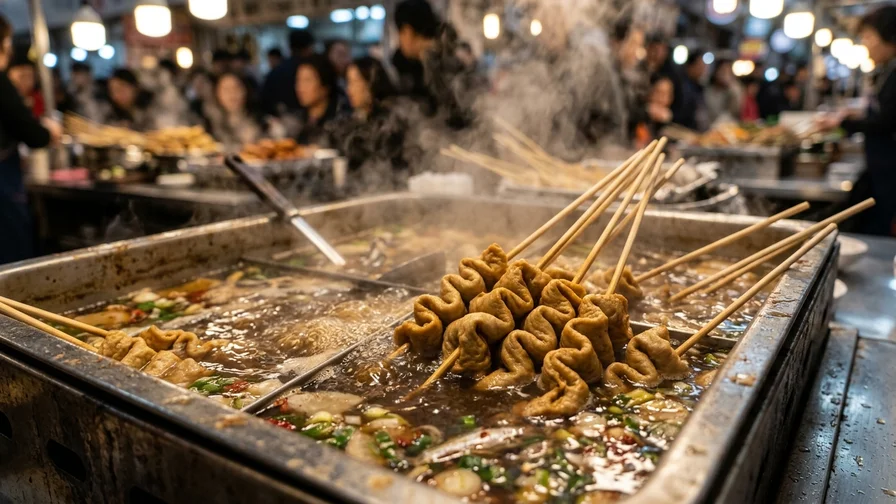
- Gwangjang Market stalls: prefer small cash (5,000 or 10,000 won), some accept T-money
- Hanjeongsik and temple cuisine: most foreign credit cards such as VISA and Mastercard accepted
- Kakao T accepts overseas-issued cards (Visa, Mastercard, American Express, JCB), but sign-up needs SMS verification and some overseas SIMs don’t receive the code (verified October 2026)
- Taxis — flagging one down on the street or asking your hotel for a call taxi is faster. Korean taxis use meters; if a driver refuses the meter, report to 1330 or 112
- If you need help: Travel Interpretation Hotline 1330 (24 hours, English, Japanese, Chinese)
Visiting Etiquette
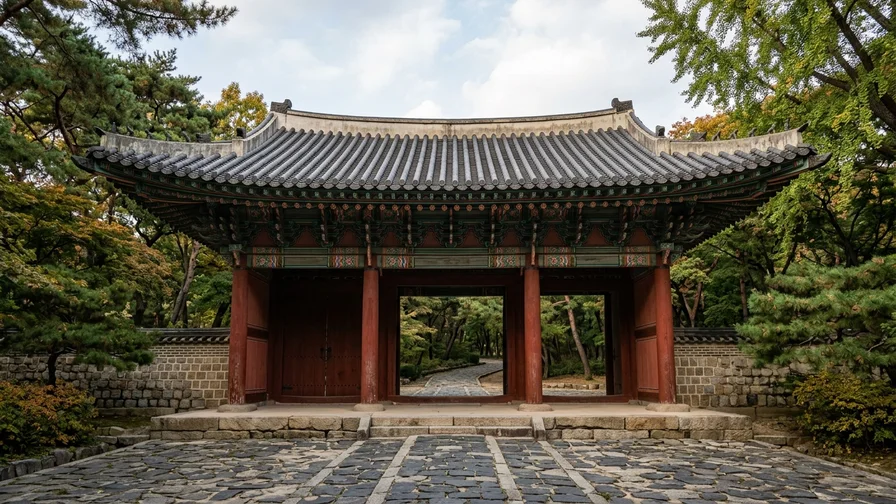
Jongmyo is a sacred space where rites are still performed today. Please observe the following.
Sindo and Eodo — Distinguishing the Paths
- Sindo (the spirit path): The slightly raised central path running from the main gate to Jeongjeon, the path of the spirits — do not step on it
- Eodo (the king’s path): The paths on either side of the Sindo, the king’s path
- Visitors should walk on the Eodo (the king’s path)
Other Etiquette
- Keep quiet — refrain from loud voices or running
- No food allowed — no food or drink other than water may be consumed
- Dress — avoid excessive exposure or clothing with inappropriate slogans; dress neatly
- Photos — personal souvenir photos are fine, but restricted during official events; refrain from flash, and obtain prior permission for commercial shoots
Frequently Asked Questions (FAQ)
- Q1. How long does a visit take?
- A1. The weekday (Mon, Wed, Thu, Fri) timed tour is guided and takes about 1 hour. Self-guided visits on Saturdays, Sundays, and holidays usually take 1–1.5 hours.
- Q2. Is it accessible for wheelchairs or strollers?
- A2. Most of the route is flat and accessible. However, there are some dirt paths and uneven flagstone sections that can be inconvenient, so we recommend contacting the Jongmyo Management Office (02-765-0195) before your visit.
- Q3. What’s the biggest difference from palaces like Gyeongbokgung?
- A3. A palace was a “space of life” where the king lived and governed, so its buildings are ornate and serve many functions. Jongmyo is a “space of ritual” meant solely for ancestral rites, so it minimizes decoration to the extreme and emphasizes solemnity.
- Q4. How do I buy tickets? Is an online reservation required?
- A4. You can buy on-site at the ticket booth or book in advance at royal.khs.go.kr. Since the number of entries per session is limited, online reservation is safest especially for foreign-language tour sessions.
- Q5. Can I go in alone without a guide on weekdays?
- A5. Not on weekdays (Mon, Wed, Thu, Fri). Entry is only allowed on guided tours at set times, and if you’re late you’ll have to wait for the next session. If you want to wander freely, visit on a self-guided day — Saturday, Sunday, a public holiday, or the last Wednesday of each month.
- Q6. Are there restrooms or amenities inside?
- A6. There are restrooms near the entrance and within the grounds. There are no shops or cafés, so bring water in advance.
- Q7. How are Jongmyo and Sajikdan different?
- A7. Jongmyo holds rites for the royal ancestors, while Sajikdan holds rites for the god of the land (sa) and the god of grain (jik). Joseon followed the principle of “shrine on the left, altar on the right” (jwamyo usa), placing Jongmyo to the left of the palace and Sajikdan to the right. (Sajikdan location: inside Sajik Park at 89 Sajik-ro, Jongno-gu, Seoul; a 7-minute walk from Exit 1 of Gyeongbokgung Station on Subway Line 3, free admission)
Jongmyo sits in the heart of downtown Seoul yet has carried on a 600-year ritual without interruption. Watching the same rite unfold in the same place, in the same order, at the reopened Main Hall after five years of restoration shows just how differently the sense of time runs through Korean culture. We encourage you to come and experience Korea’s ritual tradition — where architecture, ceremony, and music are woven together — at this site, now managed by the National Heritage Administration, reorganized from the Cultural Heritage Administration on May 17, 2024.
Some photos © Korea Tourism Organization (KOGL Type 1)
Related reads in this series
- 17 UNESCO World Heritage Sites in Korea
- Haeinsa Janggyeong Panjeon & Tripitaka Koreana (UNESCO 1995)
- Gyeongju UNESCO World Heritage (1995, 2000)
- Changdeokgung Palace & Secret Garden (UNESCO 1997)
- Andong Hahoe & Gyeongju Yangdong Villages (UNESCO 2010)
- Namhansanseong Fortress (UNESCO 2014)
- Baekje Historic Areas (UNESCO 2015)
- Sansa, 7 Buddhist Mountain Temples in Korea (UNESCO 2018)
- Bangudae Petroglyphs (UNESCO 2025)