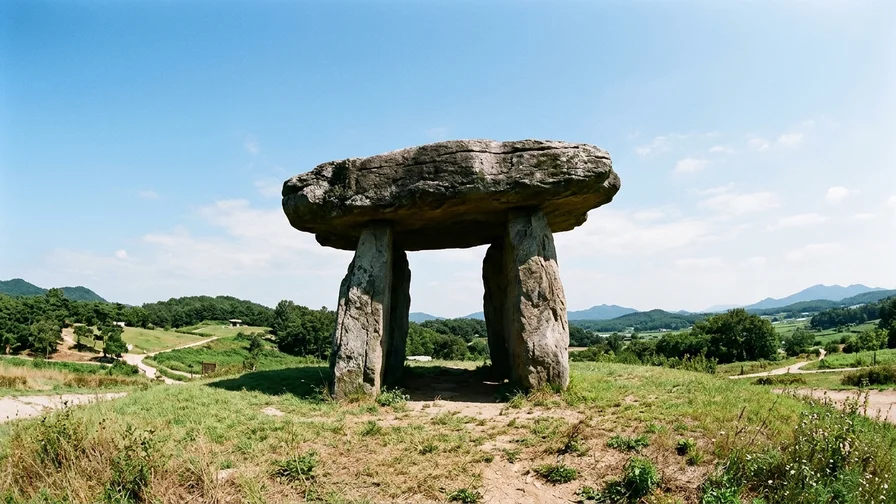
Gochang, Hwasun & Ganghwa Dolmen Sites (UNESCO 2000)
목차
- The 2000 Inscription: Why Korea’s Dolmens Matter Worldwide
- What Is a Dolmen? Types and Structure
- Best for Foreign Travelers: Bugeun-ri, Ganghwa (a Day Trip from Seoul)
- Jungrim-ri, Gochang: A Field of 447 Dolmens
- Hyosan-ri and Daesin-ri, Hwasun: 596 Dolmens in the Most Pristine Landscape
- Getting There: How to Reach Each Site
- Practical Tips for Foreign Travelers
- Frequently Asked Questions (FAQ)
The Korean Peninsula is estimated to hold around 40,000 dolmens — meaning roughly 40% of all the dolmens in the world are concentrated on this narrow strip of land. The three areas with the best preservation and highest density — 447 in Gochang, 596 in Hwasun, and about 160 in Ganghwa — were jointly inscribed as a UNESCO World Heritage Site in 2000 (official UNESCO inscription page). They are key evidence of the Bronze Age megalithic culture that flourished between roughly 1000 and 300 BCE. This guide lays out the three sites so foreign travelers can actually reach them — complete with bus numbers, fares, and closing days (current as of June 2026).
Quick Summary
- World-class density and diversity: Gochang, Hwasun and Ganghwa hold the world’s highest concentration of dolmens, spanning several different structural types
- Day trip from Seoul: The Ganghwa dolmens are the easiest for foreign travelers to reach — about 1.5–2 hours by public transit, and home to Korea’s largest table-style dolmen
- For a deeper dive: Gochang and Hwasun in the southwest are best explored by rental car, with hundreds of dolmens scattered across fields and hillsides
- Avoid a wasted trip: Both the Gochang Dolmen Museum and the Ganghwa History Museum close every Monday, but the outdoor sites are always open
The 2000 Inscription: Why Korea’s Dolmens Matter Worldwide
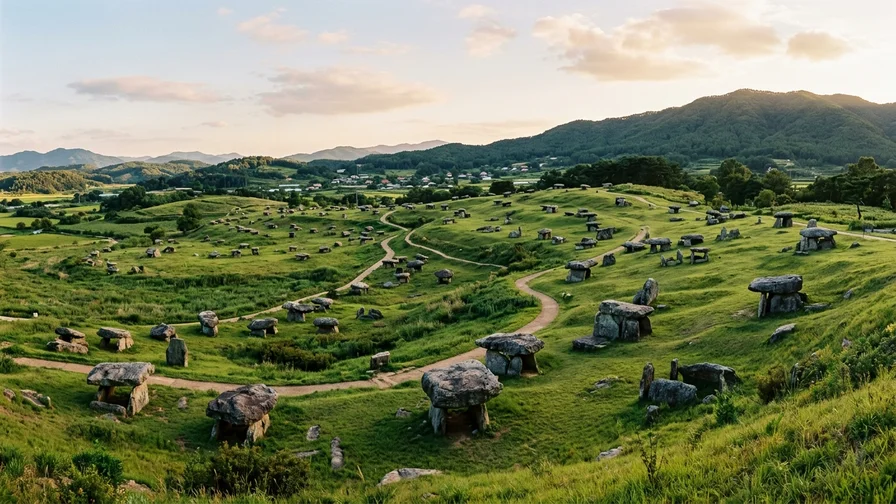
In December 2000, the 24th session of the UNESCO World Heritage Committee, held in Cairns, Australia, added the Gochang, Hwasun and Ganghwa Dolmen Sites to the World Heritage List. The reason for inscription was their value as unparalleled evidence for understanding prehistoric technology and social structure.
UNESCO Criterion (iii): The dolmen sites of Gochang, Hwasun and Ganghwa contain unique and exceptionally rare evidence of prehistoric culture and civilization.
- Overwhelming number and density: Hundreds of dolmens packed into small areas, proving the organized planning and technology needed to quarry, transport and build with megaliths
- Coexistence of multiple types: Table-style (northern), go-board-style (southern) and capstone-style dolmens are all found here, documenting cultural development and exchange
- Excellent preservation: Many remain in their original form, offering insight into construction methods, burial rituals, and social hierarchy
What Is a Dolmen? Types and Structure
A dolmen is a Bronze Age megalithic structure that mainly served as a tomb, though some are thought to have been used as territorial markers or altars. Korea’s dolmens fall into three types.
- Northern (table-style): A capstone resting on 2–4 supporting stones, shaped like a table; found north of the Han River, with Bugeun-ri in Ganghwa as the prime example
- Southern (go-board-style): A capstone over an underground burial chamber, raised on low supporting stones; common in Gochang and Hwasun
- Capstone-style: A capstone laid directly over the burial chamber with no supporting stones; the most common type in Korea
Best for Foreign Travelers: Bugeun-ri, Ganghwa (a Day Trip from Seoul)
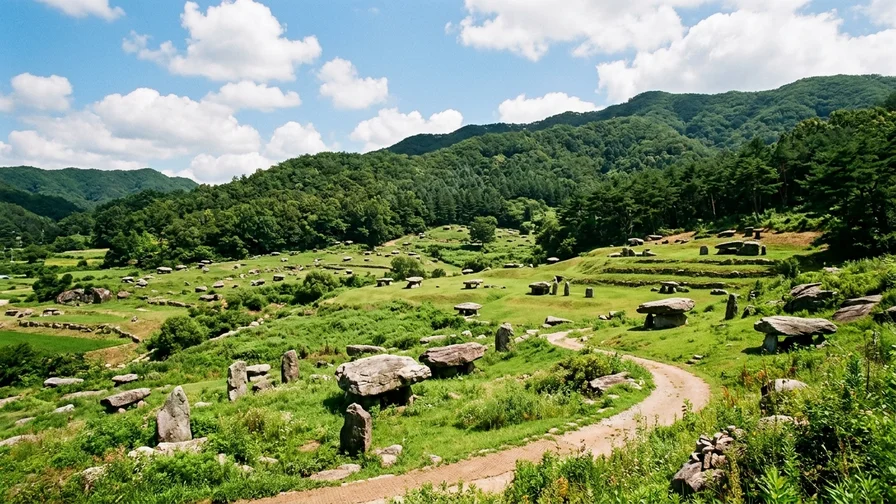
If you’re short on time or based in Seoul, Ganghwa Island is the best pick. It has good public-transit access and lets you take in Korea’s iconic dolmens in one concentrated spot. Around 160 dolmens are spread across the island.
Bugeun-ri Dolmen
This is the symbol of the Ganghwa dolmen sites. A capstone measuring 7.1 m long and 5.5 m wide rests atop two supporting stones, standing 2.6 m above the ground. As Korea’s largest northern-style (table) dolmen, it has been protected as a national historic site since 1964. The view you can’t miss is its silhouette from the side — an angle that captures, at a glance, how the two supporting stones have held up the massive capstone for nearly 3,000 years. Since it sits in a grassy park, you can observe it freely from every direction.
- Address: 317 Bugeun-ri, Hajeom-myeon, Ganghwa-gun, Incheon
- Google Maps: Bugeun-ri Dolmen
- Admission: Free, outdoor area open at all times
Ganghwa History Museum and Ganghwa Natural History Museum
Right next to the Bugeun-ri Dolmen, the Ganghwa History Museum offers an overview of the island’s history from prehistory through the modern era, with a solid dolmen exhibition. Across the road, the Ganghwa Natural History Museum (opened 2015) can be visited on the same combined ticket.
- Hours: 09:00–18:00 (last entry 17:30)
- Closed: Every Monday, January 1, and the days of Seollal (Lunar New Year) and Chuseok (Korean Thanksgiving)
- Admission: Adults 3,000 won, children and teens 2,000 won, free for ages 6 and under and 65 and over — a combined ticket for the History Museum and Natural History Museum (as of June 2026)
- Website: Ganghwa History Museum official page
Nearby Attractions and Dining in Ganghwa
After visiting the dolmens, you can pair them with other Ganghwa sights for a full day out.
- Jeondeungsa Temple: One of Korea’s oldest temples, perfect for a quiet stroll around the grounds Jeondeungsa
- Gwangseongbo Fortress: A 19th-century battlefield against foreign invasion, with a seaside fortress walk Gwangseongbo
For meals, downtown Ganghwa offers the most options. It’s about a 15-minute drive from the museum.
- Uri-ok 📍: A baekban restaurant in downtown Ganghwa running since 1953. Baekban is a Korean home-style set meal of rice and soup served with about ten side dishes — the safest choice for newcomers to Korean food (Address: 184-1 Sinmun-ri, Ganghwa-eup, Ganghwa-gun)
- Wangjajeong Mukbap 📍: Near the Goryeo Palace Site, specializing in mukbap (acorn jelly in cold broth) and the local Ganghwa specialty jeotguk-galbi (a light pork-rib hotpot seasoned with salted shrimp). Closed Mondays (Address: 55 Bukmun-gil, Ganghwa-eup, Ganghwa-gun)
- Meta Forest 📍: A cafe set in a metasequoia forest in Gilsang-myeon, where you can grab a drink and walk the forest trail. Easy to combine with a Jeondeungsa route. Closed Mondays and Tuesdays (Address: 68-46 Gilsang-ro 95beon-gil, Gilsang-myeon, Ganghwa-gun)
Jungrim-ri, Gochang: A Field of 447 Dolmens
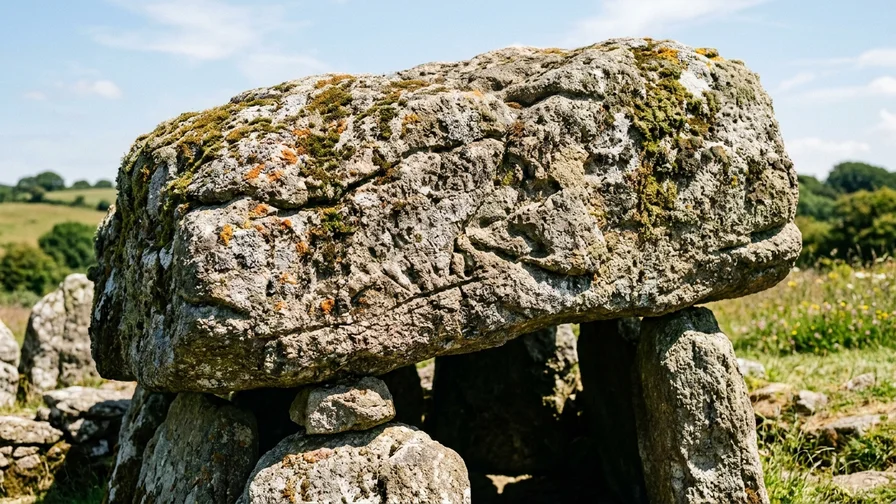
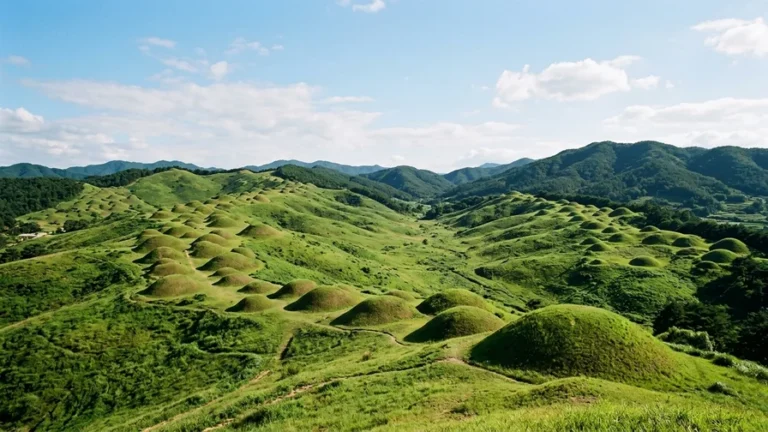
The hallmark of the Gochang site in Jeonbuk State is its density. Centered on Maesan village in Jungrim-ri, Gochang-eup, a total of 447 dolmens — 442 in Jungrim-ri and 5 in Dosan-ri — are concentrated along about 1.8 km of hillside running east to west. The view you can’t miss is the cluster of dolmens lined up along the Maesan ridge — this is the only place in the world where you can take in all three types (table-style, go-board-style and capstone-style) in a single field of view.
It’s best to start your visit at the Gochang Dolmen Museum. The Moromoro Tour Train (a trackless train) departs from in front of the museum and circles the cluster in about 40 minutes, or you can take a walking route and explore at a slower pace. You can also link it with eco-tourism at the nearby Ramsar-listed Ungok Wetland.
- Address: 74 Goindol Park-gil, Gochang-eup, Gochang-gun, Jeonbuk State (Gochang Dolmen Museum)
- Google Maps: Gochang Dolmen Museum
- Museum hours: 09:00–18:00 (until 17:00 from November to February), last entry 1 hour before closing
- Closed: Every Monday, January 1 — the tour train also doesn’t run on museum closing days
- Admission: Adults 3,000 won, teens 2,000 won, children 1,000 won. The Moromoro Tour Train costs extra: adults 1,000 won, teens 700 won, children 500 won, first-come-first-served at the on-site ticket booth on weekends (as of June 2026)
- Outdoor site: Free, open at all times
- Website: Official World Heritage Gochang Dolmen Museum site
For dining, Gochang’s signature pungcheon eel (freshwater eel grilled with sauce or salt as a restorative dish) is the answer. The eel restaurants are clustered near the entrance to Seonunsa Temple, about a 20-minute drive from the dolmen museum.
- Yeongi Restaurant 📍: The first restaurant in Gochang to serve grilled freshwater eel. Standard eel is 38,000 won per person, eel soup 12,000 won — eel soup is a hearty, spicy broth dish made by simmering eel for a long time (Address: 2727 Seonun-daero, Asan-myeon, Gochang-gun)
- Cheongwon Garden 📍: An eel specialist at the entrance to Seonunsa Temple. Sauce-grilled and salt-grilled eel are each 37,000 won per person — salt-grilled brings out the eel’s natural richness, while sauce-grilled has a sweet-and-savory gochujang (red chili paste) glaze (Address: 67 Seonunsa-ro, Asan-myeon, Gochang-gun)
- Geumdan Yangman 📍: Run directly by a freshwater eel farm, so you get great value for the price; orders are by the kilogram (Address: 51-10 Geomdang-gil, Simwon-myeon, Gochang-gun)
Hyosan-ri and Daesin-ri, Hwasun: 596 Dolmens in the Most Pristine Landscape
The Hwasun site in South Jeolla Province wasn’t reported to academia until 1995, so it has seen little human development and remains in the most natural state. A total of 596 dolmens are spread along roughly 5 km of the Bogeomjae valley, linking Hyosan-ri in Dogok-myeon (277 dolmens) and Daesin-ri in Chunyang-myeon (319 dolmens). Eight quarries where capstones were cut have also been found here, giving a complete picture of the production process.
Its biggest feature is the enormous capstones. The one piece you can’t miss is Pingmae Bawi — 7.3 m long, 5 m wide, 4 m thick and weighing about 280 tons, one of the largest capstones in Korea, and how Bronze Age people moved it is still a subject of research. At the Gamtae Bawi quarry, you can even see traces where stone was partly cut away from the rock. Every October, the Hwasun Dolmen Autumn Flower Festival is held around the site (in 2025 it runs October 17–26), and during the festival period a 5,000-won admission fee applies, fully refunded in local gift vouchers — otherwise it’s free and open at all times. You can pair a visit with the nearby Dogok Hot Springs to combine history with relaxation.
- Address: Hyosan-ri (Dogok-myeon) and Daesin-ri (Chunyang-myeon) area, Hwasun-gun, South Jeolla Province
- Google Maps: Hwasun Dolmen Site
- Admission: Free (except during the festival period), outdoor area open at all times
- Website: Official World Heritage Hwasun Dolmen Site
There are almost no restaurants right by the site. A cluster of reliable eateries can be found near the Dogok Hot Springs area, a 5–10 minute drive away.
- Dalmaji Heukdubu (Dogok Main Branch) 📍: A hanok restaurant specializing in Hwasun’s local heukdubu (black-soybean tofu made fresh every morning). The heukdubu hotpot and bossam are recommended; break time 15:30–16:30 (Address: 542 Jigang-ro, Dogok-myeon, Hwasun-gun)
- Saekdong Dubu-jip 📍: A tofu specialist on the same road. The saekdong tofu set comes as a full table spread of colorful handmade tofu with side dishes (Address: 438 Jigang-ro, Dogok-myeon, Hwasun-gun)
Getting There: How to Reach Each Site
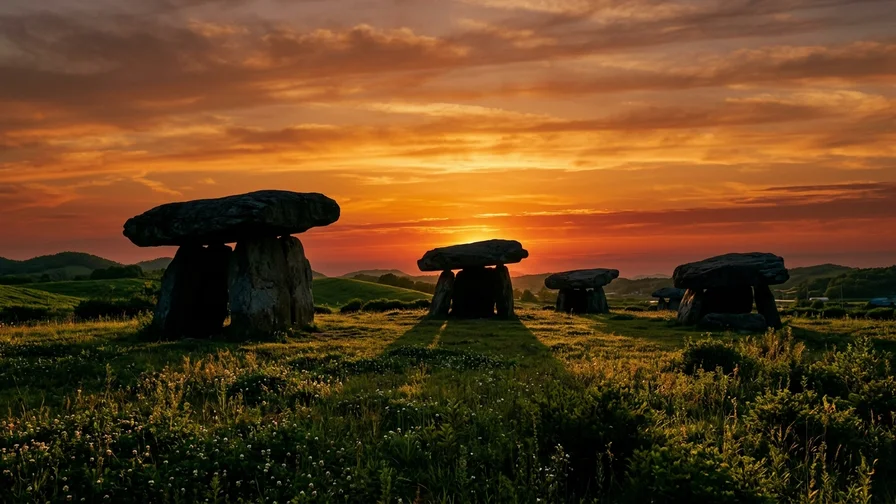
The three sites are scattered across different regions, so plan your transport in advance. The details below are current as of June 2026; rural routes change often, so double-check before you set out.
Seoul → Bugeun-ri, Ganghwa
- Express Seat Bus 3000: Runs direct from the bus stop at Sinchon Station (Subway Line 2) to Ganghwa Terminal, about 1.5–2 hours, roughly every 15 minutes during rush hours
- Bus 88: Runs from Yeongdeungpo via Dangsan Station and Songjeong Station to Ganghwa Terminal
- Via Gimpo Goldline: Take the Gimpo Goldline from Gimpo Airport Station, get off at Gurae Station, then transfer to bus 90 to Ganghwa Terminal
- Ganghwa Terminal → Bugeun-ri: Take a county bus toward Hajeom-myeon and get off at the “Bugeun-ri (Ganghwa History Museum)” stop. County bus routes and schedules change frequently, so check the terminal information board, a real-time search on Kakao Maps, or the Ganghwa County Office transport info page. A taxi takes about 15 minutes and is the simplest option
Seoul → Gochang
About 260 km from Seoul, reachable by bus or train.
- Express bus: Central City Bus Terminal → Gochang Public Bus Terminal, about 3 hours 10 minutes, with more than 10 departures a day between 07:00 and 19:30
- Train (KTX): Yongsan Station (Honam Line KTX departs from Yongsan, not Seoul Station) → Jeongeup Station, about 1 hour 45 minutes, then an intercity bus from Jeongeup Terminal to Gochang, about 30 minutes (22 a day, roughly every 20 minutes, 4,200 won)
- Gochang Terminal → Dolmen Museum: About 4 km. Take a county bus toward Dosan and get off at the “Dolmen Museum” stop (1-minute walk), or take a taxi for about 10 minutes
Seoul → Hwasun
Going via Gwangju is the usual route.
- Express bus: Central City Bus Terminal → Gwangju U-Square, about 3 hours 20 minutes
- Train (KTX/SRT): Yongsan Station or Suseo Station → Gwangju Songjeong Station, about 1 hour 50 minutes–2 hours
- Gwangju → Dolmen Site: Bus 318 (passing the Gwangju Bus Terminal stop in front of U-Square, heading toward Dogok) goes to Dogok Hot Springs, and at certain times of day it passes directly by the dolmen site. Whether it stops there varies by time slot, so checking the Hwasun County bus information system (bis.hwasun.go.kr) in advance is essential. A taxi from Gwangju Songjeong Station takes about 30 minutes
Practical Tips for Foreign Travelers
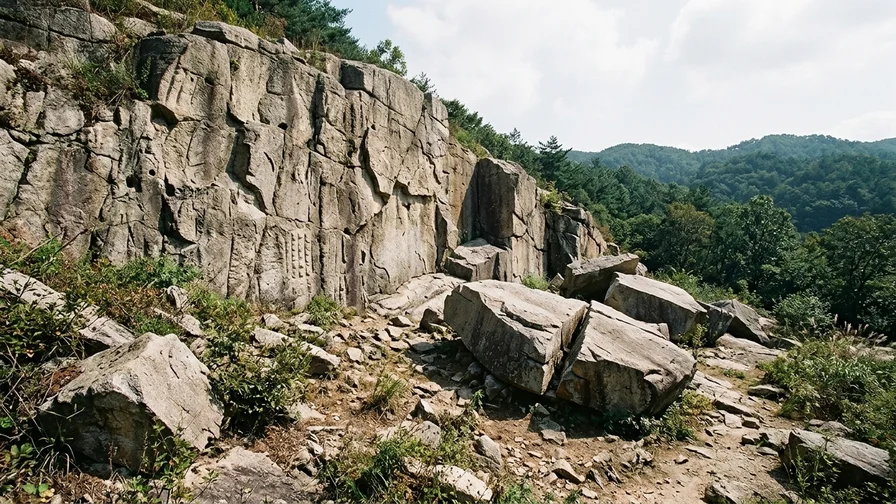
Gochang and Hwasun have limited access by public transit alone. Keep the tips below in mind.
| Item | Details |
|---|---|
| Rental car travel | The most efficient way to explore Gochang and Hwasun; an International Driving Permit (IDP) is required, and cars can be rented at major airports and KTX stations |
| Navigation apps | Google Maps gives good driving directions but its public-transit info is unreliable; using Naver Map or Kakao Maps alongside it is recommended |
| Taxi hailing (Kakao T) | Kakao T is handy for hailing taxis, though registering a foreign card can be difficult; you can choose to pay the driver directly by card or cash on arrival. When heading back from rural sites there are no empty taxis around, so a hailing app is practically essential |
| Tourist hotline 1330 | Run by the Korea Tourism Organization, available 24/7 in multiple languages including English, Japanese and Chinese; useful for checking transport hours and getting quick interpretation help |
Editor’s tip: Gochang and Hwasun are about a 1.5-hour drive apart. With a rental car, you can use Gwangju as a base and visit both sites over a two-day, one-night trip. Both museums close on Mondays, so plan your itinerary for Tuesday through Sunday.
Frequently Asked Questions (FAQ)
Q1: Which of the three sites is best for a day trip from Seoul?
A: Ganghwa Island, hands down. It’s 1.5–2 hours from Seoul and has the smoothest public-transit connections. You can see the iconic northern-style dolmen and the museum in half a day.
Q2: Is there an admission fee?
A: The outdoor sites themselves are all free and open at all times (Hwasun charges a refundable admission only during its October festival). The attached museums are paid — Gochang Dolmen Museum 3,000 won for adults, Ganghwa History Museum 3,000 won for adults (combined ticket with the Natural History Museum). Current as of June 2026; check each institution’s official website before visiting.
Q3: Can I see all three sites in a single day?
A: No. Ganghwa is in the greater Seoul area while Gochang and Hwasun are in the southwest, hundreds of kilometers apart, so they require separate itineraries.
Q4: Is there a recommended dish for each area?
A: Yes, you can try local specialties.
- Ganghwa: Jeotguk-galbi (a light pork-rib hotpot seasoned with salted shrimp) and baendaengi-hoe muchim (spicy seasoned raw fish)
- Gochang: Pungcheon eel (grilled freshwater eel) and bokbunja (wine and juice made from black raspberries — pairing it with eel is the classic Gochang combination)
- Hwasun: Heukdubu (a tofu dish made from black soybeans)
Q5: What’s the best season to visit?
A: Since there’s a lot of outdoor activity, mild-weather spring (April–May) and autumn (September–October) are best. In October especially, the area around the Hwasun dolmen site bursts into bloom for the Autumn Flower Festival.
Q6: Is the site accessible by wheelchair or stroller?
A: Most indoor facilities like the museums are accessible. However, the outdoor sites have plenty of unpaved dirt paths and grass, which can be challenging. The park around the Bugeun-ri Dolmen in Ganghwa is relatively flat and easy to access.
Related Reading on This Topic
- 17 UNESCO World Heritage Sites in Korea
- The 40 Royal Tombs of the Joseon Dynasty (UNESCO 2009)
- Haeinsa Janggyeong Panjeon & Tripitaka Koreana (UNESCO 1995)
- Gyeongju UNESCO World Heritage (1995, 2000)
- 9 Korean Seowon Confucian Academies (UNESCO 2019)
- Jeju Volcanic Island and Lava Tubes (UNESCO 2007)
- Jongmyo Shrine (UNESCO 1995)
- Changdeokgung Palace & Secret Garden (UNESCO 1997)
- Suwon Hwaseong Fortress & Haenggung Palace (UNESCO 1997)
- Andong Hahoe & Gyeongju Yangdong Villages (UNESCO 2010)
- Namhansanseong Fortress (UNESCO 2014)
- Baekje Historic Areas (UNESCO 2015)
- Sansa, 7 Buddhist Mountain Temples in Korea (UNESCO 2018)
- Getbol, Korea’s 4 Tidal Flats (UNESCO 2021)
- Gaya Tumuli, 7 UNESCO Sites (UNESCO 2023)
- Bangudae Petroglyphs (UNESCO 2025)